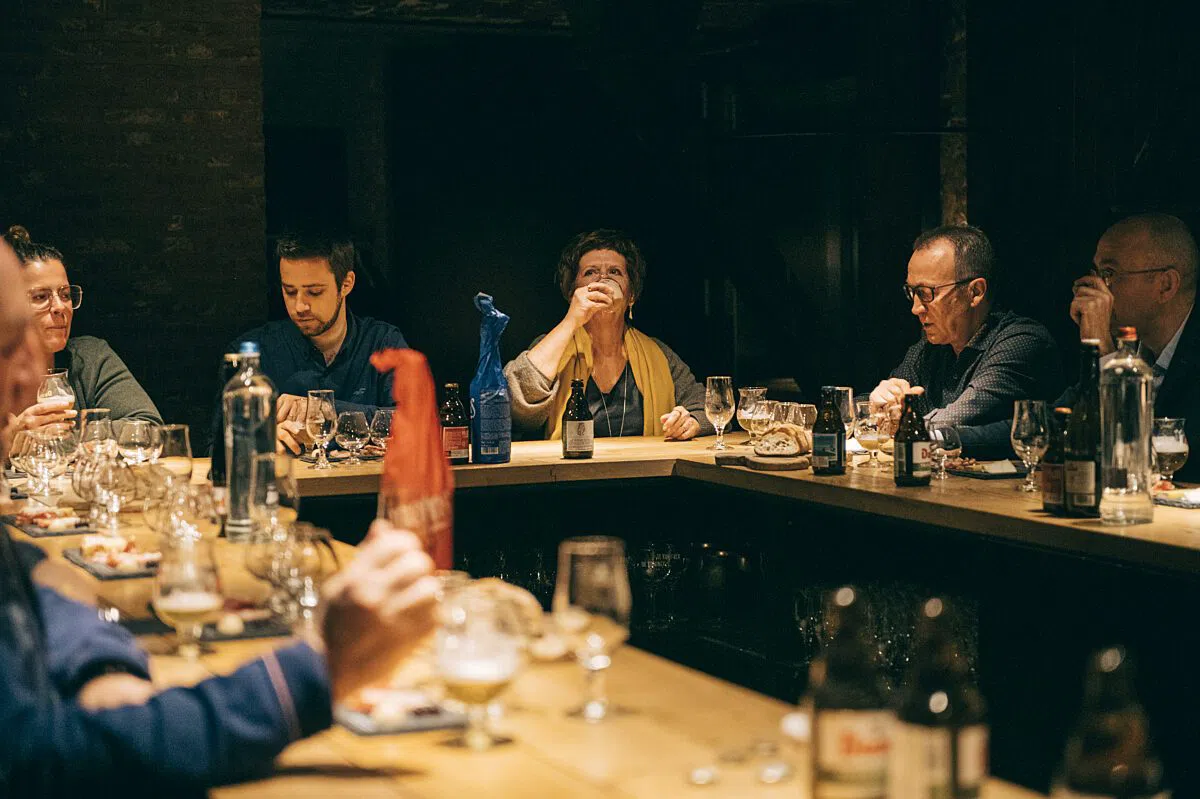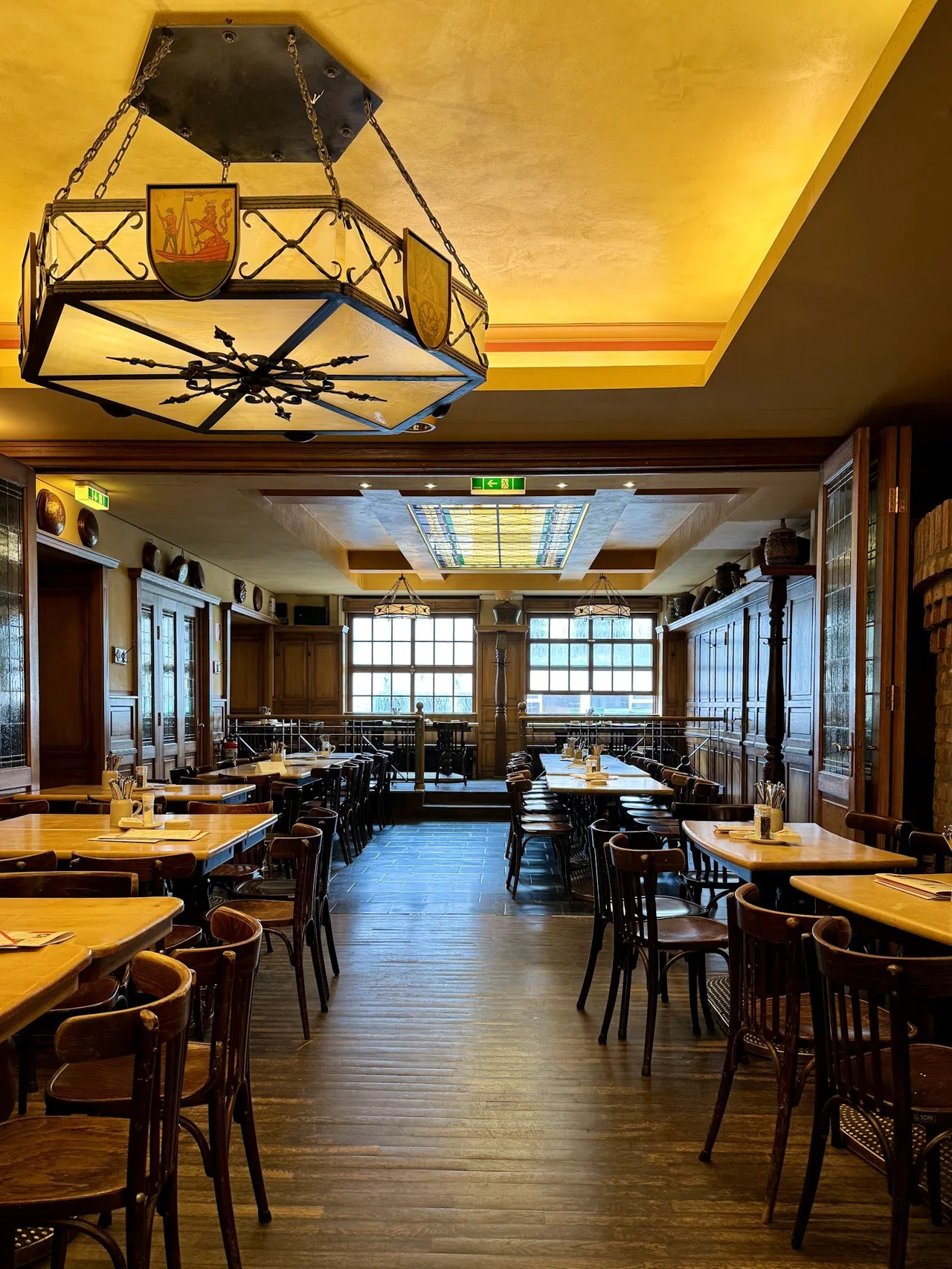

At Früh am Dom on a Friday evening, a köbes in a blue jacket weaves through packed tables with a Kranz — a wooden tray ringed with a dozen slim 0.2-litre glasses — setting down fresh Kölsch before anyone has asked for it, then chalking a mark on the beer mat for each glass drunk. This is not table service in the way most cities understand it; it is a rhythm the city has run for well over a century, and it explains more about Cologne's brewery halls than any tasting note could. Kölsch is a beer style, but in Cologne it is also a social contract — one enforced, gently, by the men and women carrying the tray.
What Makes a Kölsch a Kölsch
Kölsch is a legally protected style. Under the Kölsch Konvention signed by the city's breweries in 1986, only beer brewed within Cologne's city limits, to a defined recipe, can carry the name. It's a top-fermented pale beer, closer in method to an ale than the lagers most of Germany drinks, then cold-conditioned to lager-like clarity. The result is light, dry, faintly fruity, and built for volume rather than slow sipping.
The glass is part of the definition. Kölsch is served in a Stange — a narrow 0.2-litre cylinder, smaller than almost any standard beer glass elsewhere — specifically so it's finished before it goes flat or warm, then replaced. That's the whole logic of the halls that follow: small glass, fast turnover, constant refill, and a drinking culture that assumes you're staying for hours rather than for one pint.
Cologne's oldest working brewery, founded in 1830, still supplies several of the halls below, though the brewery and the brauhaus trading under its name aren't always the same building or the same owner — a distinction worth knowing when a local insists the beer is 'actually' brewed somewhere else. Nowhere is the weight of that history more visible than in the halls themselves.
The Köbes and the Beer Mat: How the Ritual Actually Works
The köbes — traditionally addressed only by that title, never by name — is the fixed point of a Cologne beer hall. Historically drawn from the Rhineland's working docks, the role carries a reputation for briskness bordering on rudeness that regulars insist is affection once you're used to it. You don't usually order a Kölsch; the köbes brings one, unprompted, the moment your glass is empty, and keeps bringing them until you physically place a beer mat on top of your glass. That's the entire mechanism for stopping service — no flagging down staff, no verbally closing a tab. A tally mark on the mat under your glass is your running total, and it's what you settle against at the end of the night.
This works because the glass is small — a Stange empties in a handful of sips, so the köbes isn't guessing whether you're finished. It also means the pace of a table is somewhat out of your hands unless you signal early. First-timers who don't know the beer-mat rule tend to end up several rounds deeper than planned, which is worth knowing before you sit down with a group.
The clearest place to feel the weight of this tradition is Sion (Brauhaus Sion), in the Altstadt, which traces continuous hospitality on the same plot back more than 700 years — long enough that the ritual here reads less like performance and more like inertia, a system nobody has ever needed to change. It's a sizeable hall with separate rooms and handles groups comfortably, but it's the history, not the scale, that makes it worth the stop.
Old-Town Halls Built for the Coach Trade
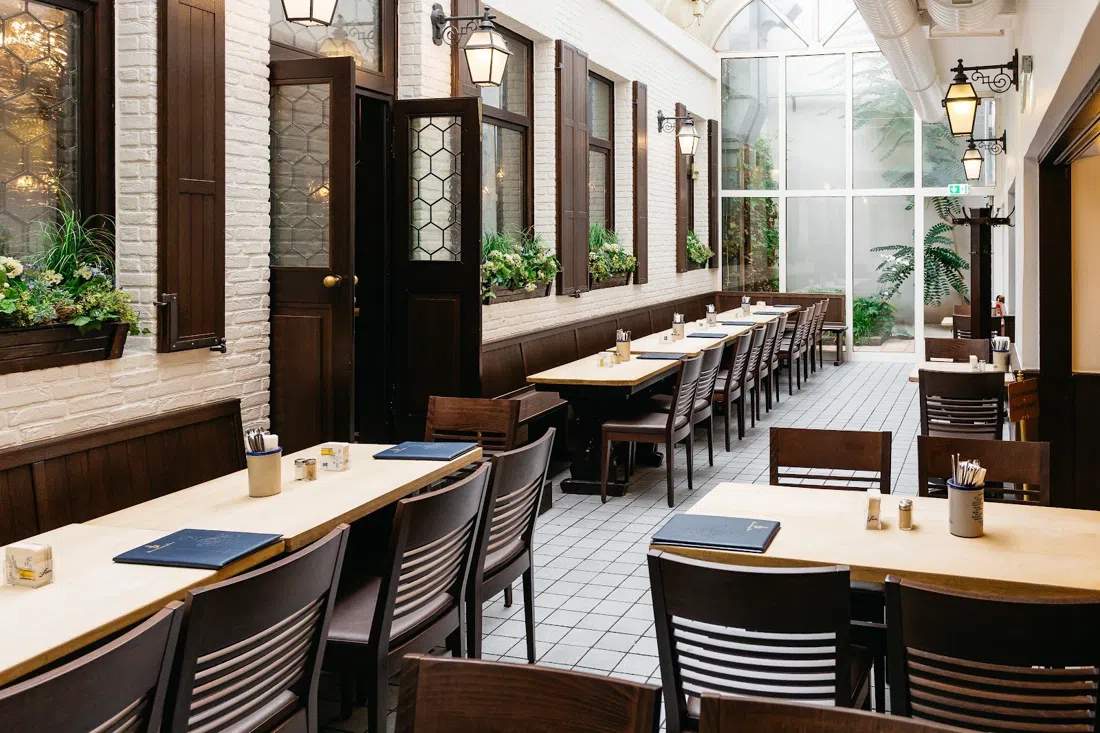
Three names dominate any conversation about large-group Kölsch in Cologne's Altstadt, and they dominate for structural reasons: they were built, or have since been extended, specifically to seat big numbers at speed.
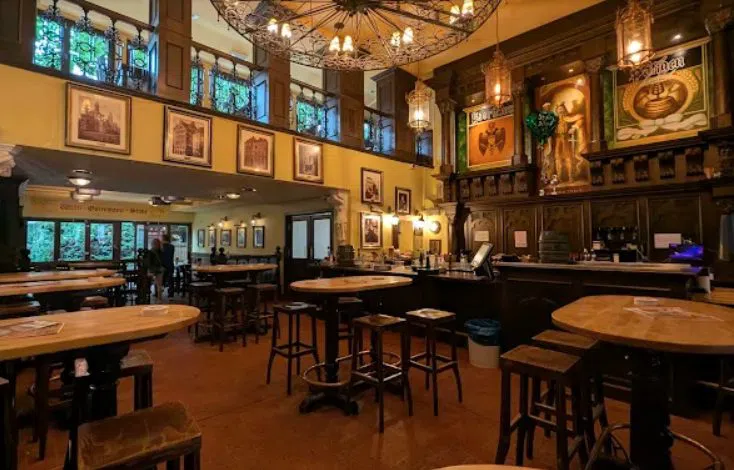
Früh am Dom, in the Altstadt just steps from the cathedral, is the default first stop for most visitors, and it shows — a huge multi-floor layout designed around big tables and coach parties means it's consistently busy, and you should expect a wait without a reservation, especially on a weekend evening. It's the classic choice precisely because it's the best-known: if you want the archetypal brauhaus experience without much research, this is it, but book ahead or arrive early with a party of more than four.
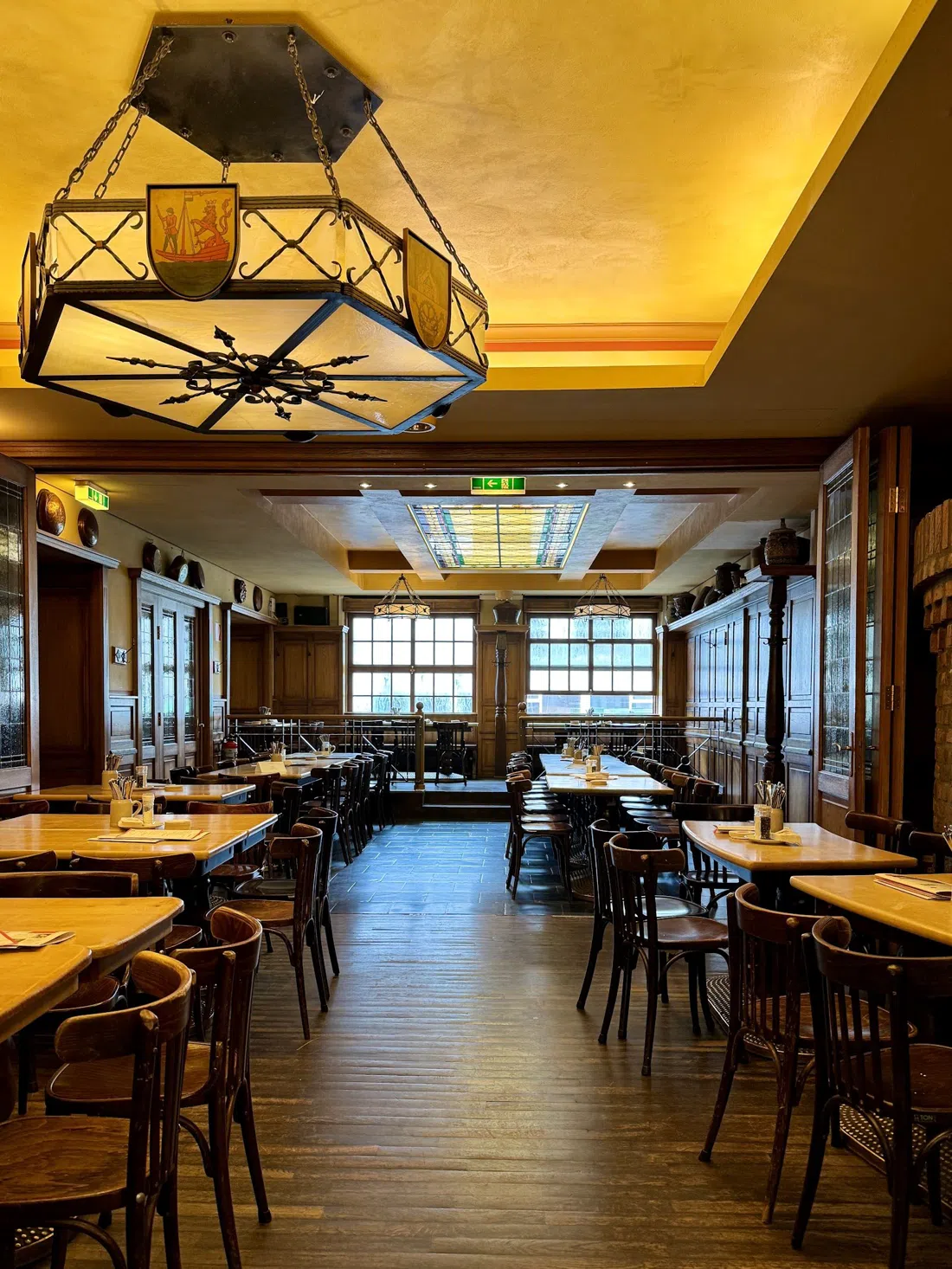
Gaffel am Dom, also in the Altstadt, goes further on raw capacity — up to 700 seats across three floors, plus a 300-seat terrace, making it the largest footprint in the old town. It was built for events and large groups rather than retrofitted for them, and it runs a Friday sing-along night that turns the ground floor into something closer to a communal singalong than a quiet dinner. If your group is large, loud, or celebrating something, this is the livelier of the two big names near the Dom.
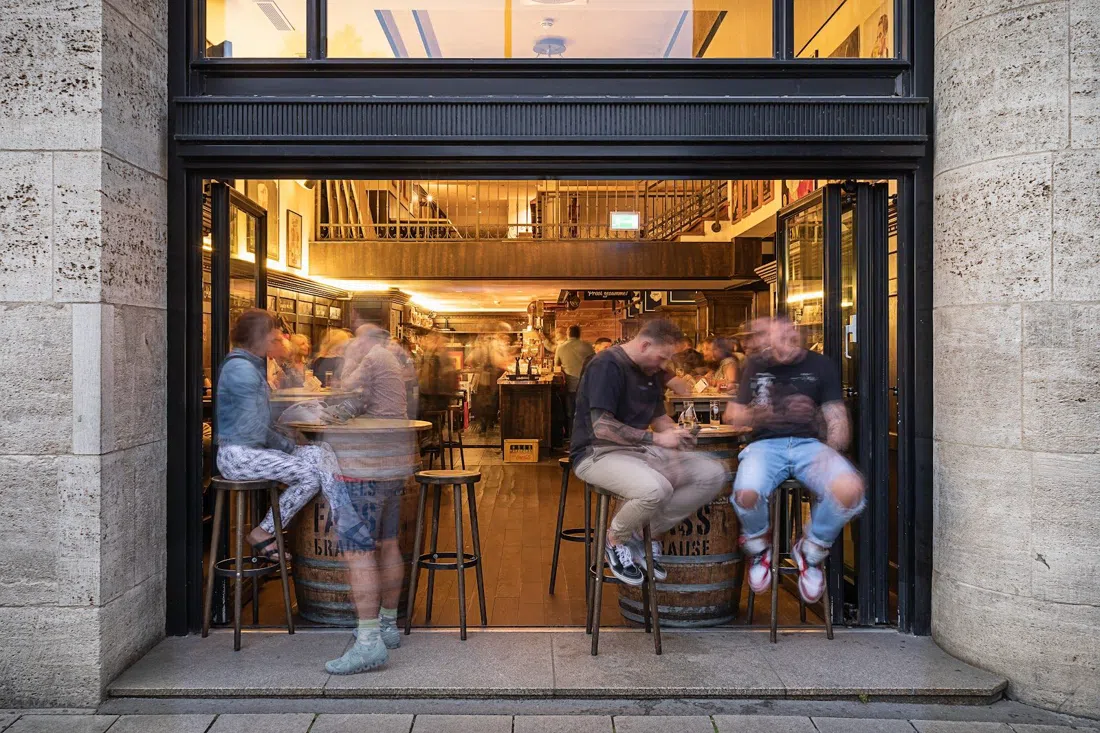
Peters Brauhaus, in the Altstadt, has a different pitch: it occupies the oldest documented brewhouse site in the city, and its several connecting rooms flex between big groups and smaller parties more gracefully than the sheer-scale halls do. A second branch, Peters am Hahnentor, opened in 2023 with 180 seats specifically to absorb overflow from the original — useful to know if you're told the main house is full, since the overflow room is a newer building, not a downgrade. For anyone more interested in etiquette and history than in raw scale, Peters is the stronger pick of the three.
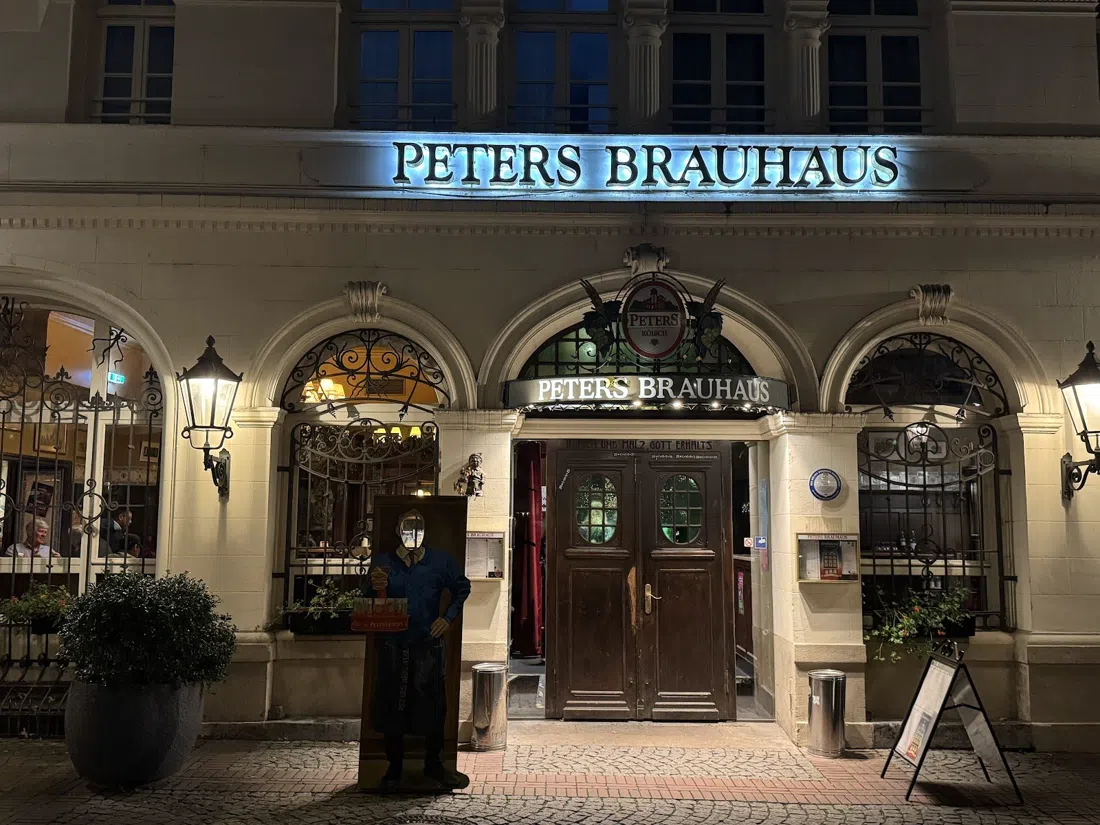
All three take walk-ins, but none of them owe you a table at 7pm on a Saturday. Reserve for groups over six, and expect shared long tables even when you do.
Quieter Rooms for Two
Not every Cologne hall is built around volume, and conflating 'brauhaus' with 'hall for forty' misses some of the better rooms in the city.
Brauerei zur Malzmühle, in the Altstadt, is Cologne's second-oldest brewery, still family-run across generations, and while it takes groups, it's a noticeably smaller and more intimate room than Früh or Gaffel — better suited to couples or parties under roughly fifteen than to a coach party. It's the hall to choose for the brewery-owned-pub experience without the scale.
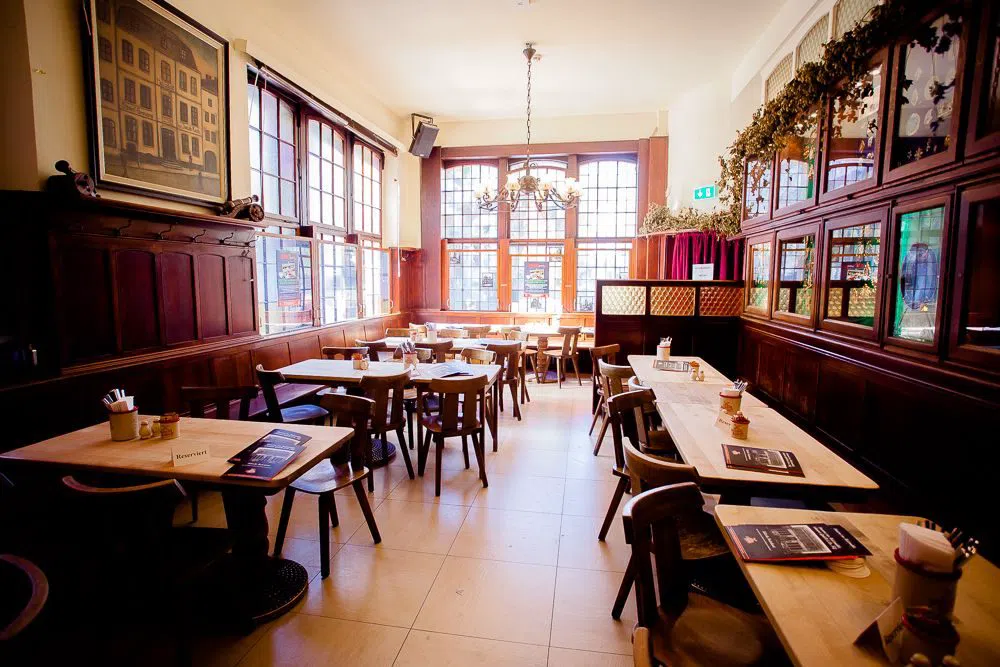
Sünner im Walfisch, in the Altstadt, belongs to Sünner, Cologne's oldest brewery, founded in 1830, and the building itself is one of the most atmospheric in the old town — worth a look even for those not staying to drink. The rooms are smaller and more characterful than the mass-capacity halls, which makes it a better fit for couples or a small group than for a coach party, though that also means it can fill on its own terms.
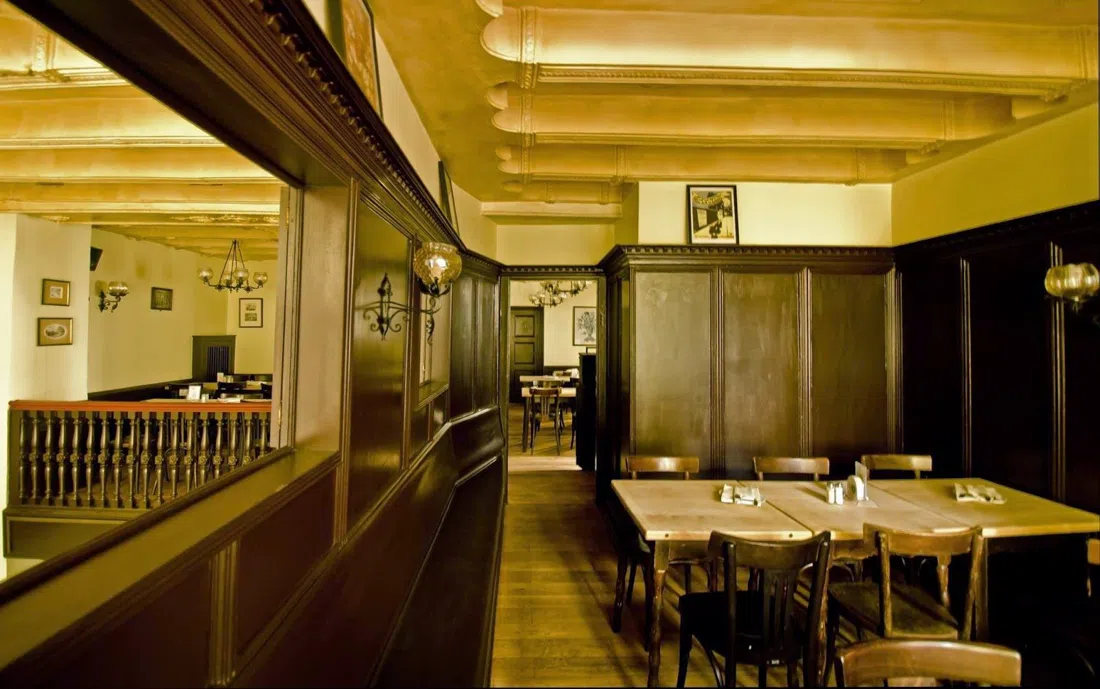
Max Stark, in the Altstadt, is smaller again — genuinely built for couples or tight groups of four to six — and it makes a point of being free of the antlers-and-oompah trappings some visitors expect from a Cologne brauhaus. That restraint is the appeal, but it's also a warning: seats go fast, and there's no fallback if you turn up unbooked on a busy night.
The Locals' Halls and the Craft Alternative
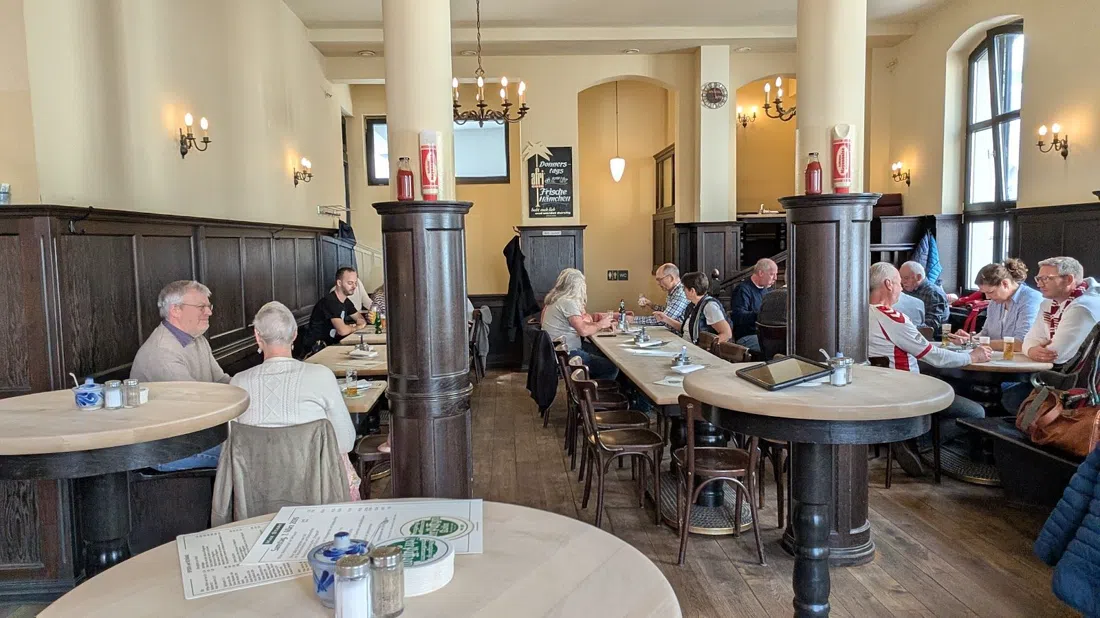
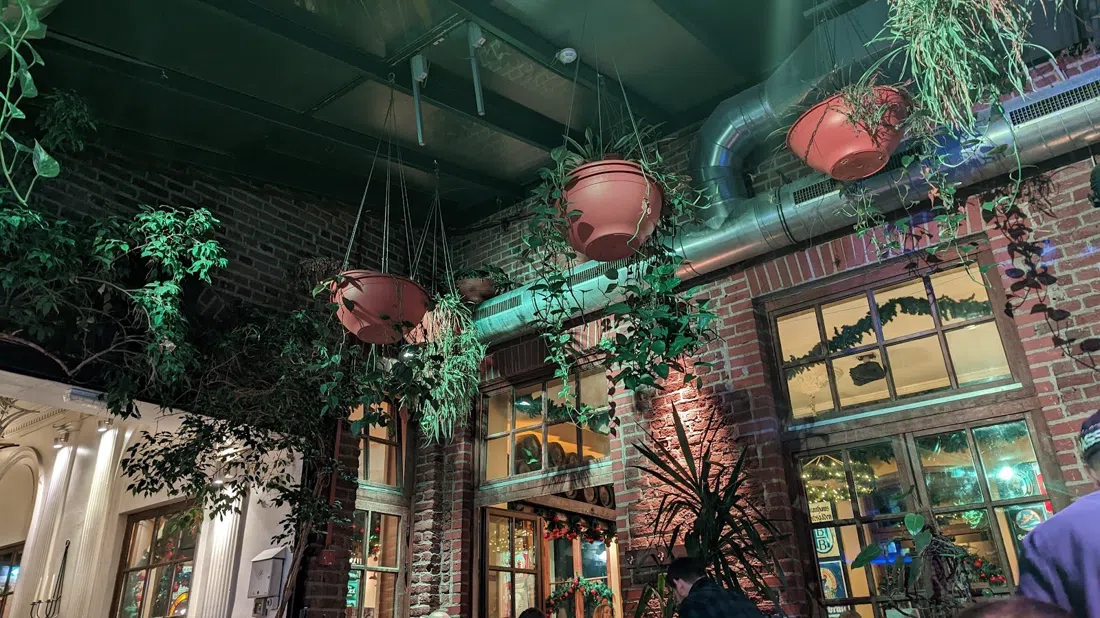
Päffgen (Brauerei Päffgen), in the Altstadt, especially its shaded courtyard beer garden, is widely rated by residents as the least touristy of the major halls, and it copes well with groups, particularly in summer when the courtyard opens up. If the rest of this list reads as a checklist for a first-time visitor, Päffgen is the counterpoint — the hall a Cologne local is more likely to suggest.
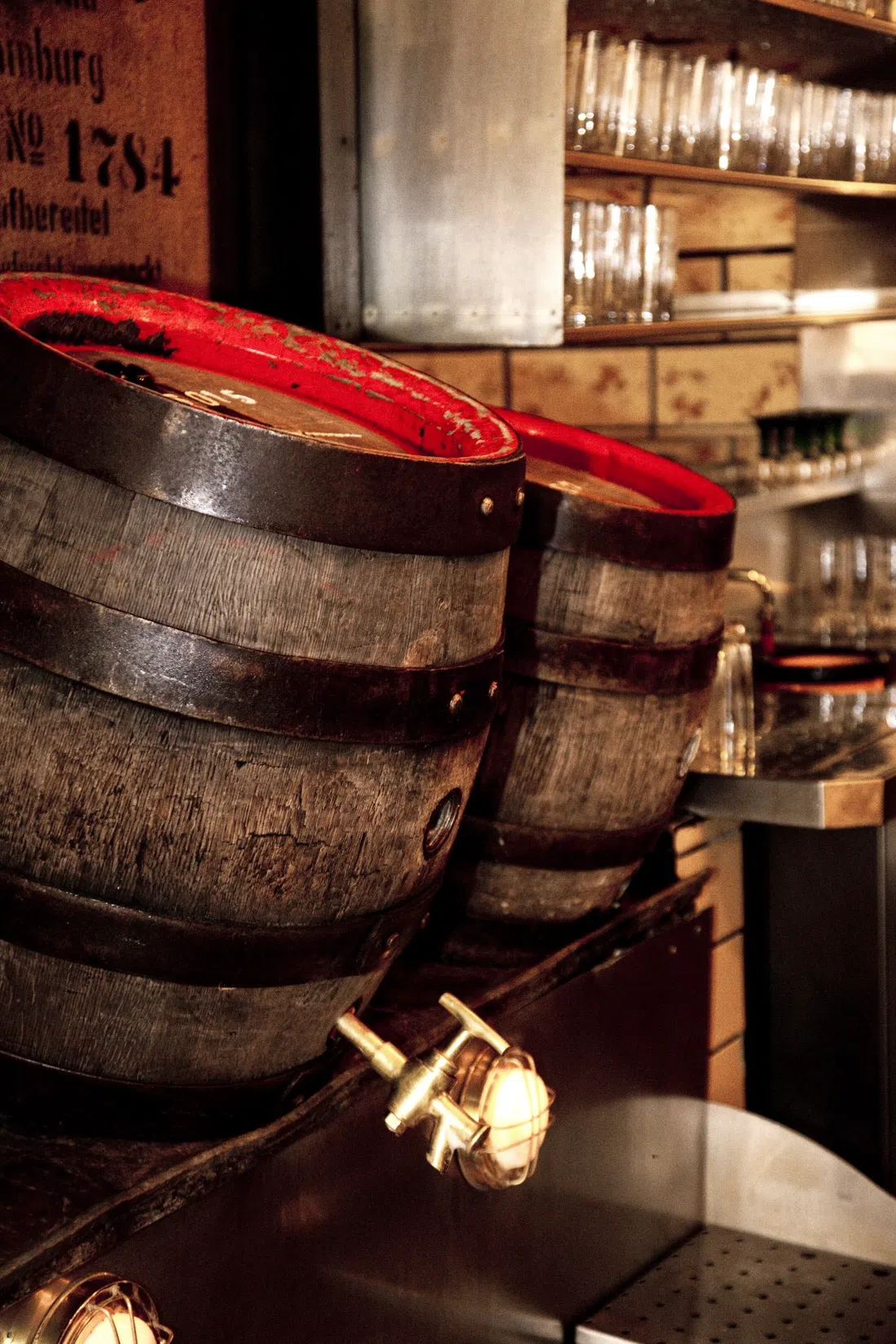
Hellers Brauhaus, north of the old town, has moderate-sized rooms, handles groups reasonably well if you check ahead, and draws a livelier, younger crowd than the old-town institutions. One honest note: Hellers stopped brewing its own organic Kölsch on site in 2024 for economic reasons and now pours a partner brewery's beer instead. It's still open and still worth including on a brewery-culture itinerary, but it's no longer accurate to call it a working microbrewery — think of it as a brauhaus with a changed supply chain, not a brewery.
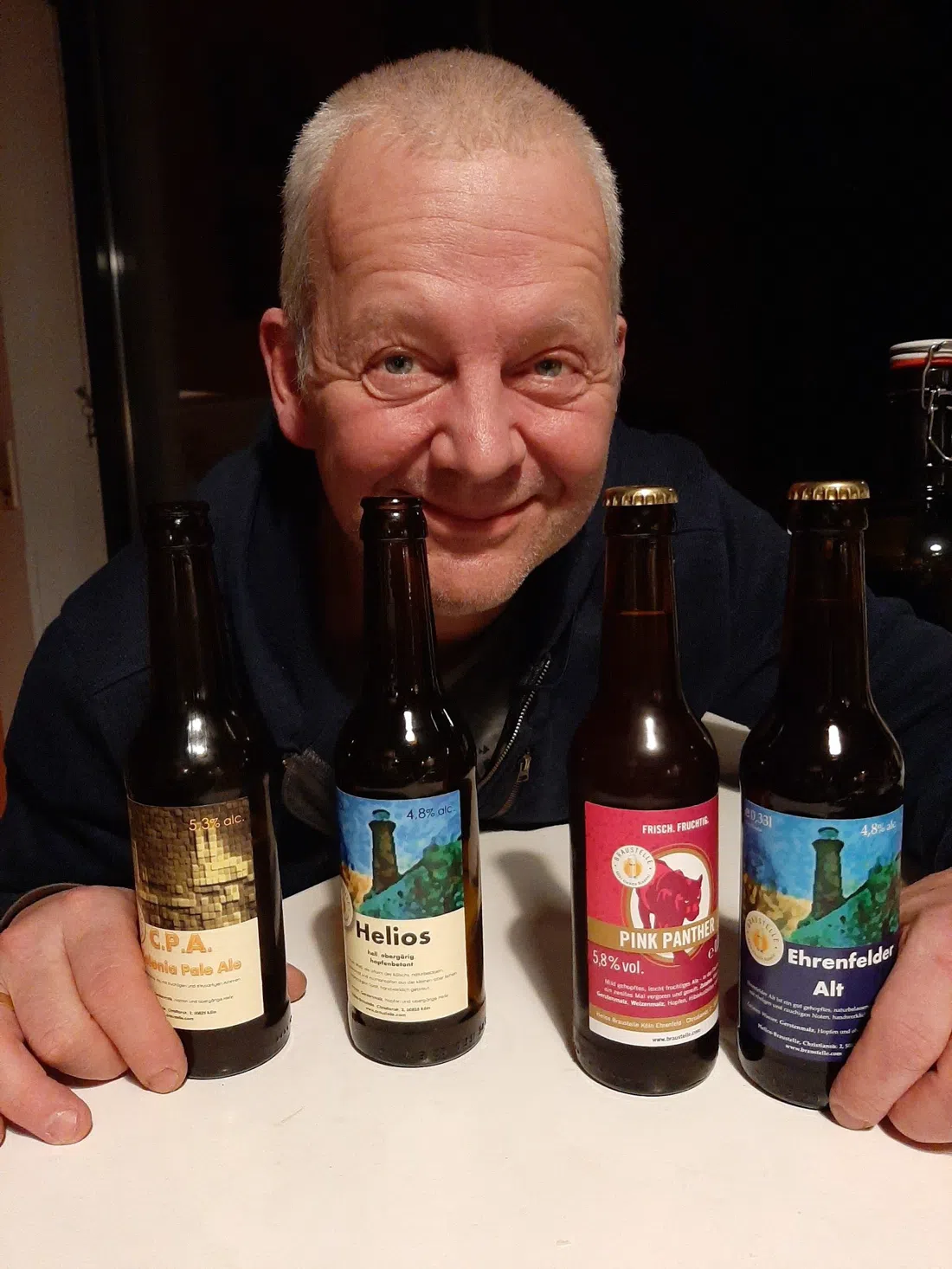
For an actual working brewery rather than a hall that once was one, Braustelle, in Ehrenfeld, is the better stop. It's Cologne's smallest brewery, the space is compact and best suited to couples or small groups, and it pours unfiltered, less conventional Kölsch alongside the polished mainstream brands — a useful contrast if the rest of the day has been spent in the big Altstadt halls and you want to taste what Kölsch looks like outside its coach-tour version.
When the Halls Close
Most Altstadt brauhäuser wind down food and full service at a fairly civilised hour, which catches out groups who assume German drinking culture runs late by default. Bierhaus en d'r Salzgass, in the Altstadt, is the exception worth knowing about: it pours Päffgen Kölsch and stays open until 3am on weekends, considerably later than most of the halls above, making it the natural next stop for a group that isn't ready to stop when Früh or Gaffel starts clearing tables.
Doing the Round With Someone Who Knows the Rules
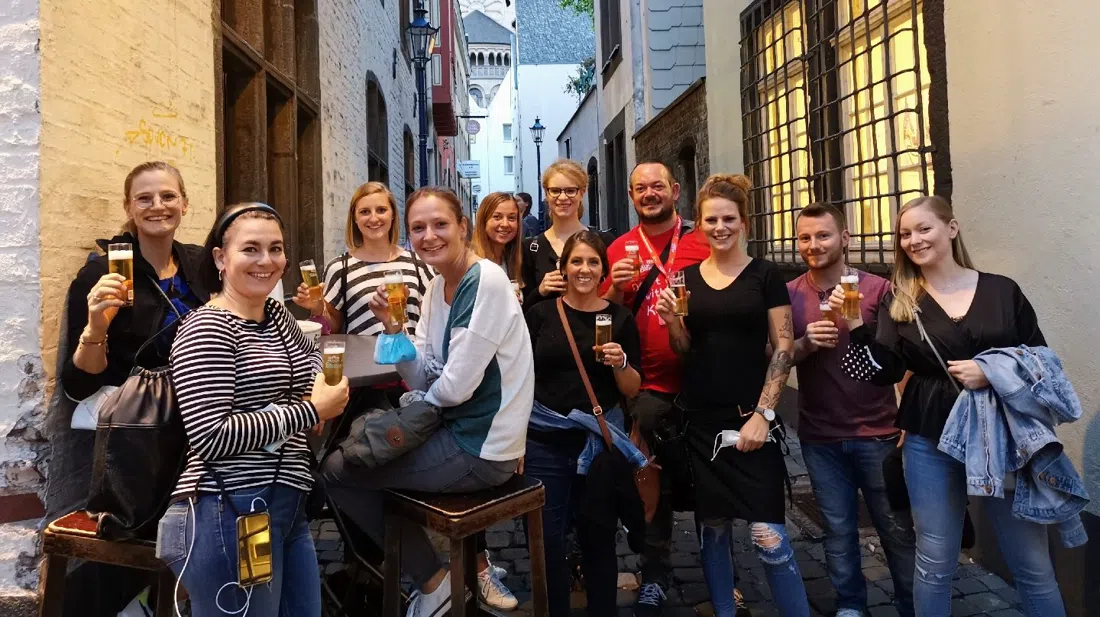
If the beer-mat system, the köbes's briskness, and the etiquette of not ordering all sound like a lot to navigate on a first night, the Kölsch Crew Beer House Tour is built to solve exactly that — a small-group, English-language pub crawl through several of the halls above, with the Kranz ritual and köbes etiquette explained on the ground rather than read off a page beforehand. It suits a group that wants the tradition explained in real time, and it removes the reservation-anxiety of visiting three or four halls in one evening rather than committing to just one.
Getting There, Paying Up, Timing It Right
Cologne's Altstadt brauhäuser sit within easy walking distance of the Dom and Cologne Hauptbahnhof, so most visitors don't need transport beyond their own feet once they're in the old town; Braustelle in Ehrenfeld is the one stop on this list worth reaching by U-Bahn or taxi rather than on foot. Card payment is now standard across the major halls, but it's still worth carrying some cash — smaller houses and late-night rounds move faster when the köbes doesn't have to bring a card machine to the table. A 0.2-litre Kölsch runs roughly €2–2.50 in most of these halls, which is part of why the beer-mat system exists: at that glass size and that price, a table can run up a real tab without anyone quite noticing.
Timing matters more here than in most cities' drinking cultures. Arrive before 6.30pm on weekends if you want a table at Früh, Gaffel, or Sion without a wait, and reserve outright for any group over six. Food service tends to stop earlier than the beer does — plan dinner for the early-to-mid evening and treat anything after 9pm as a drinking-only stretch. For a longer stay built around this, the Cologne hotel search covers options within walking distance of the Altstadt halls, and the broader Cologne guide covers the rest of the city beyond the beer.