
Stand on Roncalliplatz with your back to the cathedral's south portal and you are looking at a closed museum with a Roman street still lying under it. The hoardings have been up long enough that locals have stopped registering them, and the city's papers now put the reopening as late as 2030. The collection did not go into storage, though. It moved half a kilometre south-west into a 1950s trade building on Cäcilienstraße, where it costs €6 and opens six days a week. Walking into Roman Cologne in 2026 means walking through that door, then walking back out to find the rest of the city at street level.
What you actually get for €6 on Cäcilienstraße
Römisch-Germanisches Museum im Belgischen Haus (Cäcilienstraße 46, Altstadt-Süd, three minutes on foot from Neumarkt) is the Roman-Germanic Museum at present, not an annexe or a taster, and any Cologne itinerary that still sends you to Roncalliplatz for it is out of date. Opening is Wednesday to Monday, 10:00 to 18:00, closed Tuesdays. Admission is €6 adult and €3.50 reduced, school classes go free, and Cologne residents get in free on KölnTag, the first Thursday of the month, when the building stays open until 22:00.
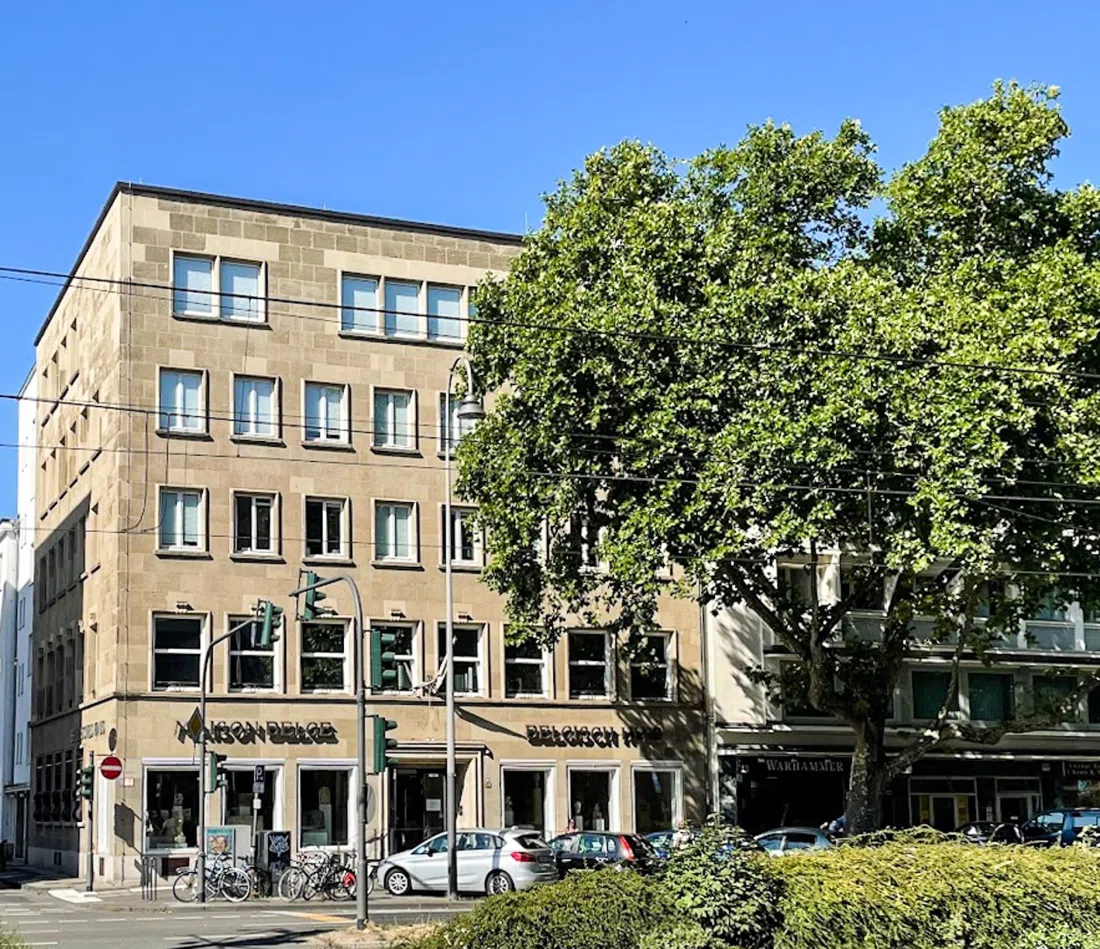
The interim is an edited museum rather than a shrunken one. You are in a single post-war office block with terrazzo stairs, not on top of an excavation, and the curators have had to choose. What that costs you is the thing the old building did best: standing over Roman floors while looking at Roman objects. The large central arch carrying the CCAA inscription, the dedication that names the colony, is not on Cäcilienstraße. It is fixed inside the shut building on Roncalliplatz and will stay there through the works.
What you gain is speed and quiet. Most visitors are done in an hour, ninety minutes if you read the labels properly, which here is worth doing because the interim display leans on text to carry context the architecture used to carry. Two hours is only realistic if you are travelling with someone who reads every case. It is a compact, low-fuss museum visit, and at €6 it does not need to be more than that to justify itself.
The Roman city you can reach on foot
The museum's closure has pushed the visit out onto the surrounding streets, which suits Cologne, because a lot of Roman Cologne was never indoors.
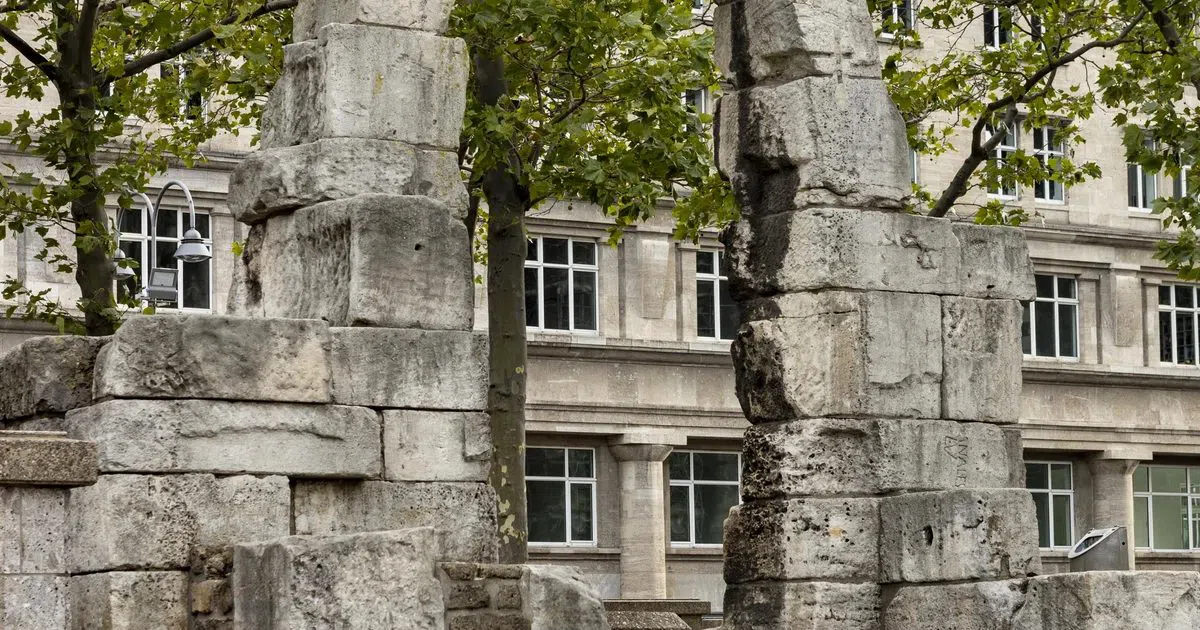
Römischer Torbogen (Kardinal-Höffner-Platz, Altstadt-Nord) is the north gate arch, standing in the open on the cathedral square. There is no door, no ticket and no group size limit, and it is the one substantial piece of Roman masonry you can walk up to and touch while the museum building is closed. It takes four minutes and costs nothing, and it is the right first stop if you want scale before you look at cases.
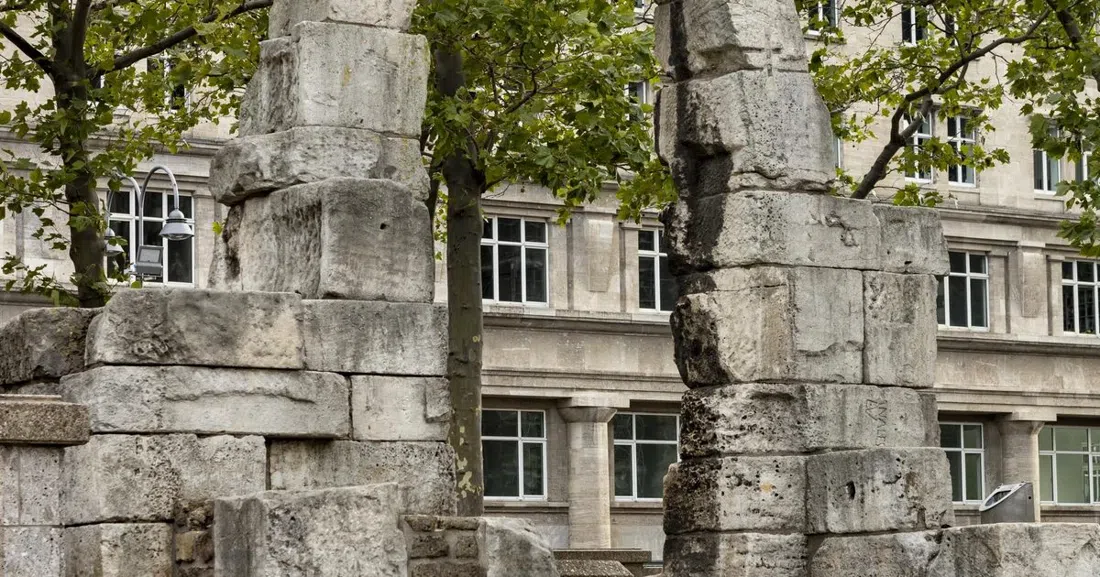
Römerturm (corner of Zeughausstraße and St.-Apern-Straße, Altstadt-Nord) is the only surviving tower of the Roman city wall, and visually it carries a walking route better than anything else in the centre. The banded decorative stonework near the top is the detail people photograph. It is exterior-only: there is no interior and no climb, whatever a guide's enthusiasm implies. Ten minutes on the pavement is the whole visit.
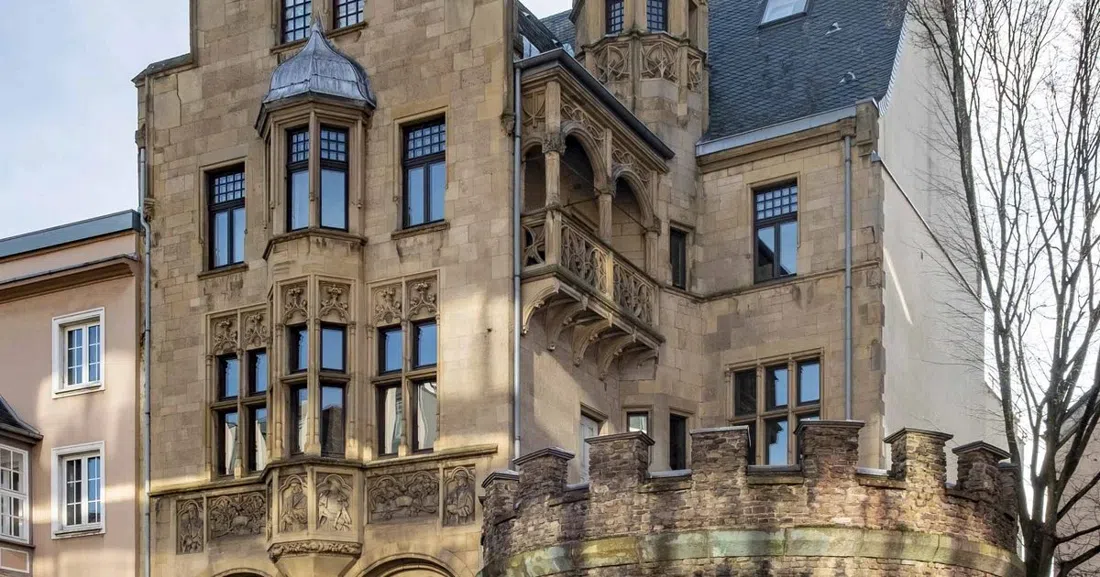
Unter Groß St. Martin (Fischmarkt, Altstadt-Nord) is the closest thing to the old experience. The Roman excavation under the Romanesque church is an official outpost of the museum, and for €1 for the lower church (the church above is free) you get Roman remains under a working parish, five minutes from Roncalliplatz. Hours are narrow and worth writing down: Tuesday to Thursday 13:00 to 17:25, Friday and Saturday 10:00 to 12:30 and 13:00 to 17:00, closed Mondays. Small groups are fine and guided groups are routinely booked in, but this is a functioning church. Services and prayer take priority, and a guide will drop their voice or wait.
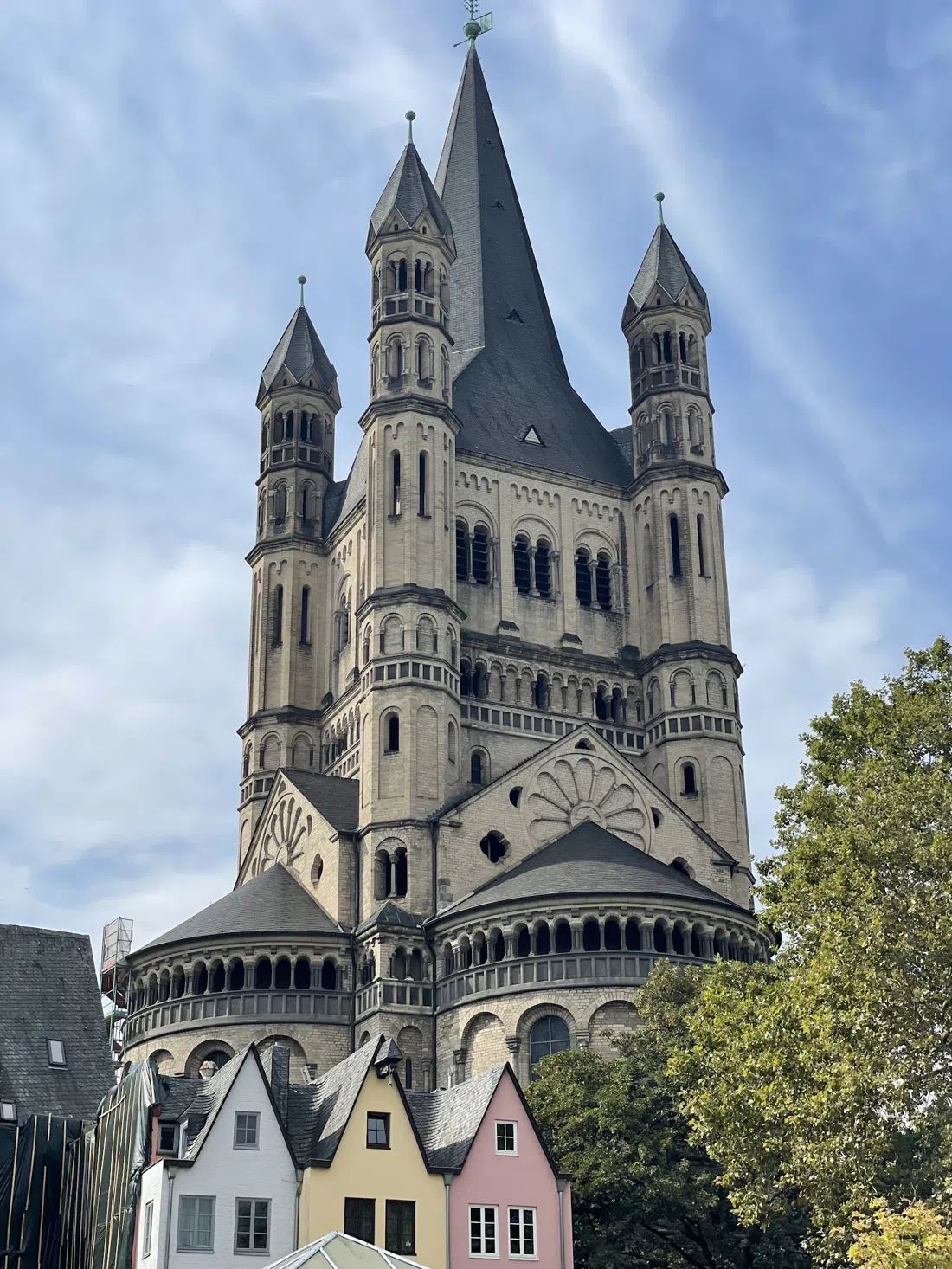
Ubiermonument (Mühlenbach, Altstadt-Süd) is the oldest dated stone building north of the Alps and another museum branch, and it is the one that catches people out. Walk-ins only get in on KölnTag, first Thursday, 14:00 to 17:00. Outside that window the door opens for groups and private parties who have arranged a guide in advance. If you are already paying for a guide, this is the stop that repays it, because it is otherwise a locked door you can stand outside for nothing.
The door price against the guided price
There are two routes into the sites the public timetable keeps shut, and they behave differently.
Museumsdienst Köln is the municipal guide service for the city's museums, not a reseller, and it is the only way to arrange a private or group tour inside the interim museum, the Ubiermonument and the other municipal collections. Booking is by phone on Tuesday, Wednesday and Friday mornings, or by email year-round. Costing is stacked rather than all-in: a €25 group booking fee, then the guide fee, then per-person admission on top. For a family of four that arithmetic rarely works. For eight people who want the Ubiermonument opened on a Saturday, it is the only arithmetic there is.
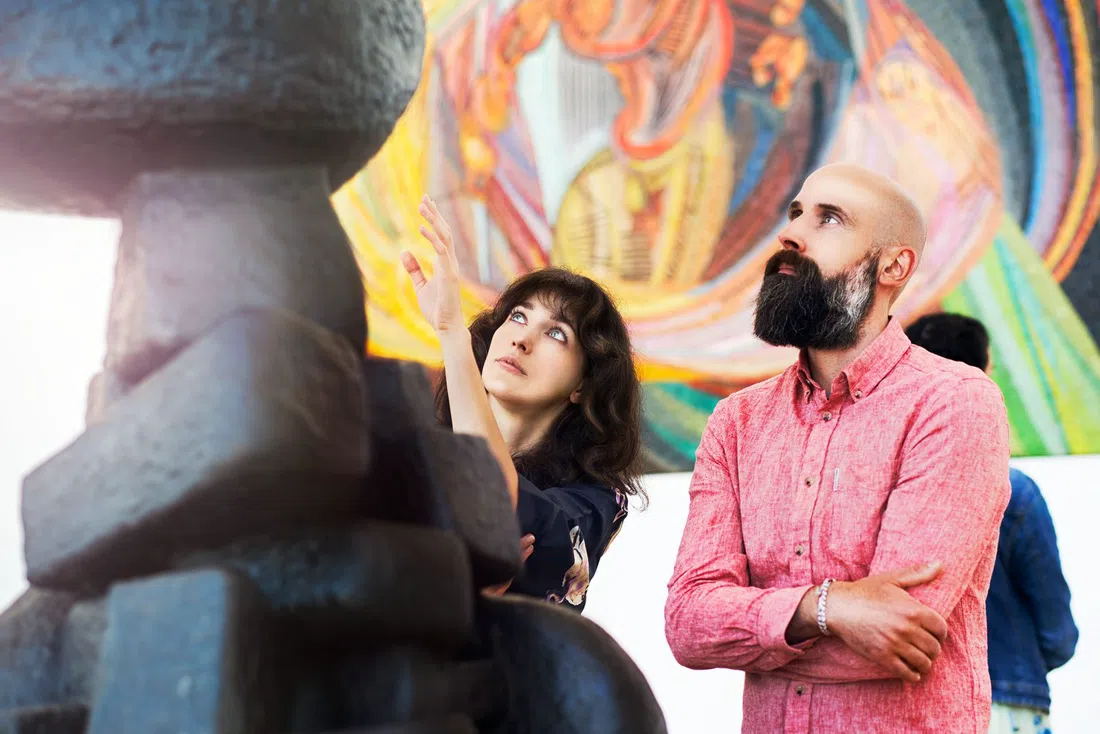
RegioColonia / Köln-Erlebnistouren is a local guide collective running underground and Roman walks, and their pricing is easier to read against. Public walks are €18, or €16 reduced, per head plus site entries, which is where the €1 for the Groß St. Martin dig lands. Private dates, weekdays included, are booked direct: €153 for up to 12 people or €173 for up to 20, for 90 minutes, with a foreign-language guide adding €15 an hour. Scheduled walks have capped numbers and need registration, so they are not a turn-up proposition.
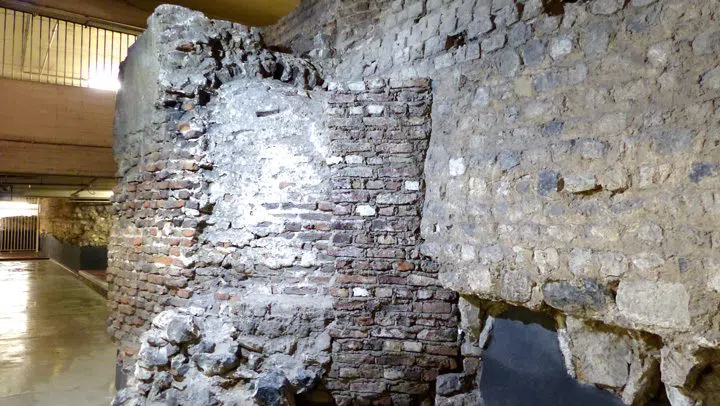
Their booking page is also the most useful piece of honesty online about Roman Cologne in 2026: it states plainly that the Roman sewer and the Praetorium, the governor's palace, are closed. What a Roman route can actually show you now is the remains under the cathedral car park, the baptistery, the dig under Groß St. Martin and the Belgian House. Anyone promising you the sewer is working from last decade's itinerary.
There is a third route, the private sightseeing tours attached to this page as a card. Those run seven days a week and start from 263 USD per person, a different order of spending from a €6 ticket or an €18 public walk, and what you are buying is a guide's whole attention and a route built around you. Across the bookable tours here there are 43 traveller reviews, with the top-rated one at 4.9 out of 5 from 33 reviews. That is a small sample, and small samples are worth reading rather than counting.
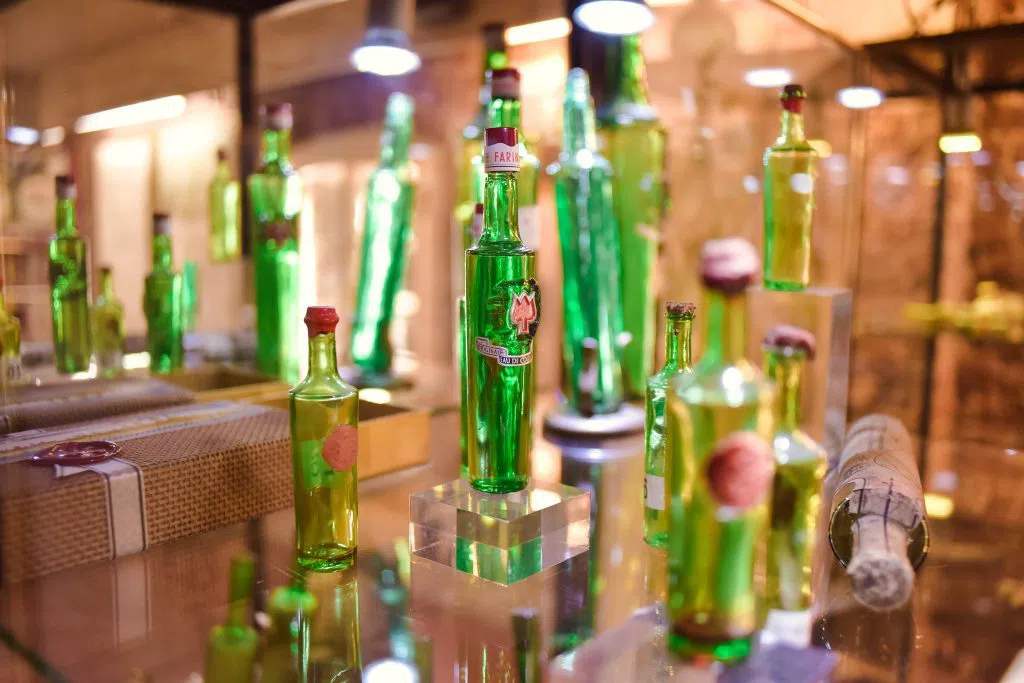
For a clean comparison of what a fixed guided format feels like, the Farina Fragrance Museum (Obenmarspforten, Altstadt-Nord, opposite the Rathaus) does it about as tightly as anyone in the city: entry by timed guided tour only, maximum 20 people, 45 minutes, multiple languages. It is €12 adult and €6 child, €18 and €13 for the costumed historical version, which includes a small fragrance, or €150 for a private tour and €200 for the costumed one, for the whole group. Not suggested for under-sixes. Set that €150 private rate against the museum's €6 door price and you can see what you are paying for: the guide, not the building.
Doors, groups and who fits where
Couples and pairs can do almost all of this without booking anything. The Torbogen and the Römerturm have no door at all, the Belgian House sells tickets at the desk, and Groß St. Martin's lower church is a €1 coin.
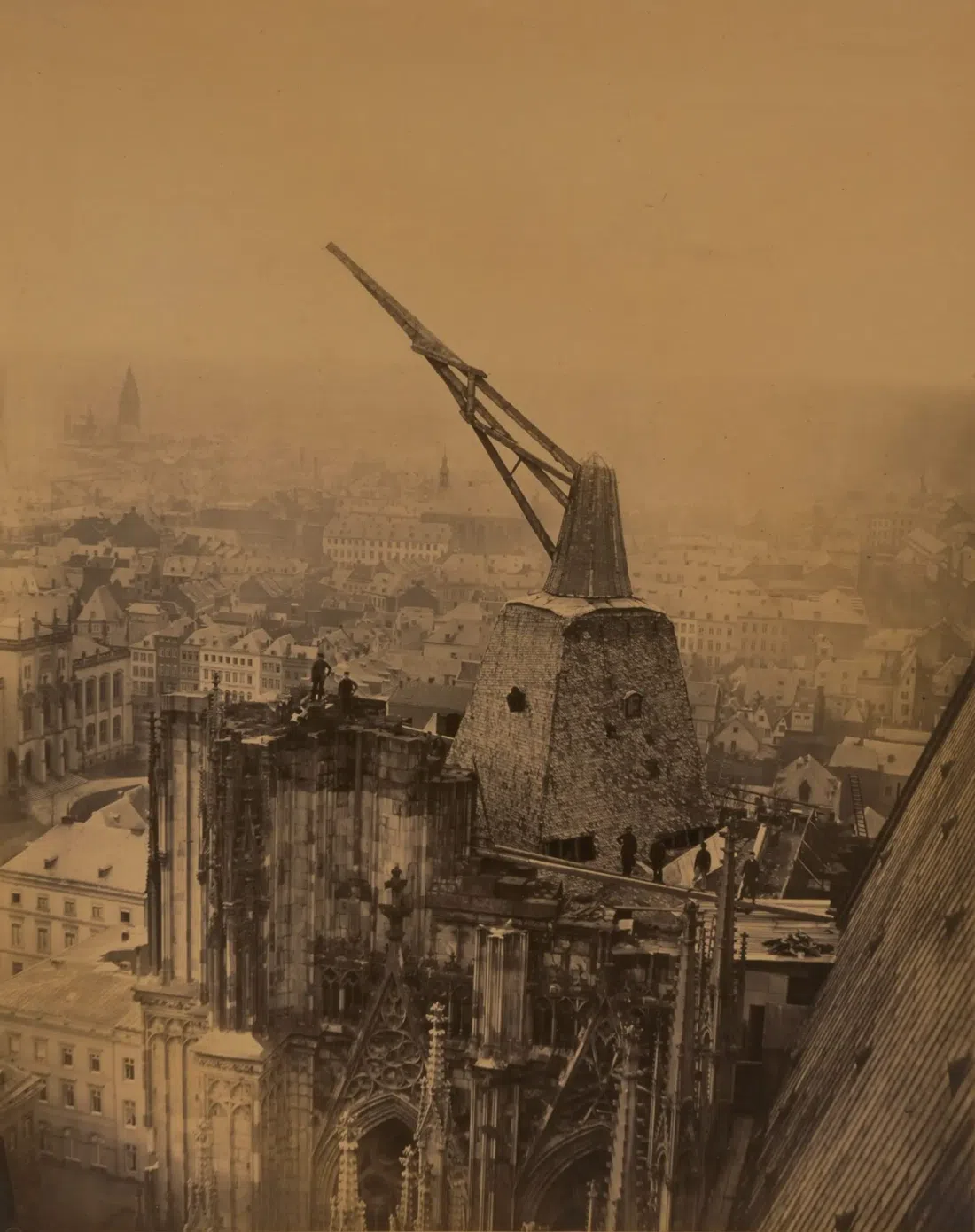
Groups are where the planning starts. The interim museum welcomes groups but they must pre-book through Museumsdienst Köln, and walk-in groups are explicitly warned about queues at busy times: a coach party arriving unannounced at 11:00 on a Saturday will wait. Cologne Cathedral (Roncalliplatz, Altstadt-Nord) has changed hardest and is the single most out-of-date fact in older guides. Since 1 July 2026 sightseeing is ticketed and timed at €12 adult and €6 reduced for students and trainees aged 14 and over, free for under-14s and for severely disabled visitors with a companion. The tower is €8/€4, the treasury €8/€4, and tower plus treasury together €12/€6. Worshippers and anyone praying in the north transept still enter free. Groups should buy online rather than queue, and during services there is silence and no group commentary. A guide who keeps talking through a Mass is a guide to leave behind.
When the weather turns
Rain off the Rhine is the normal condition for half the year, and the block around the square absorbs it.
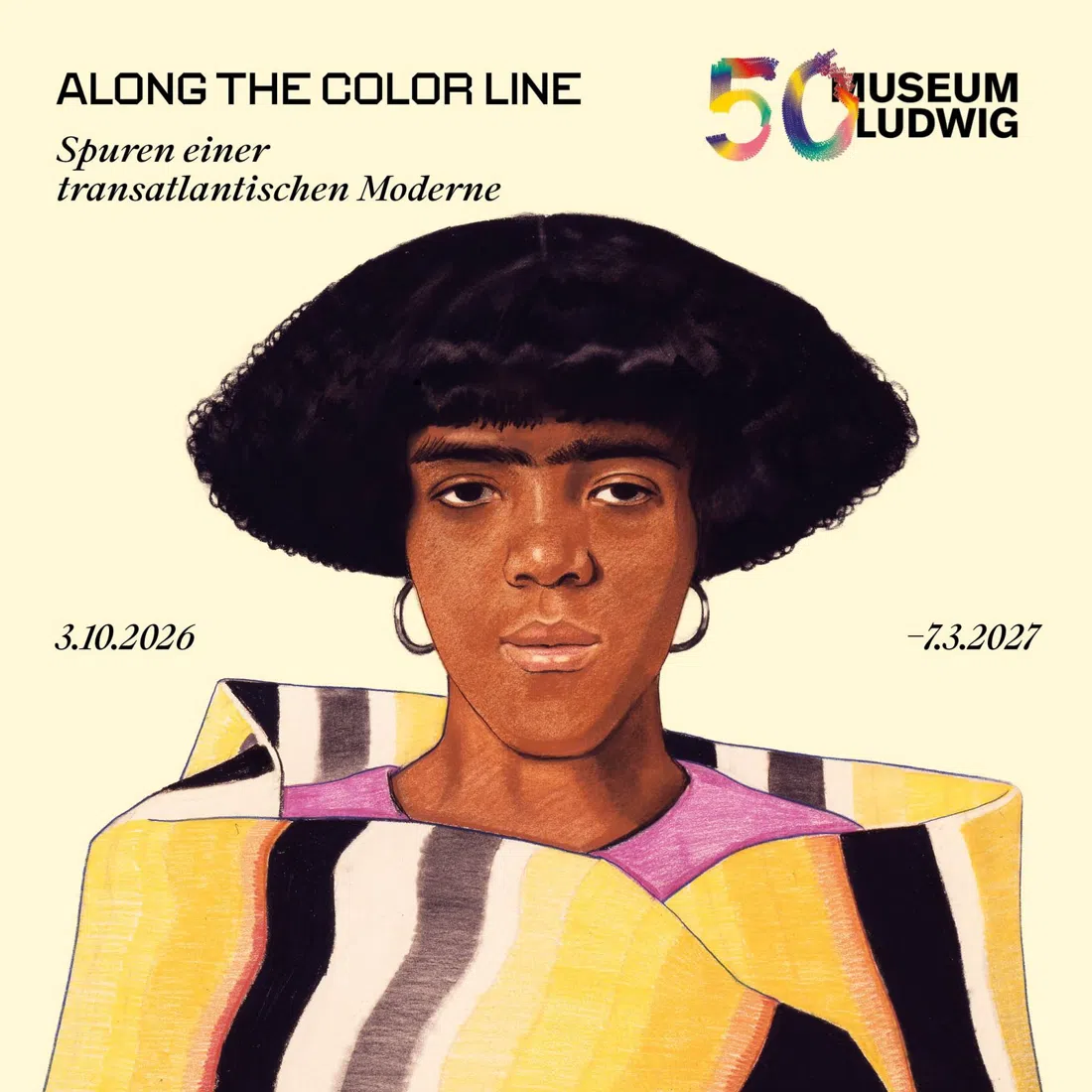
Museum Ludwig (Heinrich-Böll-Platz, Altstadt-Nord) is the obvious pairing, on the same square as the cathedral: modern and contemporary art, Tuesday to Thursday 10:00 to 18:00, Friday to Sunday 10:00 to 20:00, closed Mondays. It is €13.50 adult, €9.50 reduced, free under 18, €10 per person for groups of 20 or more, with tours booked through Museumsdienst Köln. On KölnTag it drops to €7 after 17:00 and is free all day for residents.
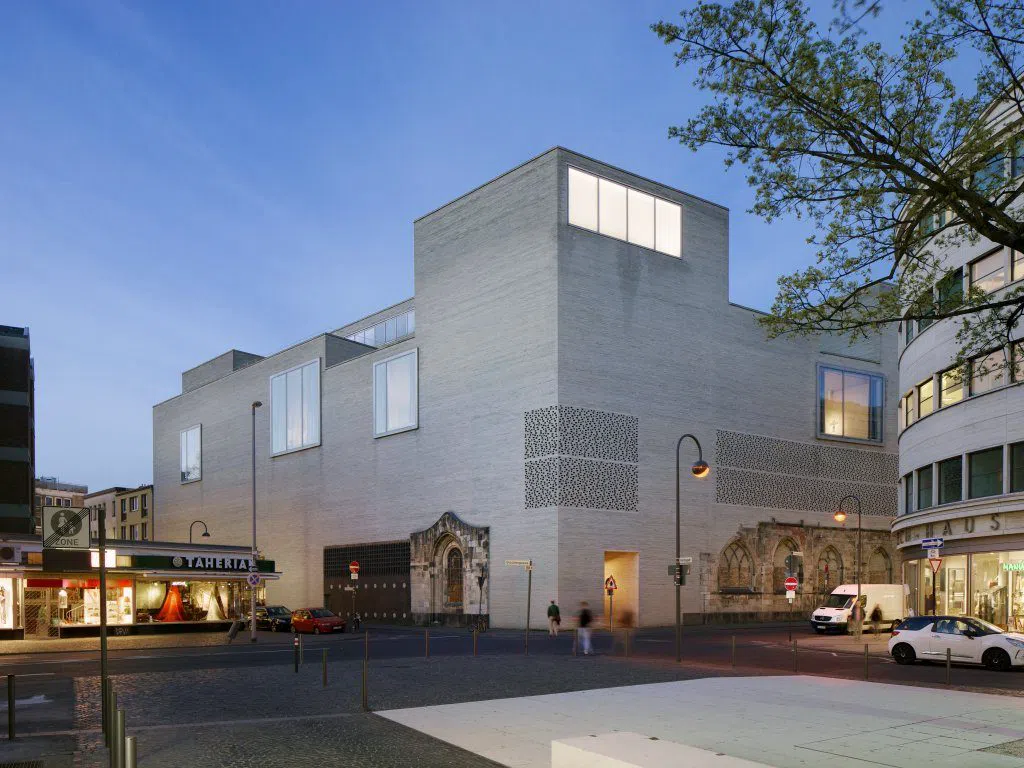
Kolumba (Kolumbastraße, Altstadt-Nord) is the closest thing in the city to the trick the old Roman-Germanic Museum pulled: an art museum built over a ruined church and its excavation, so you walk above the archaeology on raised paths. It is €8 adult, €5 reduced, free under 18, €30 for an annual pass. Two dates matter. It closes Tuesdays, and it shuts entirely for its annual rehang from 15 August to 18 September. Guided tours are by appointment only, before noon or after 17:00, which is awkward for casual visitors and ideal for a private party.
Kölnisches Stadtmuseum (Minoritenstraße 13, Altstadt-Nord) is the natural second stop after the Belgian House, since both sit in the Minoriten and Neumarkt block. City history, €5 adult and €3 reduced, free for under-sevens and Cologne schoolchildren, open Tuesday to Sunday 10:00 to 17:00 and late to 22:00 on the first Thursday. Groups book tours through Museumsdienst Köln.
If the sky clears instead, KölnTriangle Panorama (Ottoplatz, Deutz, across the Hohenzollern bridge) is €5 adult, €4 for students and groups of five or more, free under 12 and for disabled visitors with a companion. It is open 11:00 to 20:00 daily from October to April and later in summer, and it closes in storms and on Carnival Thursday, Rose Monday, Cologne Lights and New Year's Eve. It is the one place you see the cathedral whole rather than in fragments from underneath.
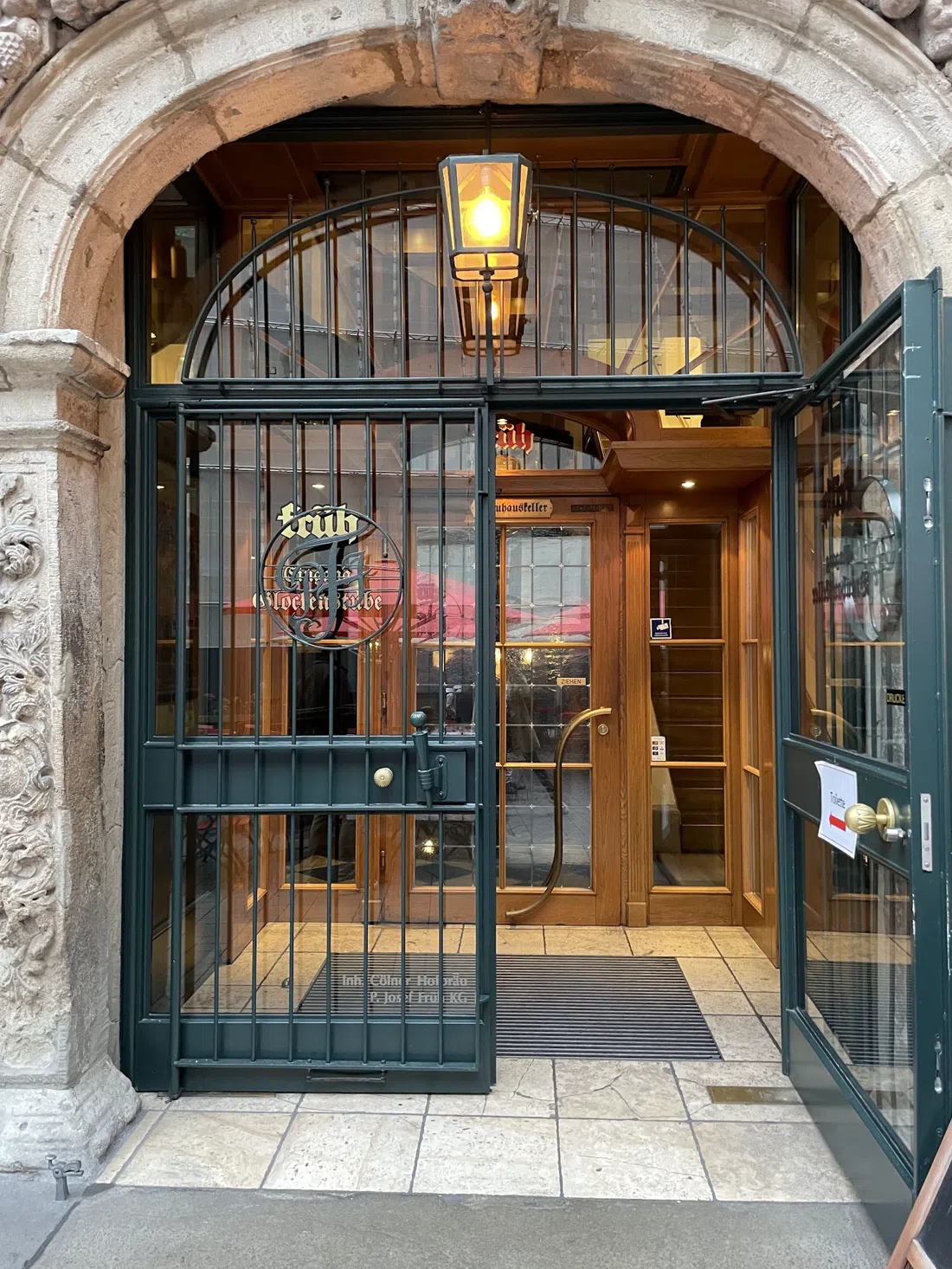
For a meeting point, Café Reichard (Unter Fettenhennen, Altstadt-Nord) has been open since 1905, runs 08:30 to 20:00 daily and has 400 seats inside and 400 out, so a large party is absorbed without notice. There is no reservation culture, so you turn up. Coffee and cake runs roughly €8 to €14 a head. For the end of a walk, Brauhaus FRÜH am Dom (Am Hof, Altstadt-Nord) is two minutes from Roncalliplatz with 1,500 seats and long experience of coach parties; reserve for six or more, particularly Friday and Saturday evenings. Kölsch is about €2.50 a glass, mains roughly €14 to €22, and it is quietest from opening until about 12:30 on weekdays. The brewery itself is out in Ehrenfeld; this is the brewpub.
Best time to go
Wednesday to Friday mornings are the clean window. The Belgian House opens at 10:00 and the first hour is the emptiest, which matters because the interim rooms are smaller than the old galleries and fill faster. Avoid Tuesdays outright: the museum, Museum Ludwig and Kolumba are all closed, and you would be left with the open-air stops.
The first Thursday of the month is the strongest single day in the calendar if the timings suit you. KölnTag brings free entry for Cologne residents and a 22:00 close at the museum, a 22:00 late night at the Stadtmuseum, €7 after 17:00 at Museum Ludwig, and the only walk-in window at the Ubiermonument, 14:00 to 17:00. Visitors still pay at the museum, but the building is livelier and the Ubiermonument door is genuinely open. It is also busier, so go at 14:00 for the monument and leave the museum until after 18:00.
Weekends bring the crowds the museum's own group guidance warns about, and Groß St. Martin's Friday and Saturday hours break for lunch between 12:30 and 13:00, so arrive at 12:20 and you will be turned round. Winter afternoons are short but well suited to this itinerary, since four of the stops are indoors and the two street monuments are lit and visible after dark. If you want the private-tour route, it operates seven days a week, so the day of the week constrains the sites far more than it constrains the guide.
Is it worth it
As a museum visit on its own: yes at €6, no at any price you would pay to travel across the city specially. The interim is a competent, compact display of a collection that deserves its permanent building back, and it does not pretend otherwise.
As a half-day: clearly yes, if you treat the Belgian House as one of five stops rather than the destination. The Torbogen, the Römerturm, the dig under Groß St. Martin and the museum together cost €7 in total, take about three hours at a walking pace, and give you the shape of the Roman colony in a way the old single building never quite did.
It suits anyone who likes reading a city's layers off its streets, and families with school-age children who can handle a walk between short stops. It suits groups well if someone books ahead through the municipal service. It does not suit anyone who arrives wanting the famous Roncalliplatz interior, which is simply not available, and no guide can open it. If the Ubiermonument or a properly-paced Roman narrative matters to you, a guide is the difference between looking at stones and understanding them; if not, €6 and a map does the job. For where to base yourself, start with the Cologne hotel search, and the wider Cologne guide covers the districts beyond the Altstadt.
Practical notes
Getting there. Cäcilienstraße 46 is a five-minute walk from Neumarkt, which every U-Bahn line through the centre reaches, and about twelve minutes on foot from the cathedral down Hohe Straße and along Cäcilienstraße. The whole Roman circuit (museum, Römerturm, Torbogen, Groß St. Martin) is walkable in under 25 minutes of actual walking. The Ubiermonument adds ten minutes south. KölnTriangle means crossing the Hohenzollern bridge or one stop to Bahnhof Deutz.
Cash. Carry coins. The €1 for the lower church at Groß St. Martin is exactly the kind of charge that is awkward without them, and smaller municipal desks are not all card-first.
Timing. Museum 60 to 90 minutes. Groß St. Martin 20 to 30. Römerturm and Torbogen 10 each. Cathedral sightseeing 30 to 45, longer with the tower. Farina is a fixed 45 minutes. Plan a morning rather than a full day.
Budget. Two adults doing museum, dig, Torbogen and Römerturm: €14 plus coffee. Add cathedral sightseeing and it is €38. A public Roman walk is €18, or €16 reduced, a head plus entries; a private local guide is €153 for up to 12 people for 90 minutes, and the private sightseeing tours attached here start from 263 USD per person. Lunch at the brewpub is €20 to €30 a head with a couple of Kölsch. Book the group route in advance, always: turning up at the door will not get a group in.