
Aachener Straße carries the 1 and 7 trams west out of the Cologne ring, and at the Melaten stop the traffic noise drops away within twenty paces. Behind the gate, lime and chestnut close over a paved avenue lined with marble angels, bronze doors and a hooded figure holding a scythe that a fair number of Cologne residents can describe from memory. Melaten is a working cemetery with roughly 55,540 graves, and also a hundred years of civic sculpture you can walk through without buying a ticket.
Six gates, one tram stop and a short list of rules
Millionenallee (Mittelallee), Melaten-Friedhof, in Lindenthal immediately at the Melaten tram stop, is the paved central avenue that runs the length of the cemetery, and it is why the site reads as a sculpture park rather than a graveyard. The frontage along it was bought in the second half of the nineteenth century by the families who ran the city's banks, chocolate works, rubber factories and perfume houses, and they commissioned their plots the way they commissioned their villas: named sculptors, imported marble, bronze portals with handles you could actually pull. Cologne gave the avenue a nickname that has outlasted most of the firms, the Millionaires' Avenue.
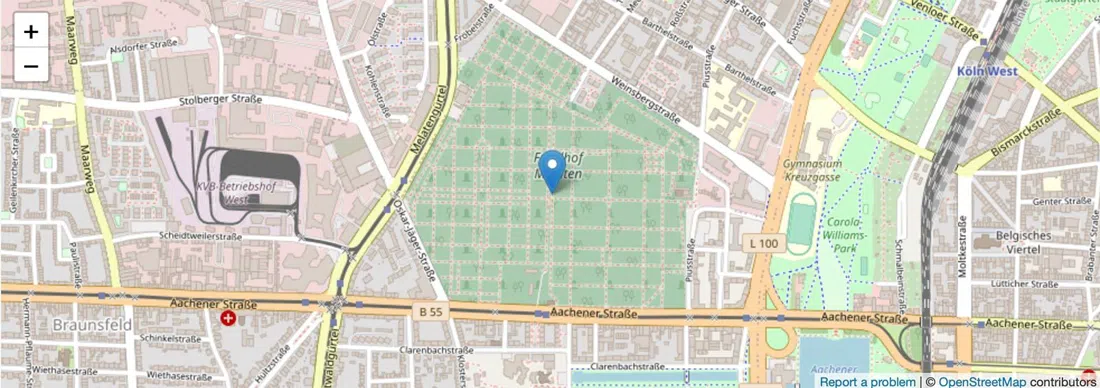
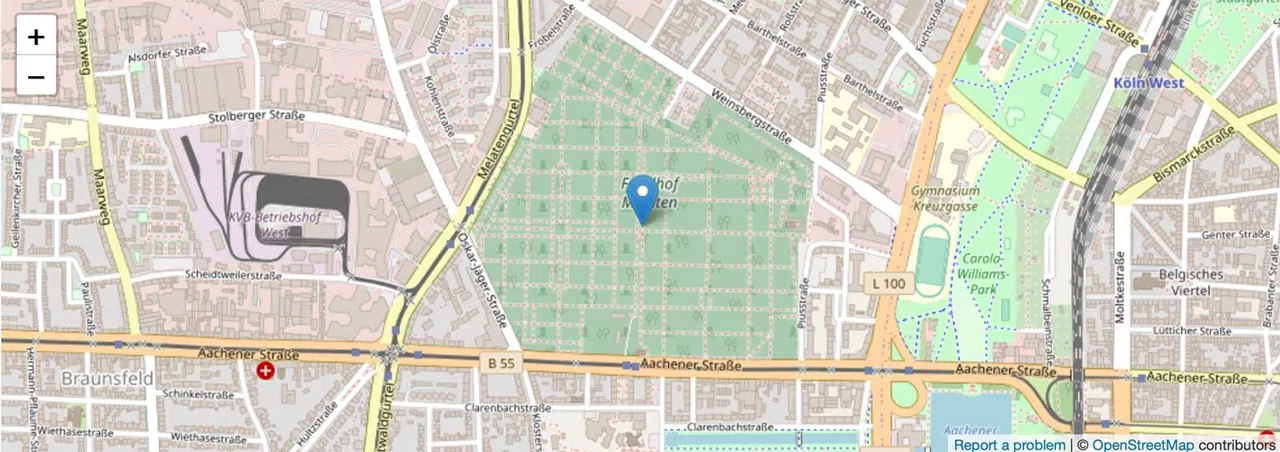
Access is free and unticketed through six gates. The historic main entrance is at Aachener Straße 204, with further gates on Oskar-Jäger-Straße, Piusstraße and the Melatengürtel. Trams 1 and 7 stop at Melaten directly outside the main gate, so this is one of the few long walks in Cologne you can reach without planning anything. Gate closing times shift with the season and are posted at each entrance; in the short days of winter the light goes before you have finished the avenue, so read the sign on the way in rather than on the way out.
Melaten buries people every week, and that shapes what you can do there. Dogs are banned outright, guide dogs excepted; cars are not allowed in; and the cemetery statute does not permit running, so the pleasant picture of locals jogging past mausoleums is not something to plan a morning around. The administration asks organised groups to walk after 15:00 so that funerals are not disturbed, and to register guided visits in advance. Couples and solo walkers can come whenever the gates are open and will bother nobody. Ten people with a raised voice at 11:00 will, and the office will say so. If you are building a wider few days, the Cologne guide covers the rest of the city on foot.
The grave that gave the word cologne an address
Grabstätte Familie Farina, on the main path a few steps inside the historic 1810 gate in Lindenthal, is the first stop of any group walk and the oldest grave on the site. Johann Maria Farina, who died in 1765 or 1766, invented the Aqua mirabilis he named Eau de Cologne; when the cemetery opened he was reinterred here in a lead coffin. The word printed in every duty-free hall on the planet has a physical address, and this is it.
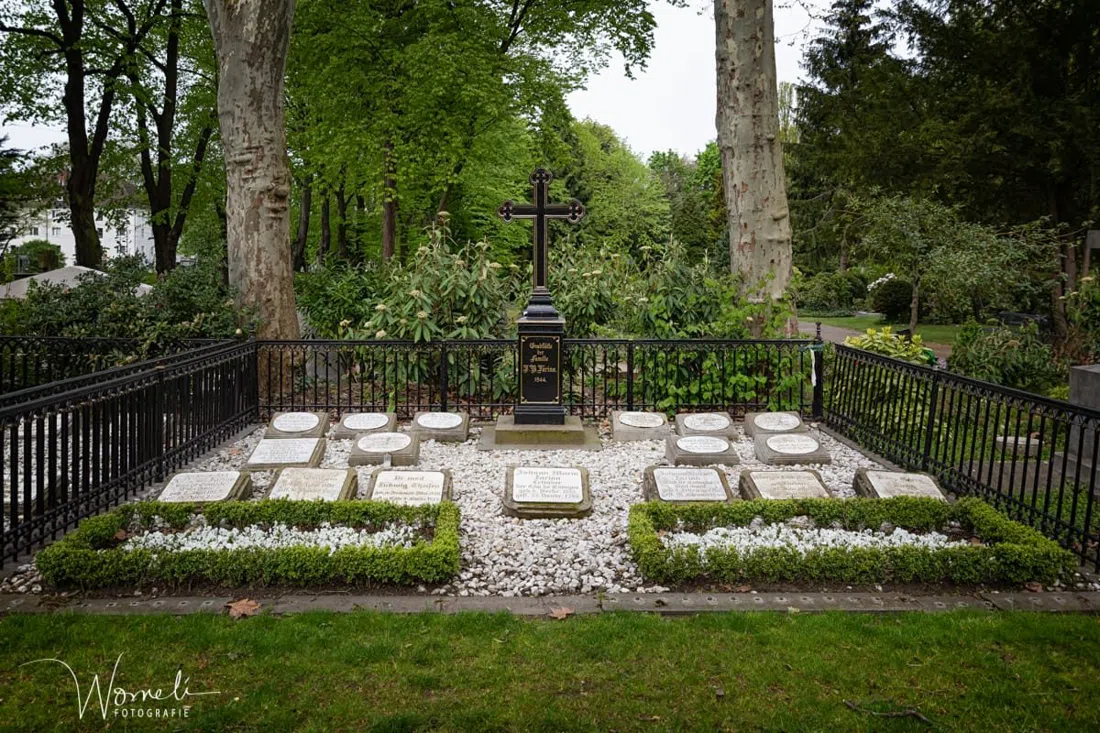
The stone is not spectacular, and that is more or less the point. It is early, plain and pre-industrial, and everything else you are about to look at was built by people who arrived later with far more money. Stand here for a minute and look down the avenue before you start walking. The sequence from this modest slab to the neo-Renaissance mausoleums a hundred metres on is the city's nineteenth century compressed into a five-minute stroll.
Farina is not 4711, though the internet repeats that it is. 4711 is the separate Mülhens house, a different business and a different family. A guide who merges the two is the wrong guide.
Two monuments where everyone stops
Der Sensenmann, the grave of Johann (Jean) Müllemeister, stands on the western main path between Flur 82 and Flur 76B, a straight walk from the main gate, and it is the figure the whole cemetery is known by. August Schmiemann carved it for Müllemeister (1851-1902), a brick-kiln owner and merchant, and the scythe-bearer has been photographed more than anything else here by a wide margin. The plot is now under the patronage of the stonemason family Steinnus, and low down on the stone there is a small carved frog, placed for a son the family called Fröschlein. Nobody points it out.
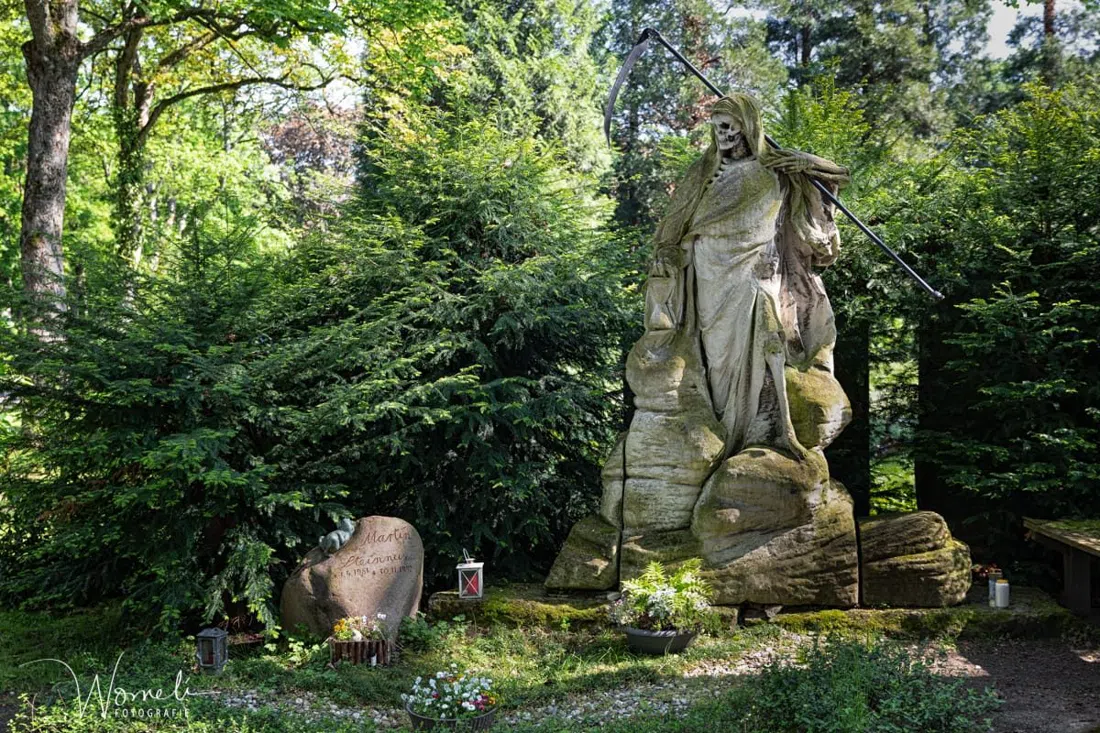
Groups gather at this spot constantly, and the etiquette matters. Stay on the path. The graves either side belong to families who still come, and a dozen people backing up for a better angle end up standing on someone's mother. Morning light falls flat on the stone; late afternoon gives you the modelling.
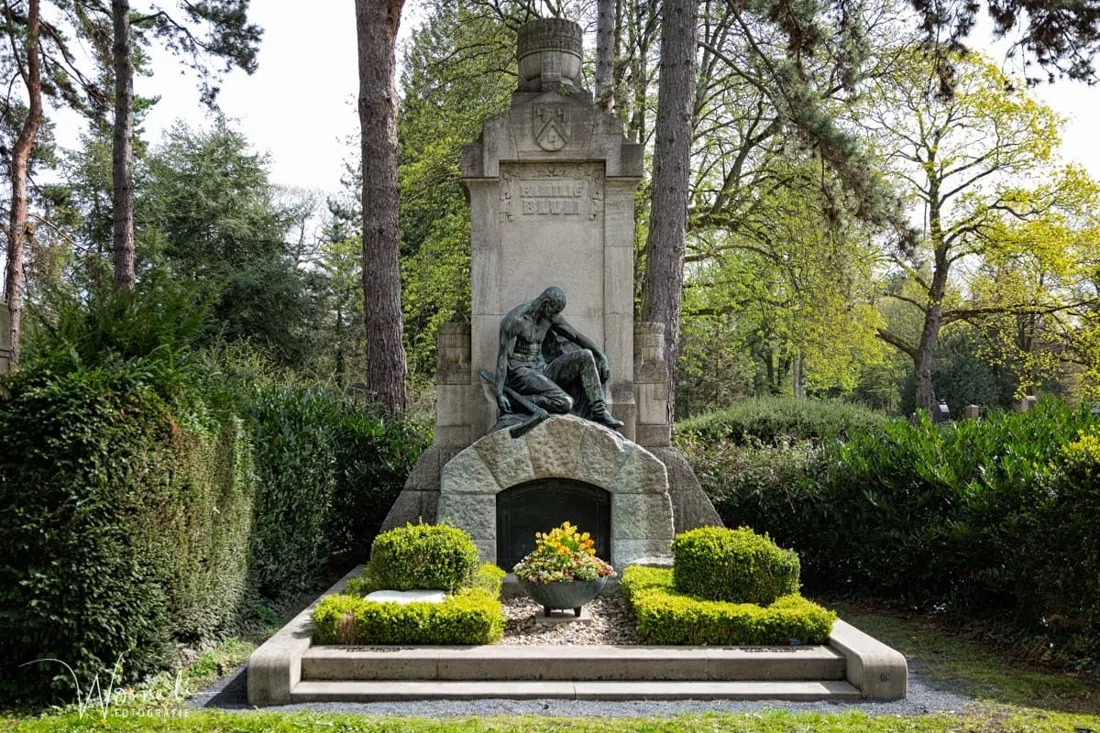
Grabmal Alfred Sauer, in Flur 76a a few minutes further along the same side of the cemetery, is the resting miner, cut in 1908 by Wilhelm Faßbinder for Alfred Sauer (1856-1907), a Cologne lawyer who chaired the Justus I colliery. The pitman sits at rest rather than heroic, with lamps worked into the stone that are the part people crouch to photograph. It is industrial-heritage sculpture sitting in what is functionally a city-centre park, and it pairs usefully with the Sensenmann: within a few hundred metres you have death as allegory and work as memorial, commissioned by men in the same trade directories.
A puppet founder and the sculptor who carved half the avenue
Hänneschen memorial for Johann Christoph Winters, open-air with unrestricted access, comes mid-route. Winters (1772-1868) was a tailor who founded Cologne's Hänneschen puppet theatre in 1802, an institution the city has never stopped loving. He died poor and was buried in a pauper's grave. In 2002, for the theatre's 200th anniversary, the city corrected that with a sculpture by Stefan Kaiser. A pauper's grave turned into public art two centuries late holds a group longer than any millionaire's portico, and it is a natural place to stand and listen.
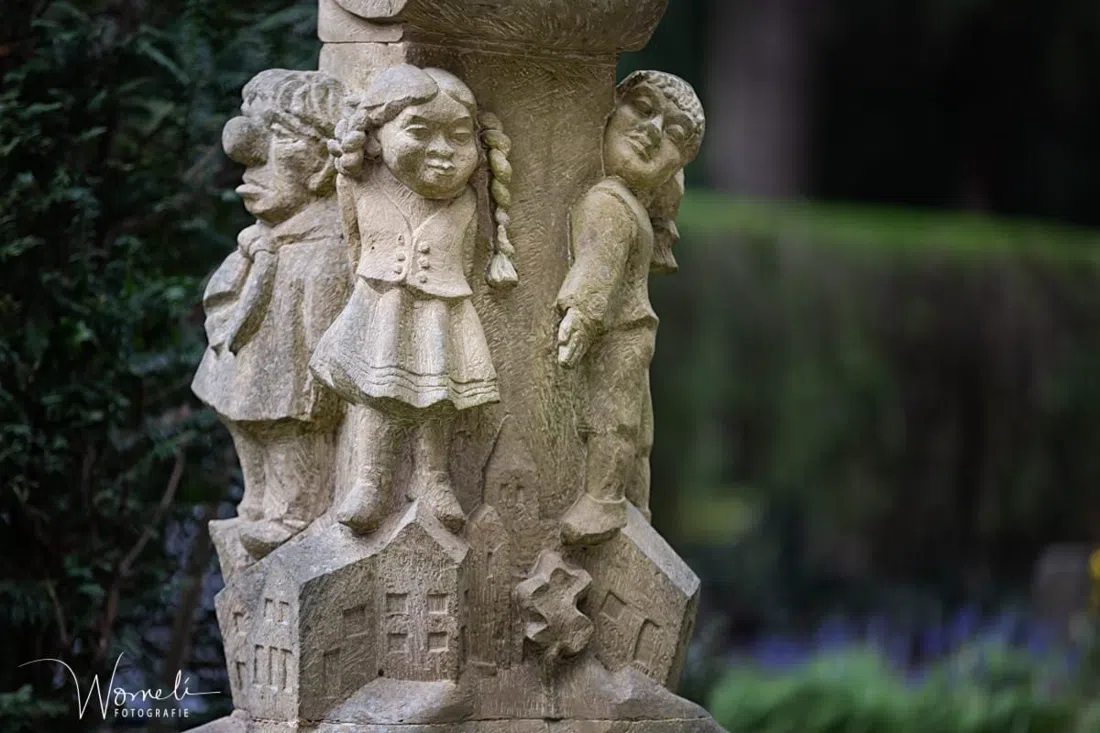
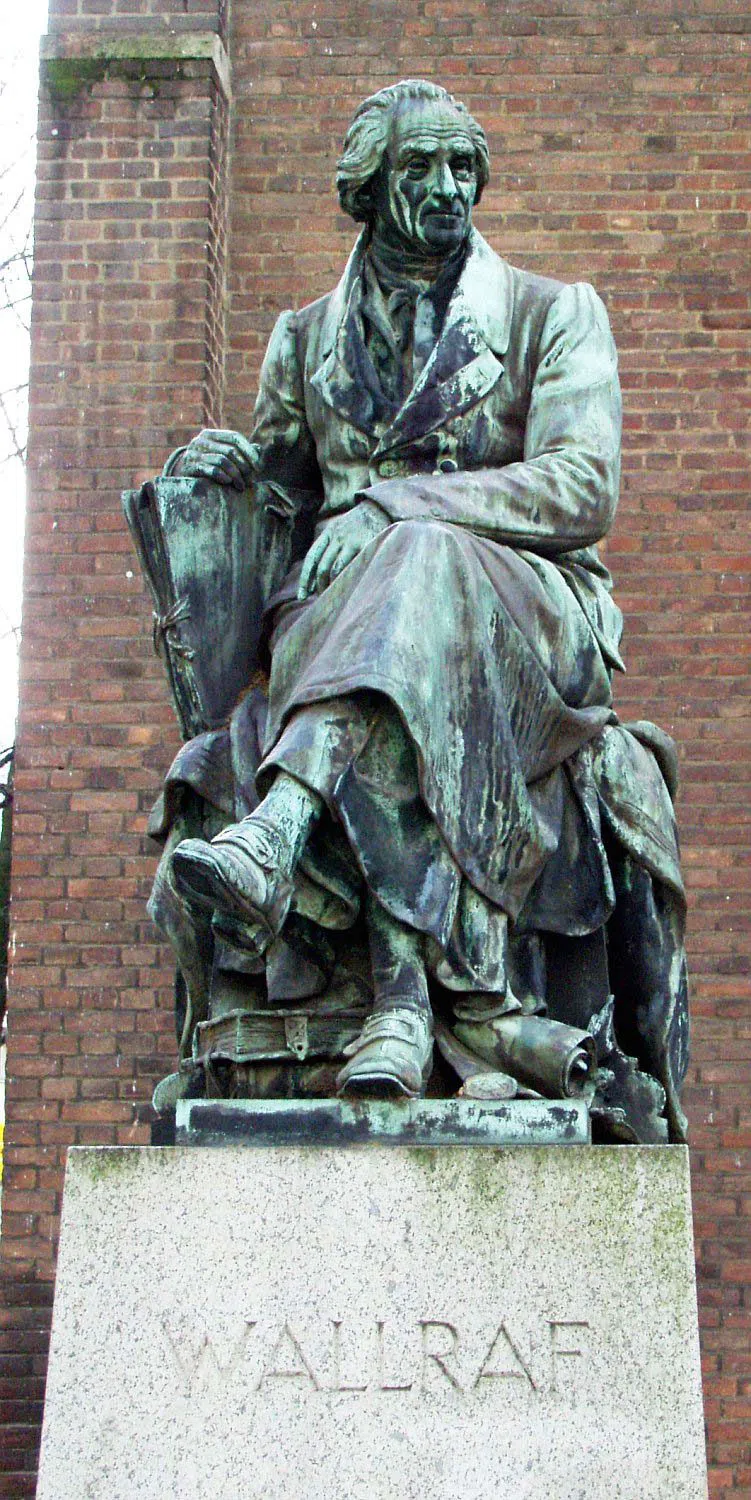
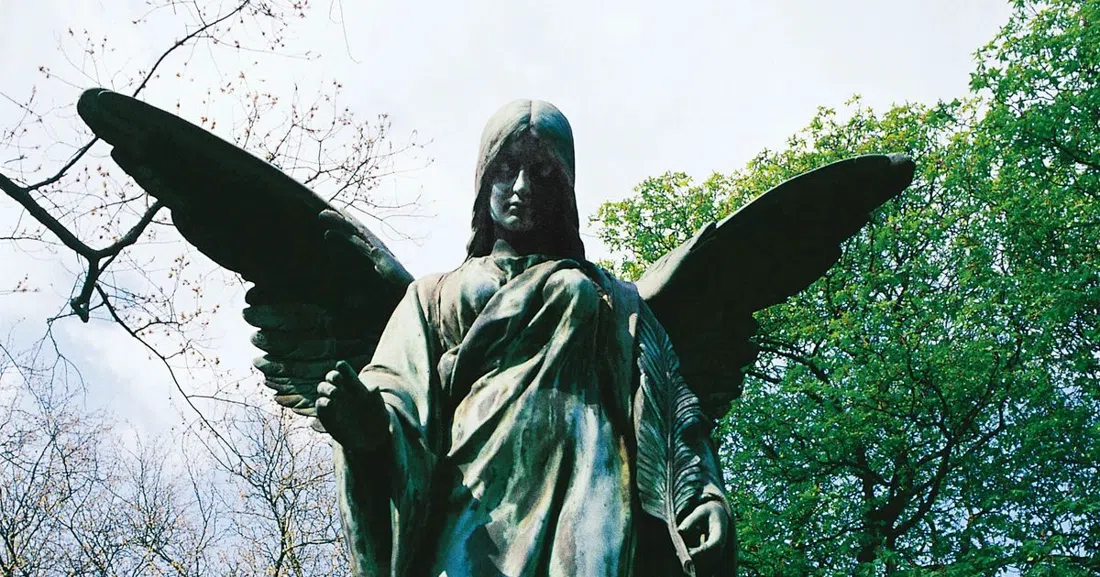
Grabmal Wilhelm Albermann, at Lit. L set against the boundary wall, is where the walk should finish. Albermann (1835-1913) carved something like twenty of the monuments you have already passed: the Deichmann bronze portal, the Broelsch mourning angels, the Trimborn, Mevissen and Pflaume graves. His own children reportedly modelled for his angels, which changes how the faces read once you know it. Ending at the sculptor's own stone leaves you having looked at the work rather than the surnames. The lawn in front is narrow, so groups need to keep to the path here too.
Two buildings worth going inside
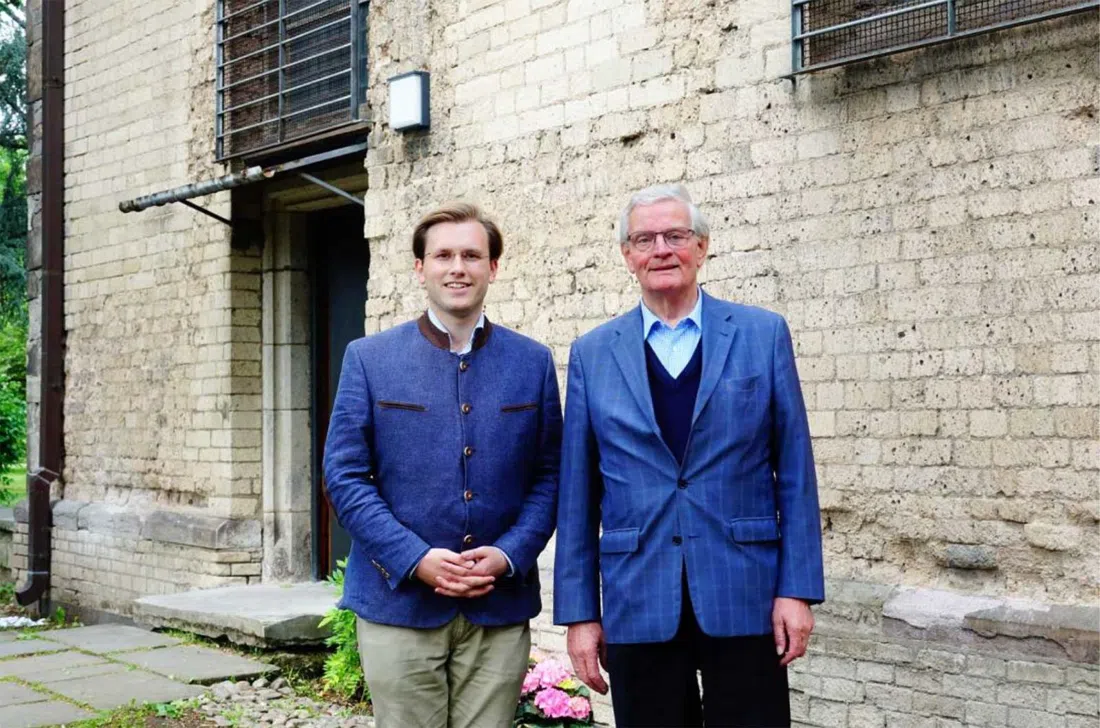
Kapelle St. Maria Magdalena und Lazarus, inside the walls near the historic core, was consecrated in 1245 by Archbishop Konrad von Hochstaden, which makes it older than the Gothic cathedral down in the centre. It is the only surviving building of the leprosarium that gave the place its name, from malade by way of Malaten, the lepers' house, and it has recently been restored in work involving the Cologne stucco workers' guild. Locals will tell you it is the only consecrated Catholic church in Cologne standing inside a cemetery, and nobody here argues with that.
It is consecrated and in use, not a museum. Masses are said, and there are occasional readings and concerts with a Christian connection, but no secular events. Visitors and small groups should look in around service times only, and quietly.
Kolumbarium in der Alten Trauerhalle, the listed 1881 mourning hall on the cemetery grounds, is the newest thing at Melaten. The hall was built in 1881, extended in 1916, and reopened in June 2024 by Mayor Henriette Reker after a full restoration, converted to roughly 1,000 urn chambers. The interior is open to visitors during cemetery hours. Small groups are fine; quiet voices are not optional, because people come here to visit relatives.
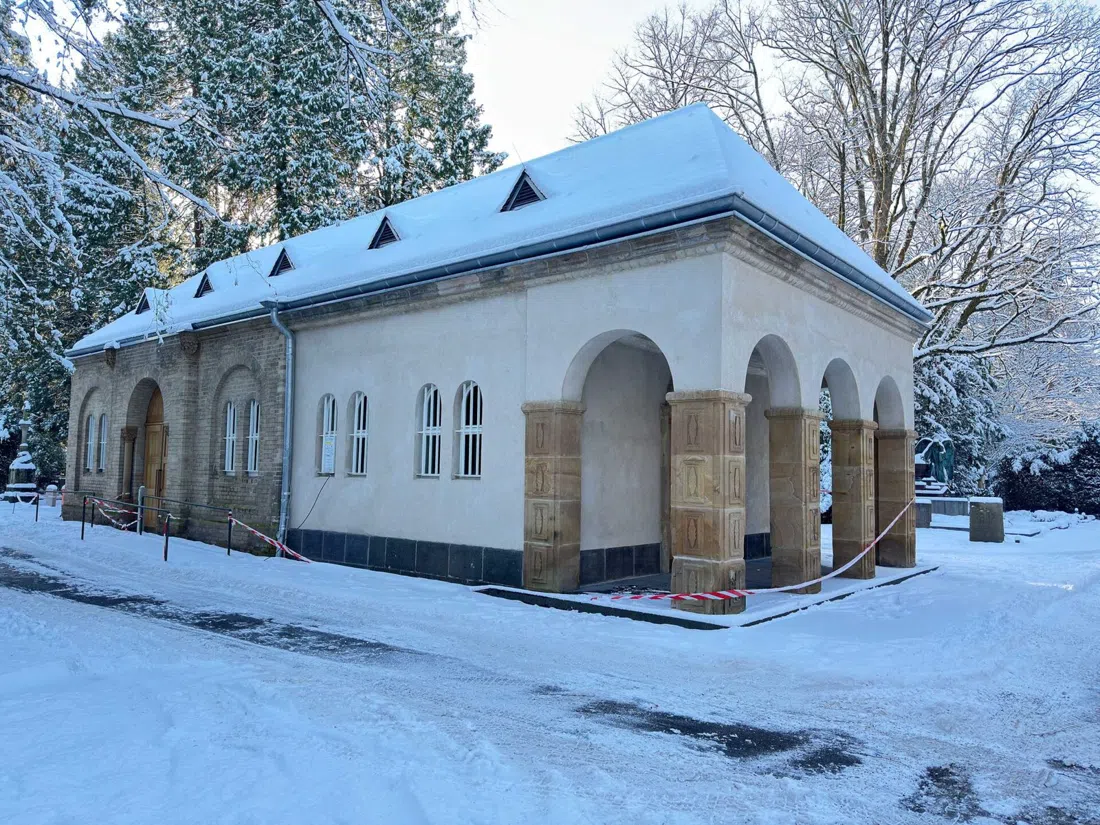
Do not confuse it with the two halls that are shut. The separate 1955 Neue Trauerhalle has been closed since 2023 pending a full renovation, with funerals running from a temporary hall, and the Piusstraße chapel is still under scaffolding with no reopening date announced. A cemetery plan that sends you to either will put you in front of a fence.
When a guide earns the money
The city tourist board runs a 120-minute walk under the title KölnTourismus guided tour 'Friedhof Melaten — vom Leprosenhaus zur Millionenallee', starting at the cemetery in Lindenthal, and it earns its fee for anyone who wants the leper-house-to-millionaires arc rather than a sequence of gravestones. Book it directly on +49 221 346 43 0 or at [email protected]. It is priced per group: €220 in German, €245 in a foreign language including English, plus a €25 booking fee per group.
Run the arithmetic. Ten people in English works out at €27 each, which is fair for two hours with someone who knows which sculptor did what. Two people would pay €135 each, which is not, and a couple is better off walking the route in this article at their own pace. The tour goes ahead in any weather and is aimed at adults. Wet marble and leaf litter mean proper shoes. Cemetery rules push guided groups to after 15:00, so from roughly November to February a booked tour finishes in the dark; April to September is the sensible window for an afternoon start.
Coffee at the gate and the weekend problem
Café-Restaurant Herrmann an Melaten, at the main gate on Aachener Straße in Lindenthal, is the only sensible warm stop without walking back toward the ring. It seats up to 80, is barrier-free, has plenty of parking, and takes reservations, which larger parties should make rather than hope. Prices run from coffee and cake up to full catering menus, so anywhere from cheap to a proper sit-down bill.

Two caveats are worth knowing in advance. It opens Monday to Friday 10:00 to 17:00 and is closed at weekends except for pre-arranged events, so walk Melaten in the morning and land here afterwards rather than the other way round. And its core trade is funeral receptions. The mood is subdued and the room is often full of people having a hard day, so keep the loud debrief about the sculpture for later. Weekend walkers should plan on nothing at the gate and head back down Aachener Straße toward the ring, where cafés keep normal weekend hours.
Planning the walk
Trams 1 and 7 put you at the gate from the centre in around ten minutes, and the stop is called Melaten, so there is nothing to work out. Buy a standard KVB single or a day ticket at the machine or in the app before boarding; inspectors do check, and a printed ticket needs validating. Driving is pointless, since cars cannot enter the cemetery.
Allow 90 minutes for a relaxed loop taking in the Farina grave, the Sensenmann, the miner, the Winters memorial, the chapel, the columbarium and Albermann's own stone. Two hours if you stop and read inscriptions, which you will. The walk is flat and largely paved, with gravel side paths that get soft after rain. Go in the morning on a weekday if you want the café afterwards, late afternoon if you want the light on the stone; a booked group has to start after 15:00 regardless.
Budget is close to nothing. Entry is free at all six gates, the chapel and the columbarium are free, and the only costs are your tram fare and whatever you spend at the gate. A guided group tour is €220 to €245 plus the €25 booking fee, which only makes sense from about six people up. Carry a small amount of cash even though most places now take cards, and bring water in summer, because there is nothing to buy inside the walls. If you want to be within a tram ride of the gate, the Cologne hotel search covers the streets either side of Aachener Straße as well as the centre. One point of manners rather than logistics: this is somebody's cemetery before it is your walk, so keep your voice down, put the phone away when a funeral party passes, and leave the plots to the families who tend them.