The Cologne issue
Roman Cologne Beneath the Modern City — The Underground Ruins, the Mosaics, and the 2,000-Year-Old Streets Still Traceable Today
A room-by-room, door-policy-honest route through the Roman fragments still standing, sunk, and load-bearing under Cologne's modern streets in 2026.

By Derya KayaFrom the Türkischer Markt to Michelin, and every döner between
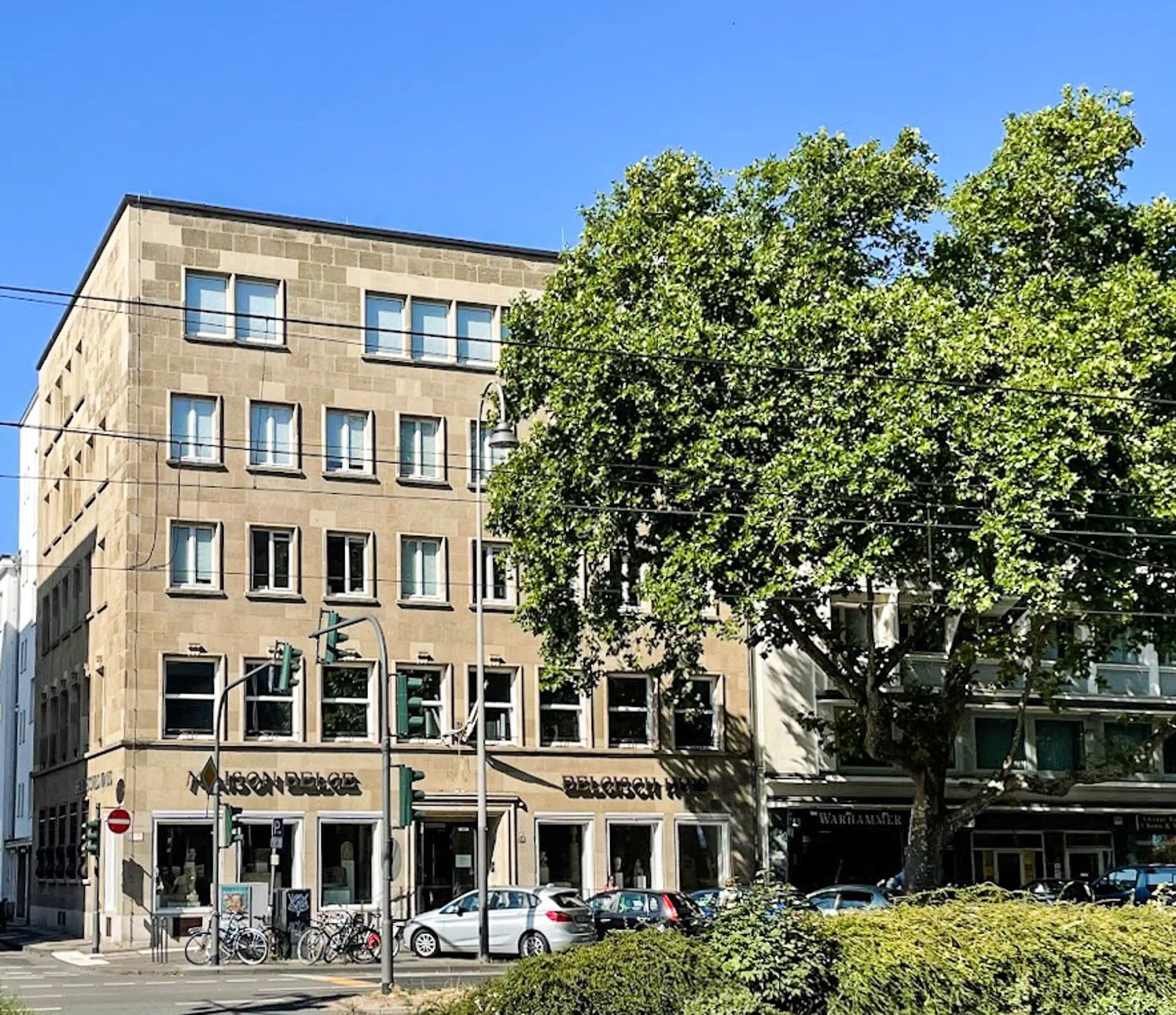
Cologne wears its two thousand years the way a good coat wears its lining — mostly hidden, occasionally flashing through at the seams. Walk from the Cathedral to the river and you cross the main street of a Roman colony without a single sign to tell you so; walk down a car-park ramp on a Tuesday afternoon and you're suddenly standing beside a wall the legions built. This is a guide to finding those seams, in the order that actually makes sense for a visitor with limited days and a curiosity about what's underfoot.
Where Roman Cologne Begins: The Museum and the Mosaic
Start with the two sites that sit almost on top of each other on Roncalliplatz, because between them they give you the whole shape of the story before you go looking for its fragments elsewhere in the city.
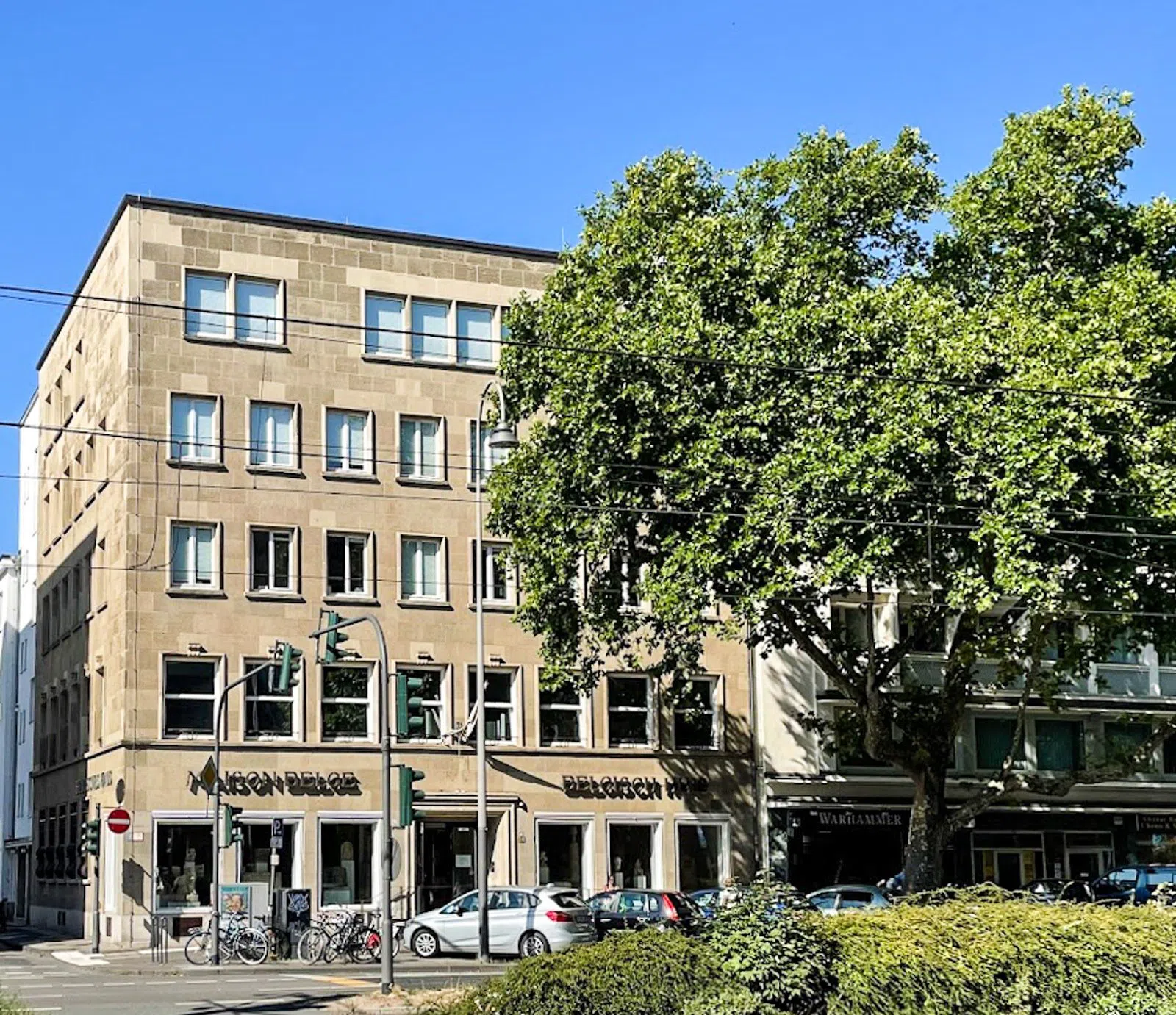
The Römisch-Germanisches Museum (temporary home at Belgisches Haus, a short walk from the Cathedral) is Cologne's single best introduction to its Roman finds — glassware, jewellery, funerary sculpture, the kind of everyday material culture that makes a colony feel like a place people actually lived, not just a name in a history book. Its usual home on Roncalliplatz is mid-renovation until later in 2026, so the core collection has moved to Belgisches Haus for now; don't let the temporary address put you off, the objects are the same ones you'd see in the permanent building. It takes pre-booked groups and school classes without fuss, and casual group visits get standard entry with no size cap enforced — this is not a site that will turn a coach party away at the door, and it works just as well for a solo traveller who wants forty minutes of context before heading out to the ruins themselves. Admission runs roughly €6-8 for adults, with concessions available, which makes it the cheapest serious history lesson in the city.
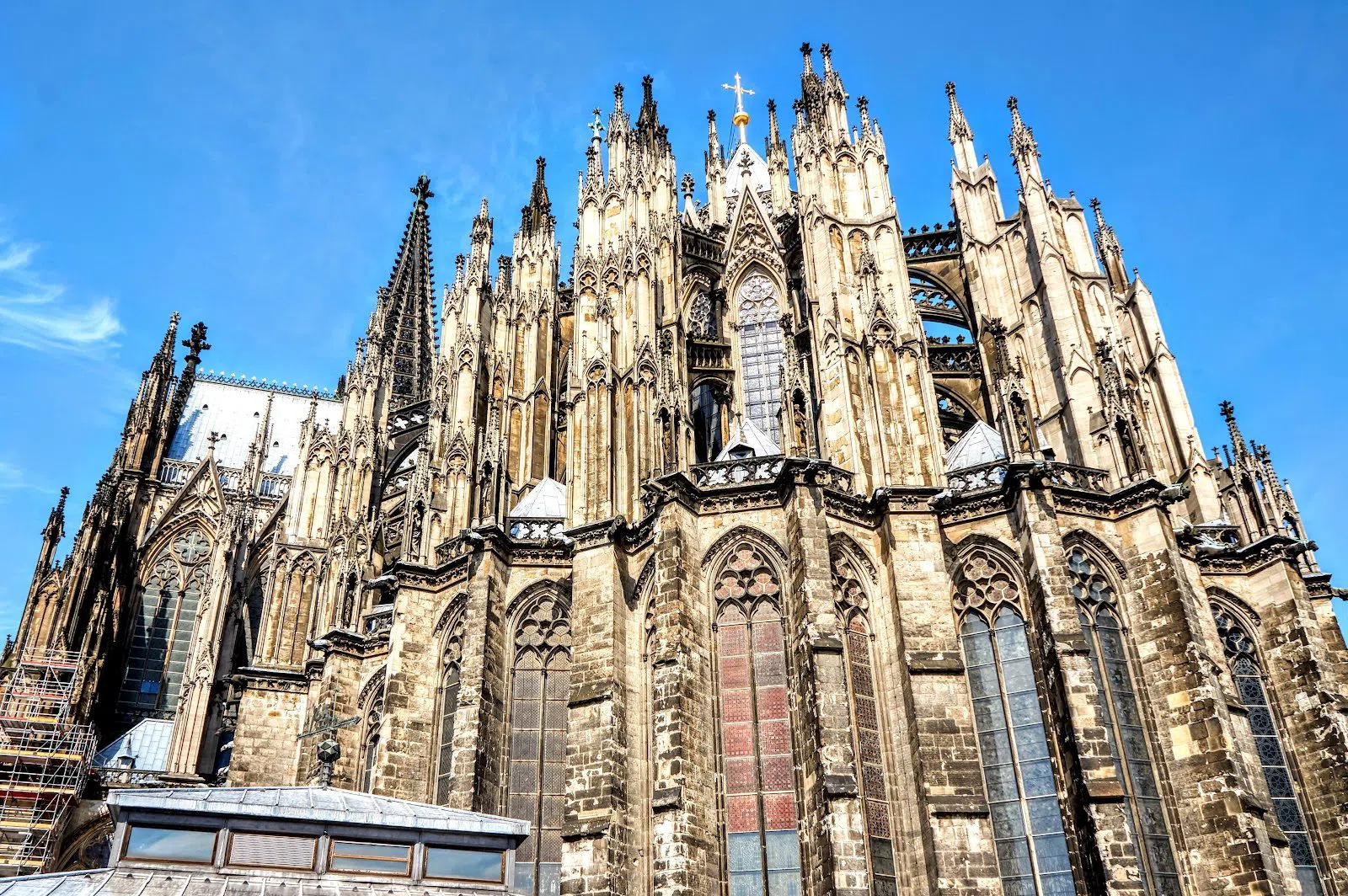
Two hundred metres away, and free at any hour, is the Dionysus Mosaic in situ, Roncalliplatz. This is the piece that explains why the museum sits where it does at all: the mosaic floor of a wealthy Roman house was too fragile to lift, so in the 1970s the museum was built around it rather than the other way round. Even with the main building under renovation, the mosaic itself is still visible through the street-level window, no ticket or booking required, and there's no cap on group size because you're simply standing on the pavement looking in. It's arguably the best single "streets frozen in time" photograph in Cologne — a two-thousand-year-old dining-room floor, in its original spot, framed by twenty-first-century glass.
Plan your Cologne trip
Live prices from our booking partners.
Free cancellation on many rooms. We may earn a commission when you book.
Walking the Wall: Roman Cologne at Street Level
For visitors who want to feel the scale of the Roman colony rather than just its objects, the fortification line is where to go, and two stretches survive well enough to be worth the walk between them.
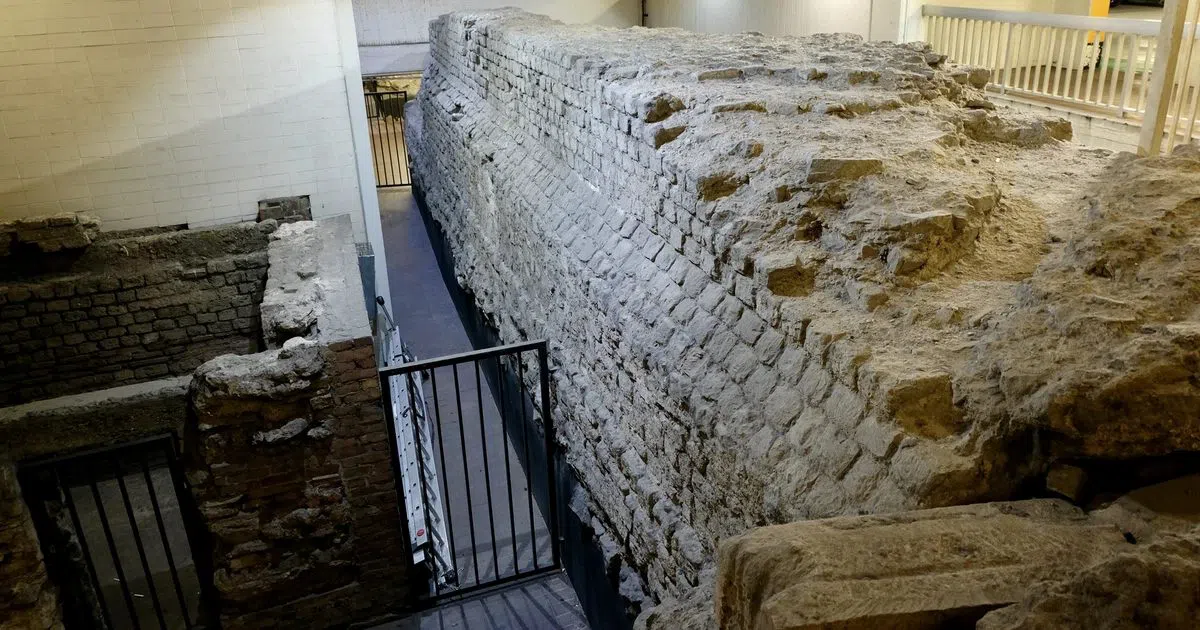
The Roman North Gate & city wall, Domkloster / Cathedral car park site is the most startling of the pair, because it does something none of the others quite manage: it lets you stand on Roman paving at street level, in the open, and then walk down a ramp into the Cathedral's underground car park to find the same wall continuing beside the parked cars. The outdoor section is unrestricted for any group size and free around the clock; the car-park section is self-guided and accessible whenever the garage itself is open. It's a genuinely disorienting juxtaposition — ancient masonry and modern combustion engines sharing a wall — and it costs nothing to see either half.
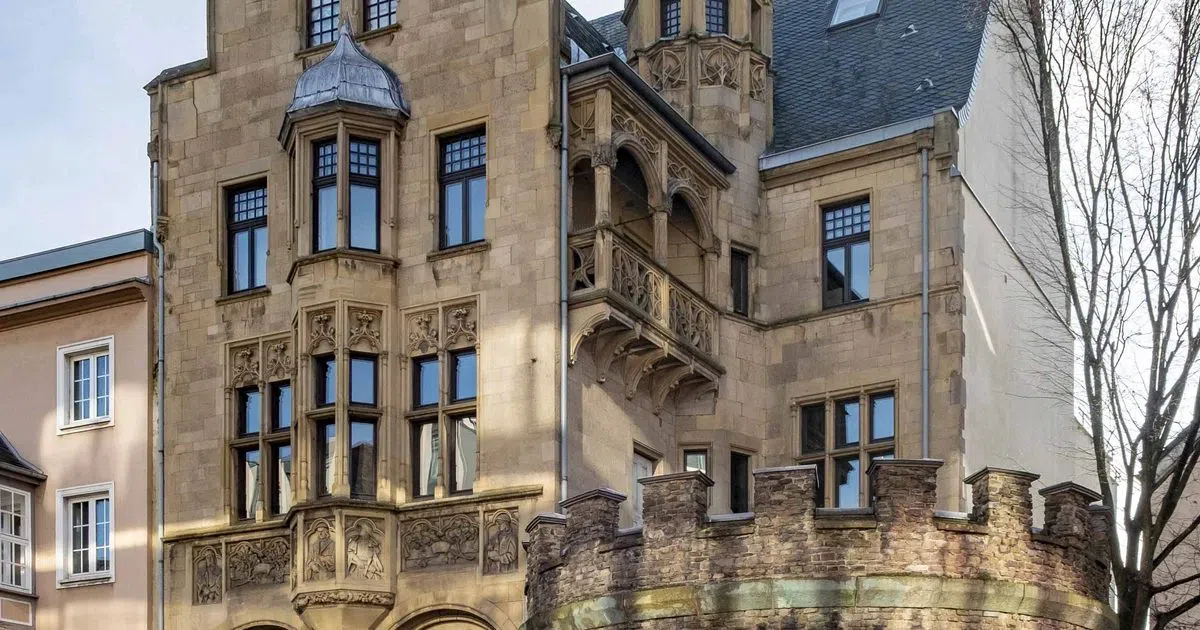
A fifteen-minute walk away on Zeughausstraße stands the Römerturm & Roman city wall, Zeughausstraße, the only one of the nineteen towers that once ringed the Roman colony to survive intact. It owes its survival to an unglamorous accident of history: medieval nuns were using it as a latrine, which kept it standing when the rest of the wall was quarried away for building stone over the centuries. It's outdoor, unrestricted for groups, free, and makes a natural stop if you're stringing the wall sites together into a self-guided walking route — the two locations are close enough to cover on foot inside an hour, with time to linger. Neither site has a door to knock on or a ticket to buy, which makes this pairing the easiest win in the whole guide: turn up whenever, stay as long as you like, pay nothing.
The Site You Have to Plan a Trip Around: Ubiermonument
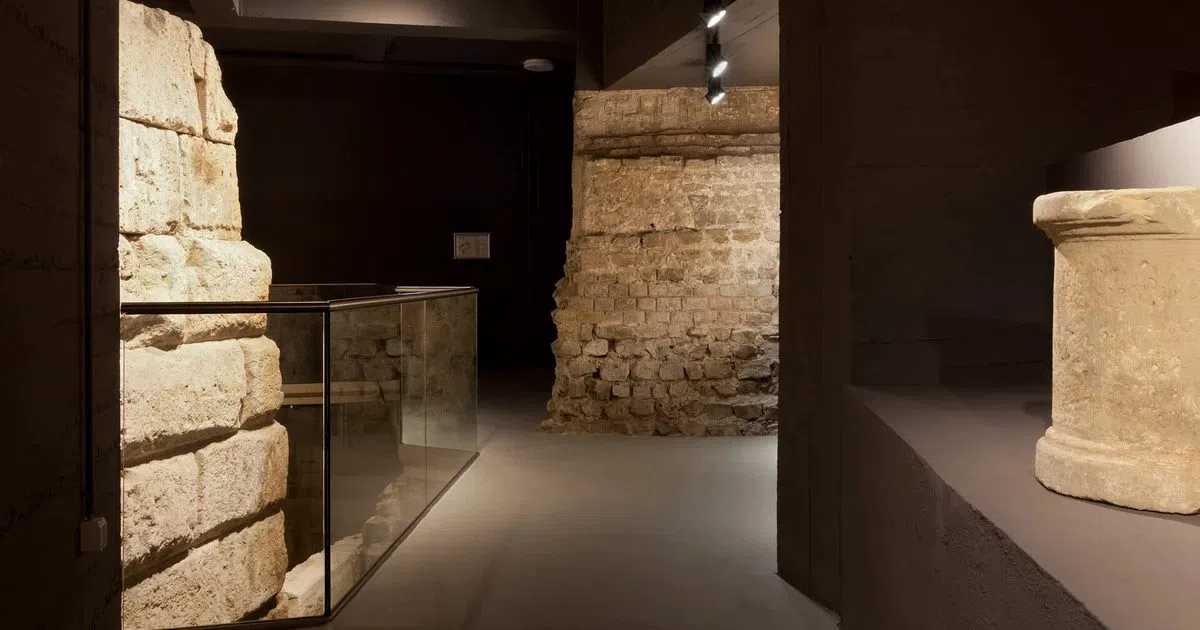
Most of Roman Cologne can be seen on impulse. The Ubiermonument, tucked near the Rathaus in the Altstadt, cannot, and it's worth saying that plainly before anyone builds a day around it. This is the oldest stone structure in Germany still standing on its original foundations, but access is restricted to small guided groups on the first Thursday of each month, 2-5pm, with entry only via the guided tour — no walk-up visits, no exceptions for a day either side. It's free once you're on the tour, and the tour itself is unhurried enough that it works equally well for a couple wanting the full story and a small group happy to share a guide's attention. If your travel dates happen to land on a first Thursday, it's genuinely worth building the itinerary around; if they don't, don't try, because there's no workaround, no early-entry favour, and no second slot that week. Check the date before you book flights, not after.
Roman Cologne, Still Load-Bearing: Two Church Crypts
Some of the city's Roman fabric never stopped being used — it just got built into churches that are still holding Sunday services, which changes how you have to plan a visit.
St. Gereon's Basilica crypt, in the Gereonsviertel just north of the old town, sits on top of a Roman burial ground, and Roman wall fabric was incorporated directly into the church's structure rather than simply preserved beside it — a rare case of Roman Cologne still doing structural work in a functioning building nearly two thousand years later. It's open to groups outside service times, but larger groups should call ahead so a service or a wedding doesn't derail the visit; smaller parties and couples can generally just turn up between services. It's free, with donations welcomed.
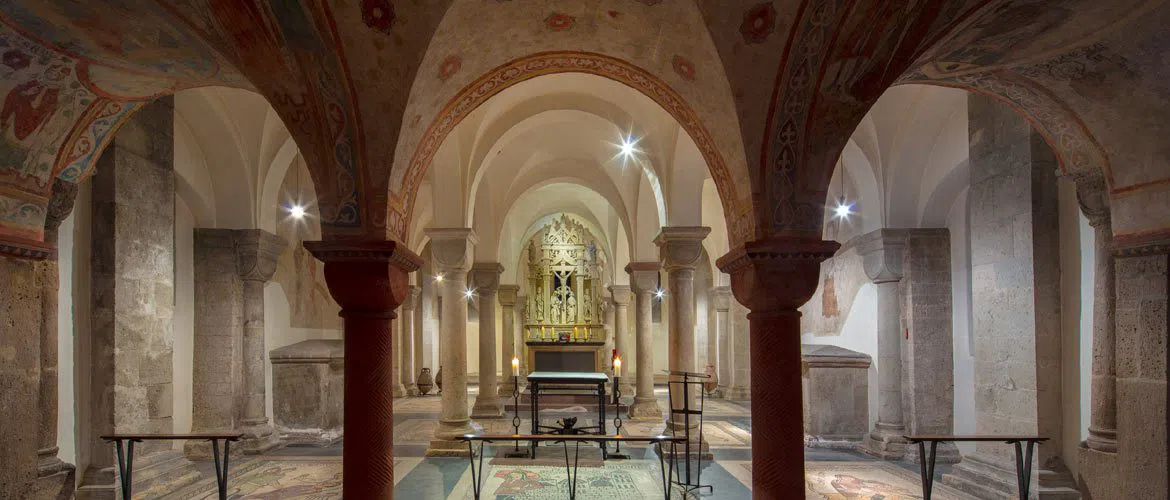
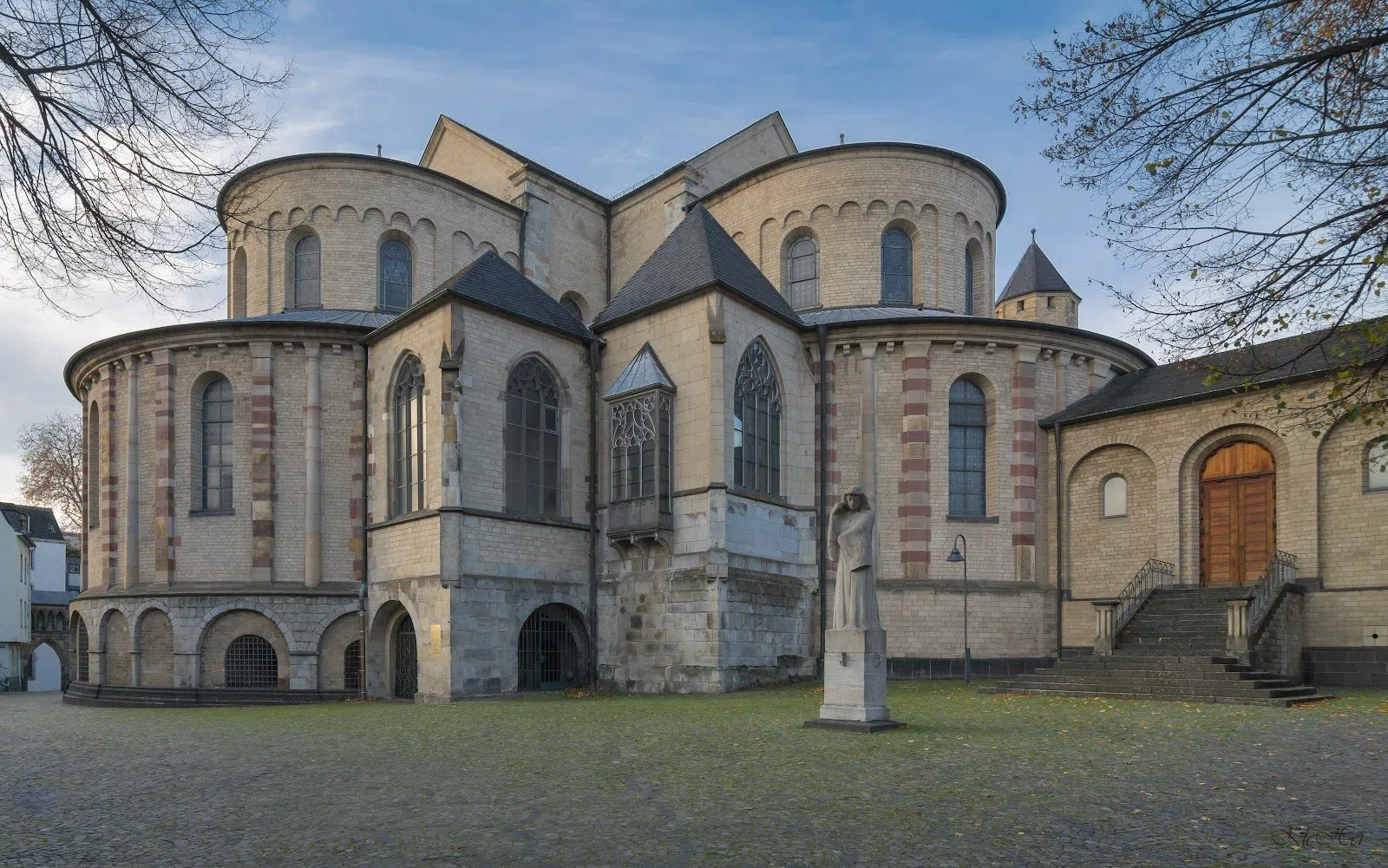
Closer to the Rhine, in Altstadt-Süd, St. Maria im Kapitol crypt makes the same point on an even grander scale: Cologne's largest Romanesque church was built directly on the platform of the city's biggest Roman temple, and in the crypt you can actually see the join between the two eras in the masonry itself — Roman foundation stone giving way to Romanesque church-building above it. Groups should register in advance through the parish office; outside of that, access is free. This is a better stop for a couple with an hour to spend looking closely than for a large tour group moving on a schedule.
The Deepest Cut: The Cathedral Excavation
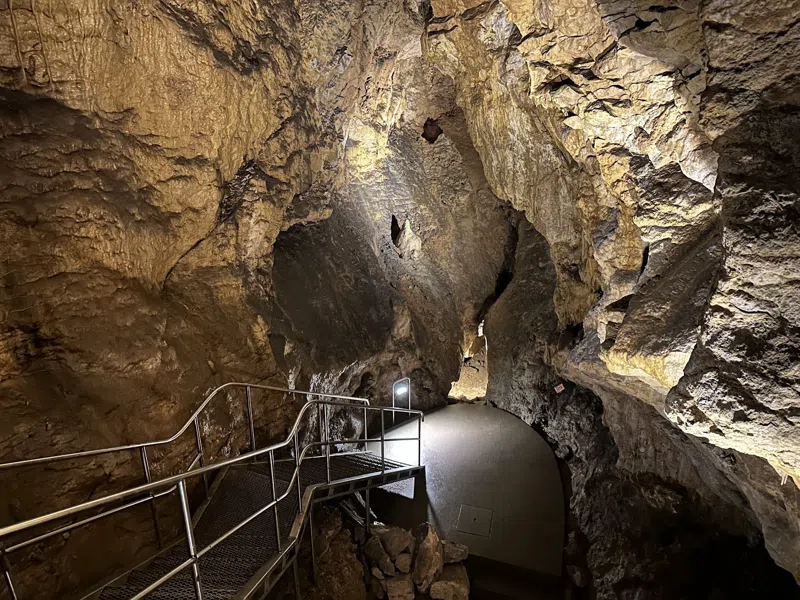
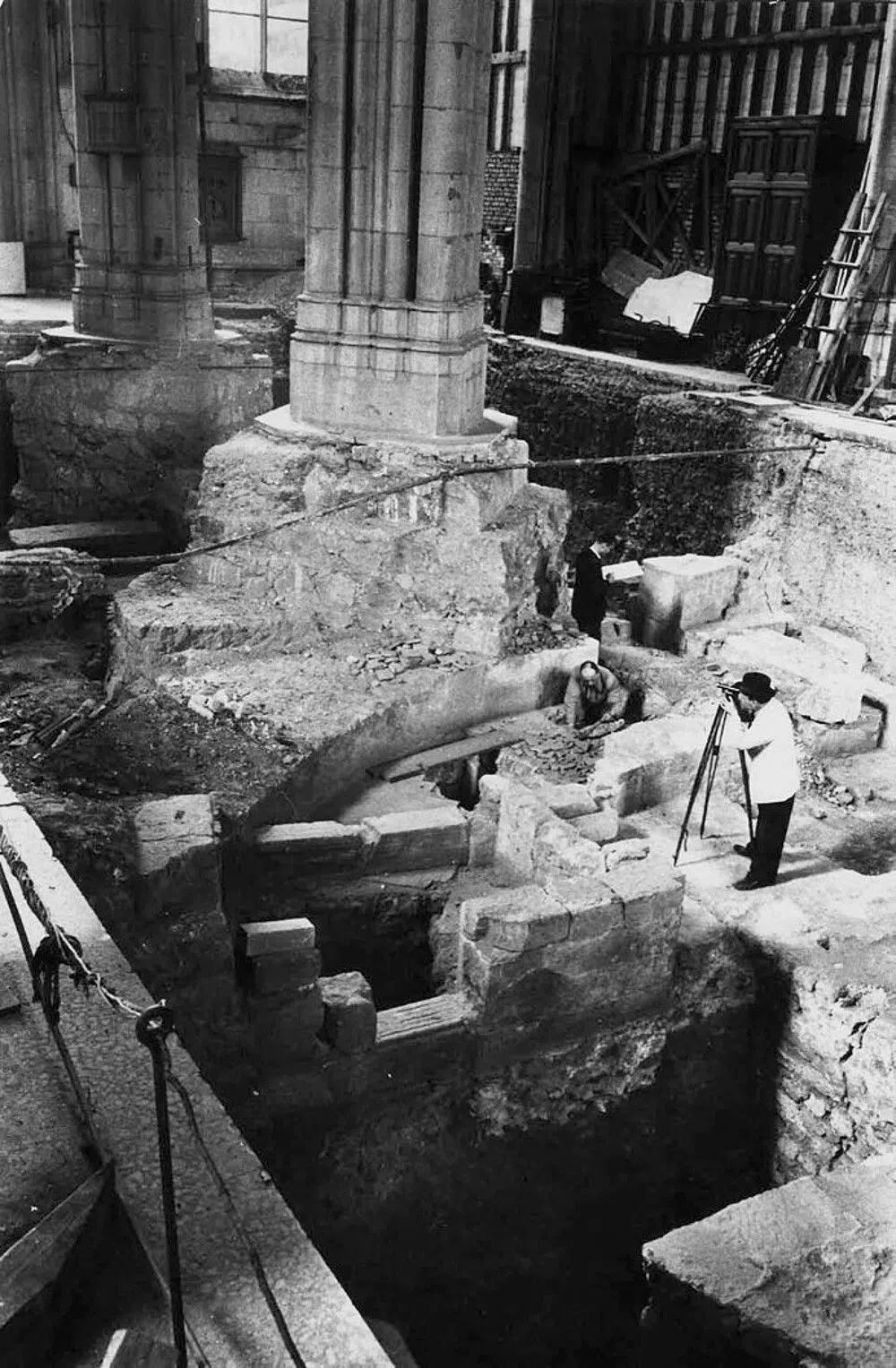
If you only have time and budget for one underground experience, it should probably be the Cologne Cathedral excavation (Domgrabung). It's the least purely Roman of everything on this list — what you're actually walking through is the entire two-thousand-year sediment of the city, layer stacked on layer under one roof — but it's also the single most dramatic underground space in Cologne, and nothing else here comes close for sheer theatre. Access is by bookable private group tour only, up to twelve adults, running around ninety minutes via Domforum, and it's restricted to ages sixteen and up — not a stop for younger children or a spontaneous solo detour. Budget roughly €330 for the group tour, plus individual Cathedral entry on top (from July 2026, standard entry is €12 per person). It needs advance booking and a bit of planning, but of everything in this guide, it's the one that earns its price tag outright.
Contemporary Art Over Ancient Stone: Kolumba
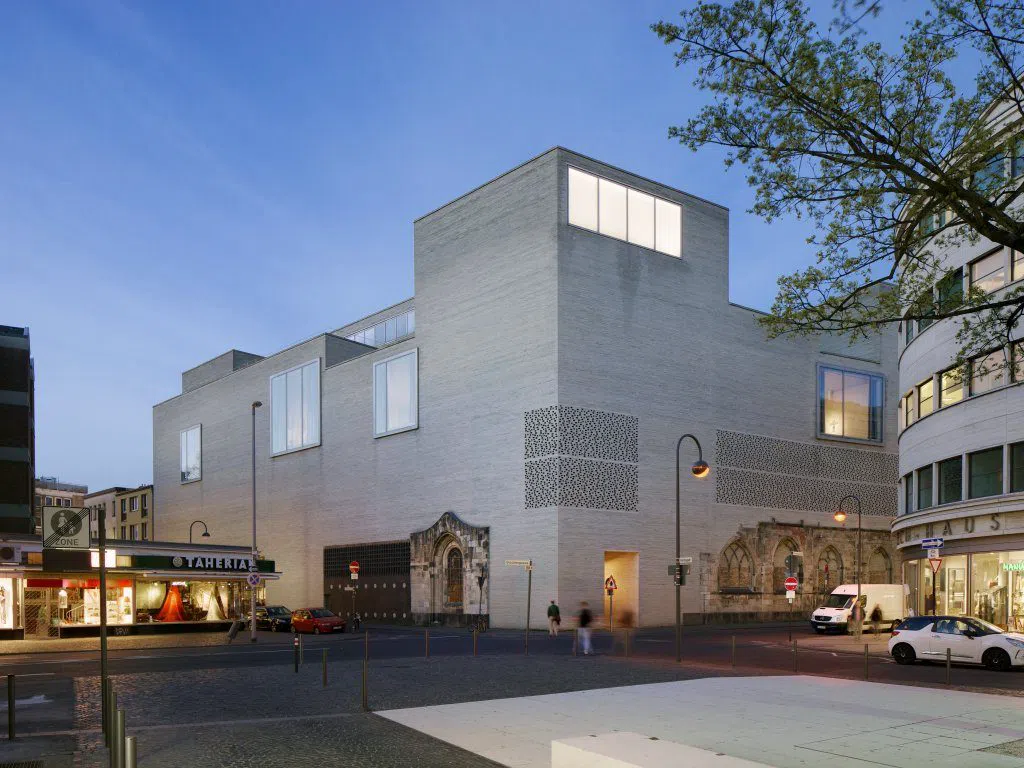
Kolumba, on Kolumbastraße in the city centre, doesn't announce itself as a Roman site — it's an art museum first, built over the ruins of a bombed medieval church — but the excavated foundations at its base date back to the city's founding era, and the effect of walking from contemporary installations down into that stonework is unlike anywhere else on this list. Groups are accepted, though advance notice is appreciated for larger parties so the galleries don't get overcrowded. Entry is €8 for adults, with concessions available. It suits a slow, solitary visit better than a checklist stop — the kind of place you wander rather than tour — and it's a good pairing for a traveller who wants Roman Cologne without a purely archaeological framing: art and antiquity in the same building, one holding up the other.
Making Sense of the Gaps: A Guided Walk
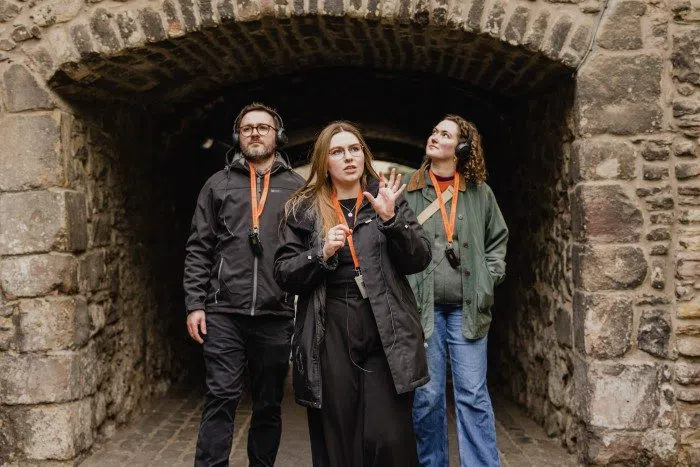
The trouble with all of the above is that Roman Cologne's most complete site — the Praetorium, the governor's palace that would have tied this entire itinerary together — is shut for construction until 2028. What's left is a set of real, verified fragments scattered across the old town with no visible street grid connecting them. That's exactly the gap the Cologne Tourism guided walk: In the Footsteps of the Romans is built to fill. It's designed for groups, with tiered pricing running from around €111 for up to five people to about €141 for up to twenty, plus whatever individual site entry fees apply along the route. A guide who can narrate the invisible Roman street plan between the North Gate, the Römerturm, and Roncalliplatz turns four unconnected stops into one coherent city. Given how much of the story is currently inaccessible underground, this is the one booking on this list that most improves everything else you do.
Getting Around, Cash, Timing, and Budget
Cologne's Roman sites cluster tightly around the old town and the Cathedral, and almost everything on this list is walkable from Cologne Hauptbahnhof (Hbf), which sits directly beside the Cathedral itself. A day pass on the KVB trams and buses is worth it only if you're also heading further out to St. Gereon's or St. Maria im Kapitol on a tight schedule; otherwise, comfortable shoes cover the core route.
Carry some cash. The free sites — the Dionysus Mosaic, the North Gate and car-park wall, the Römerturm, and both church crypts — don't need it, but the crypts welcome donations, and it's the considerate thing to drop a few euros in the box at a working church that's letting visitors through for free.
Timing matters more here than in most cities. The Ubiermonument only opens its doors on the first Thursday of the month, 2-5pm — check that date before anything else. The Domgrabung and the guided walk both need advance booking, ideally a few days out in peak season. Church crypts are best visited on weekday mornings or early afternoons, well clear of Mass times.
For budget, the free outdoor sites and the museum's modest entry fee mean a full day of genuine Roman Cologne can be done for well under €30 per person, drinks and lunch aside; add the Domgrabung or the guided walk and it climbs quickly, but both are one-off splurges rather than daily costs. If you're building a longer stay around this itinerary, start with a Cologne hotel search for something within walking distance of the Cathedral — it puts the North Gate, the mosaic, and the museum all within ten minutes of your door. For everything else worth doing in the city beyond its Roman layer, the full Cologne guide is the place to keep planning from.
Before you go
Do I need to book ahead for the Roman sites in Cologne?
Some, but not all. The Dionysus Mosaic, the North Gate and car-park wall, and the Römerturm are free, unbooked, and open-access. The Römisch-Germanisches Museum and Kolumba take walk-ins but appreciate notice for groups. The Ubiermonument, the Cathedral excavation (Domgrabung), and the Cologne Tourism guided walk all require advance booking — the Ubiermonument only opens on the first Thursday of the month, so check that date before anything else.
What's the difference between visiting the Dionysus Mosaic and the Römisch-Germanisches Museum?
The mosaic is a single in-situ Roman floor, visible free through a street-level window at any hour with no ticket needed. The museum, currently at its temporary Belgisches Haus location while its Roncalliplatz building is renovated through 2026, holds the wider collection of Roman finds — glassware, jewellery, sculpture — for a ticketed entry of roughly €6-8. Seeing the mosaic first gives useful context for the museum, or vice versa, since they're only about two hundred metres apart.
Is Roman Cologne accessible for couples, not just groups?
Yes — most sites suit a couple or solo traveller as well as a group. The free outdoor sites (mosaic, North Gate, Römerturm) have no group logistics at all. The church crypts and Kolumba particularly reward a slower, quieter visit rather than a tour-group pace. Only the Cologne Tourism guided walk and the Cathedral excavation are priced and structured around group tours, though a couple can still book either.
When can I visit the Ubiermonument?
Only on the first Thursday of each month, 2pm to 5pm, and only via a small guided tour — there's no walk-up access on any other day. It's free once you're on the tour. If your dates don't land on a first Thursday, plan around the other sites instead rather than trying to make an exception happen.
Is Roman Cologne underground the same as the Cathedral excavation?
Not quite. The Cathedral excavation (Domgrabung) is broader than the Roman story alone — it's the full two-thousand-year sediment of the city stacked under the Cathedral, bookable as a private group tour of up to twelve adults for around €330 plus individual entry (from July 2026, €12). The purely Roman underground experience — the wall continuing beneath the Cathedral car park — is a separate, free, self-guided site nearby.