The Cologne issue
The Fifth Season: Inside Cologne's Karneval, Where the City Loses Its Mind
A calm, practical field guide to Cologne's carnival week in February 2026 — which square, brauhaus, parade or gala actually suits your group, and how to survive the crowds.

By Bram HendriksSlow walks, Romanesque churches and the city beyond the Dom
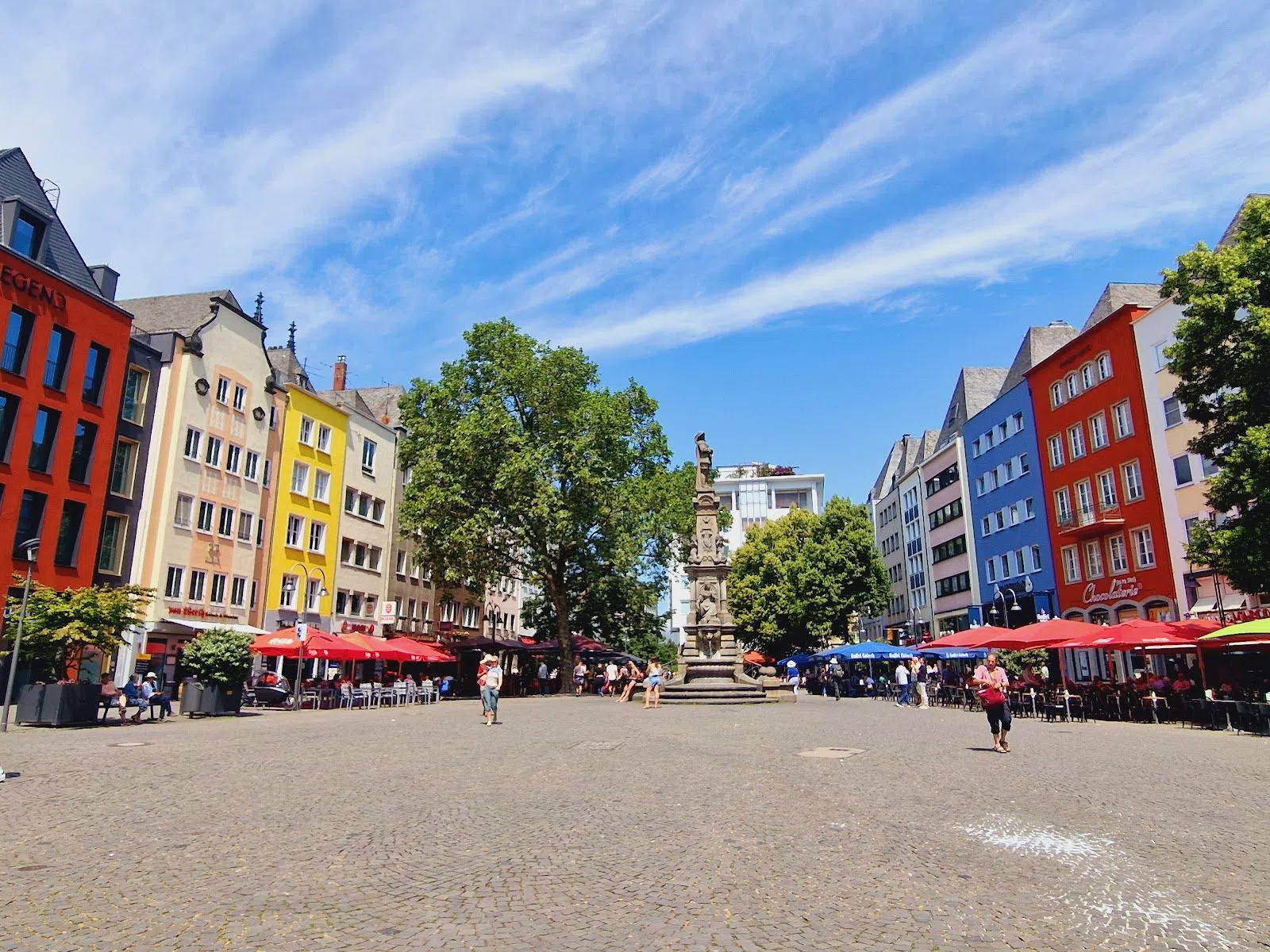
At 11:11 on Weiberfastnacht, the shutters half-close on ordinary Cologne and the city hands itself over to the season it calls its fifth. For the better part of a week the Rhineland's most self-possessed city sets down its routines, puts on a costume, and turns its medieval market squares and beer halls into one continuous, brass-driven street party under the twin spires of the Dom. What follows is not a spectacle you watch so much as a week you step into — and knowing where to stand makes all the difference.
What the "fifth season" actually means
Cologne carnival — locally Fastelovend, more formally Karneval — nominally opens every year at 11:11 on the eleventh of November, but the days that draw visitors are compressed into the week before Ash Wednesday. In 2026 the street carnival begins at 11:11 on Weiberfastnacht (Women's Carnival), Thursday 12 February, builds through the weekend, peaks with the great parade on Monday 16 February, and ends abruptly with the hush of Ash Wednesday on 18 February.
A few practicalities are worth internalising before you arrive. Almost everyone wears a costume — not fancy dress in the theatrical sense, just something, anything, that signals you have joined in; turning up in office clothes marks you out more than any outfit could. The greeting is Kölle Alaaf. On parade days, the cry is Kamelle, shouted at the floats to bring down a hail of sweets. And the language of the season is Kölsch — both the pale, cool beer served in slim 0.2-litre glasses called Stangen, and the local dialect, which matters when you choose an indoor show. For orientation, opening times and getting-around basics beyond carnival, the Cologne guide is a useful companion to this piece.
Plan your Cologne trip
Live prices from our booking partners.
Free cancellation on many rooms. We may earn a commission when you book.
The free squares: where a first-timer should start
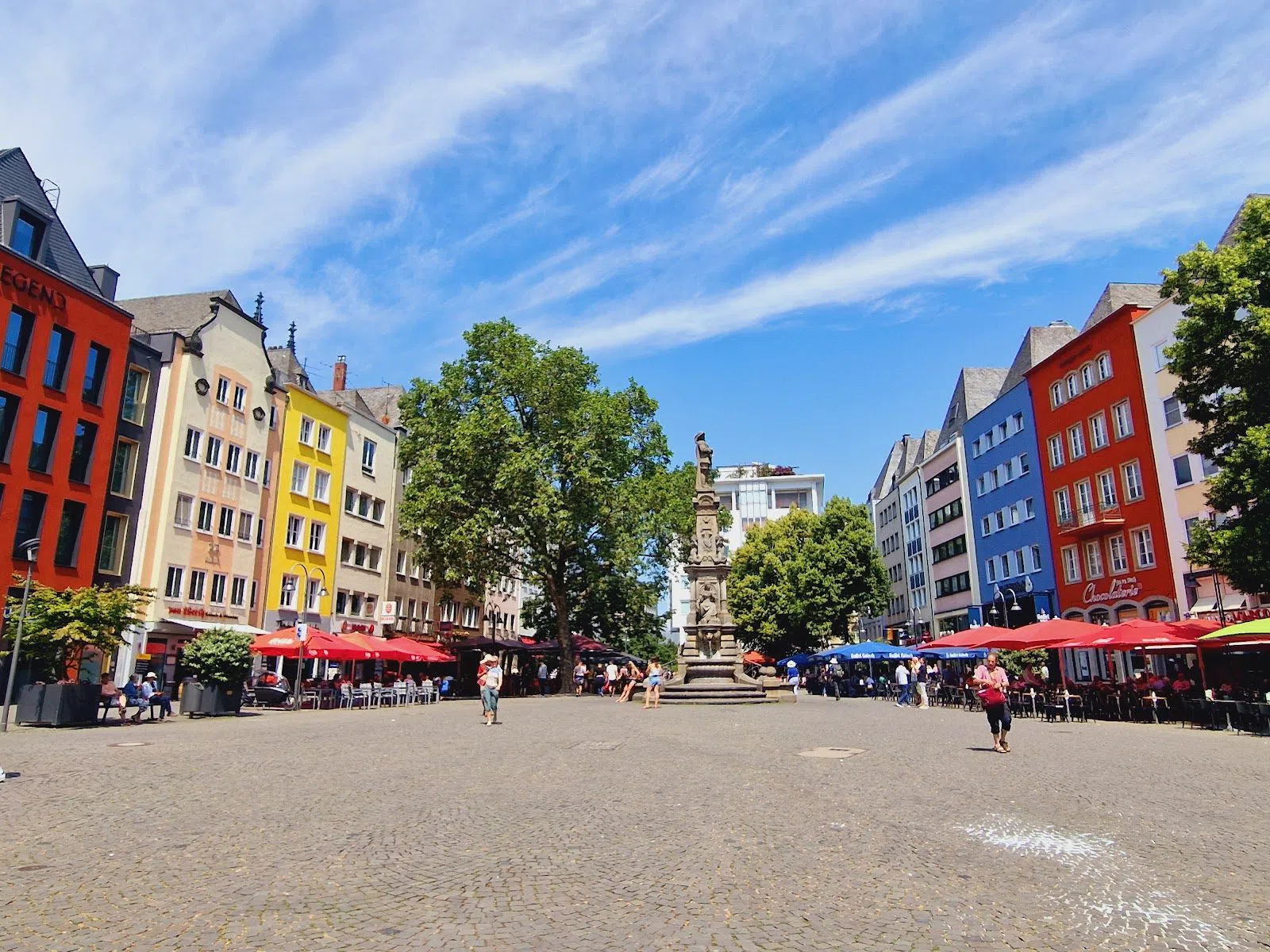
If you have one afternoon and want the real thing without a ticket, go to the old town. Heumarkt & Alter Markt (Altstadt) are two adjoining medieval market squares just back from the Rhine, and during carnival the city rigs free open-air stages on them. There is no ticket and no door; drinks come from stalls and the little kiosks Cologne calls Büdchen. This is the mixed-age, mixed-nationality heart of the street carnival, and for an international first-timer it is the single most reliable place to feel what Fastelovend is actually about. The catch is timing: on Weiberfastnacht the squares fill early and stay full, so arrive well before the 11:11 start if you want to be able to move.
Zülpicher Straße, known as the Kwartier Latäng in the university quarter southwest of the ring road, is the other pole of the street party — younger, louder and considerably rowdier. It is a genuinely good time for a young crew, but be clear-eyed about it. In 2026 the city manages the crush with three controlled entry points — at Beethovenstraße/Roonstraße, at Zülpicher Wall, and at Barbarossaplatz — and closes the whole district to new arrivals once it reaches capacity. A glass ban is in force. The sensible approach is to go early, keep your group together, and hold a fallback plan for when the gates shut, because they do. Couples or anyone wanting to actually hear each other should treat this street as a look-in, not a base.
The parades: one to watch, one to join
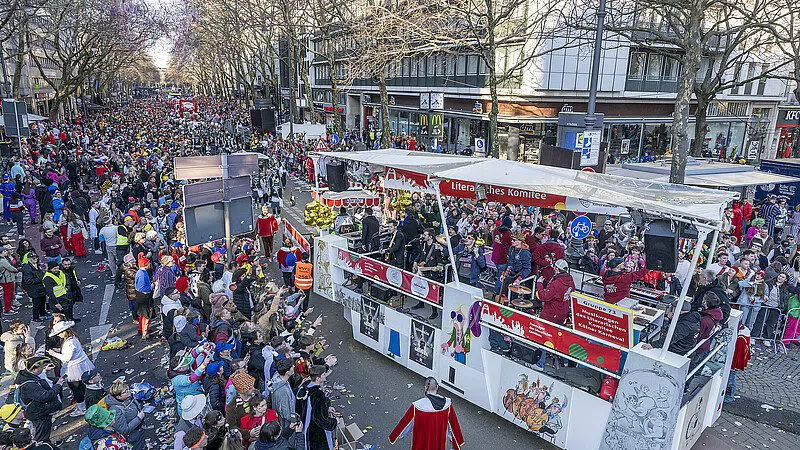
The week's centrepiece is the Rosenmontagszug (Rose Monday Parade), which winds several kilometres through the city on Monday 16 February. It is free to watch from anywhere along the route, and this is where the Kamelle ritual comes into its own — floats, bands and marching societies throw sweets, small toys and flowers by the tonne into the crowd. A curb spot costs nothing but patience: stake your place 60 to 90 minutes before the parade reaches you, particularly near the start or the Dom. For groups who would rather not stand in a February crush for hours, reserved grandstand seats are sold, roughly €40–90 a head depending on position, and they buy you a guaranteed, sightlined spot.
For something quieter and more participatory, the Kölner Geisterzug (Ghost Parade) runs on Carnival Saturday, 7 February 2026. It is the grassroots counterpoint to the official parade: instead of grandstands and corporate floats, it is a loose procession in dark and ghostly costume that anyone can simply join on the night. A group can march in it rather than merely watch, and because it asks nothing of your German, it is one of the most genuinely inclusive things you can do all week. Bring a costume that reads "ghost" — a sheet, black and grey, a lantern — and fall in.
Brauhaus carnival: the beer halls, honestly ranked
The Kölsch brewery halls are where carnival goes indoors when the weather bites, and they differ more than their menus suggest. All serve the same 0.2-litre Stange, kept flowing by blue-aproned waiters called Köbes who will replace your glass unbeliebt you put a beer mat over it.
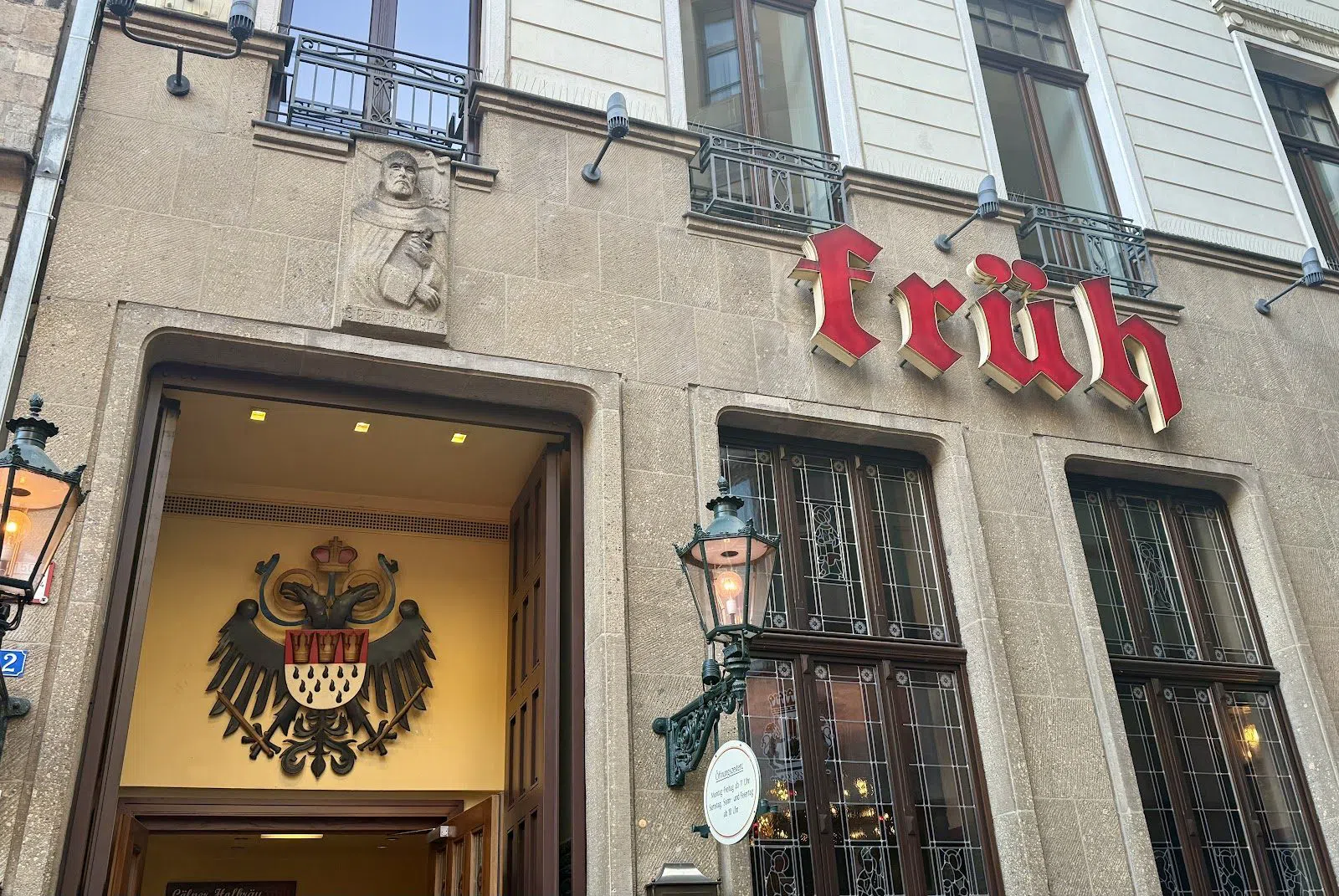
Brauhaus Früh am Dom (Altstadt), with its cellar programme Jeck em FRÜH, sits directly beside the cathedral and is the most convenient traditional house for a visitor. Its sprawling halls and vaulted cellar absorb large parties comfortably — big groups are its stock in trade — and it stays warm and jeck without tipping into chaos. Kölsch runs about €2.30 a glass alongside hearty mains; reserve for carnival days, because walk-in space evaporates.
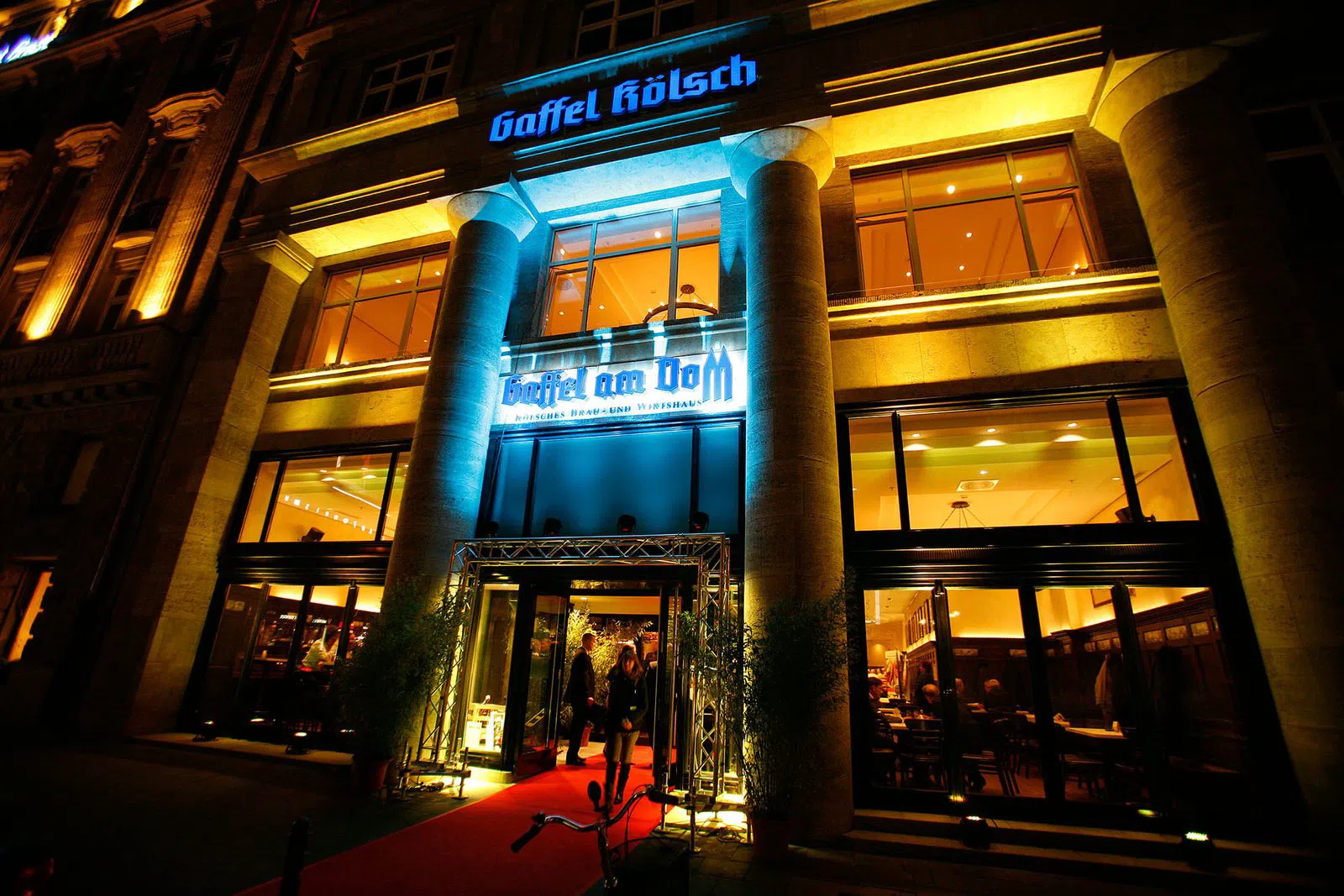
Gaffel am Dom (Altstadt) is the low-friction pick for an international group. Central, high-capacity and used to visitors, it has English-comfortable staff and celebrates hard in the main hall, which makes it the easiest room in the city to enjoy beer-hall carnival without hitting a dialect barrier. It is not the most "authentic" address, and it doesn't pretend to be — it is reliable, and during carnival that is worth a great deal.
Brauerei zur Malzmühle (Heumarkt) trades on two things: it is family-run and warm to groups, and it sits right on Heumarkt. That address is the point — step out of the door and you are on the doorstep of the main square stage, which makes it a natural base for a party that wants to alternate indoor Kölsch with outdoor carnival.
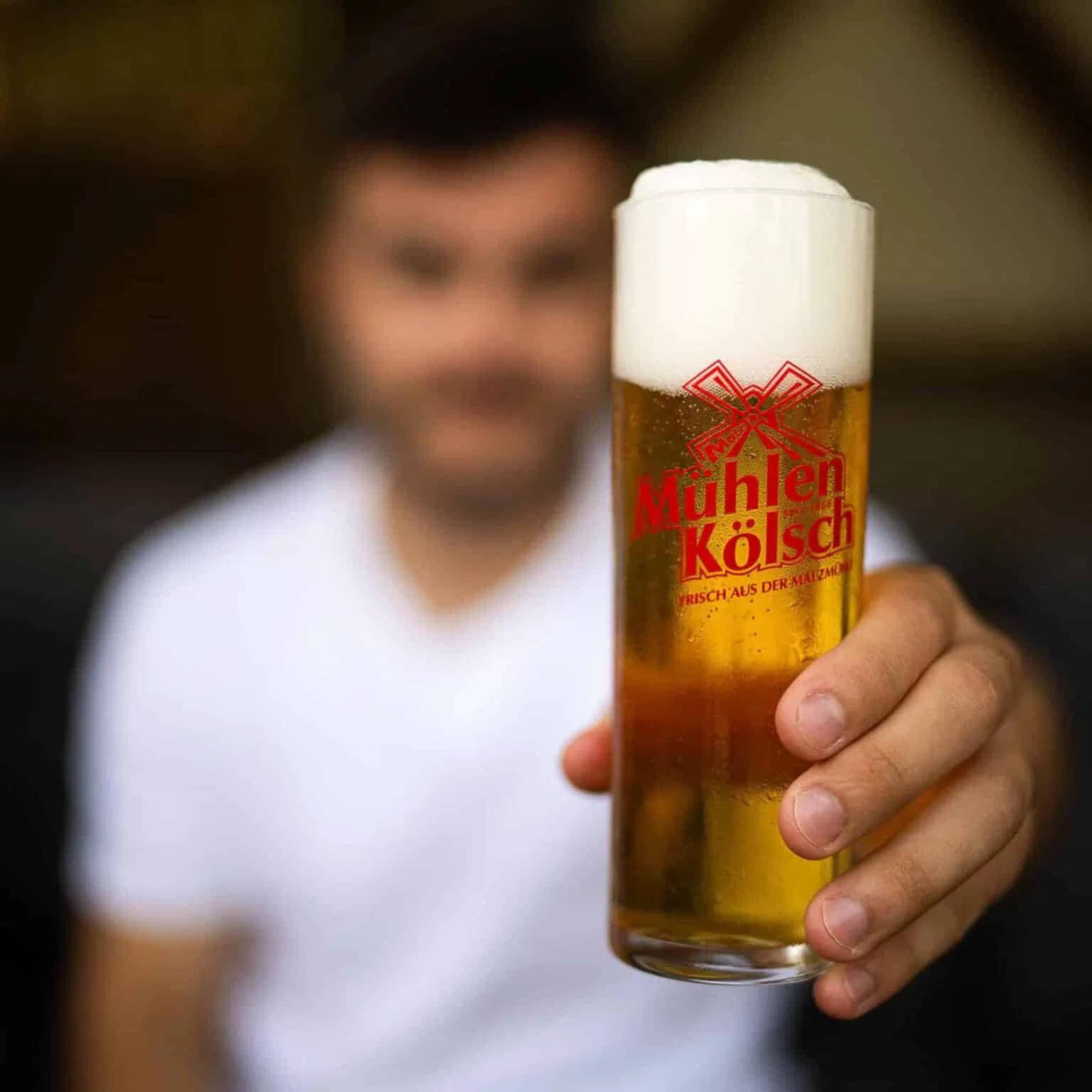
Päffgen (Friesenstraße) is the choice for a group that prefers tradition to spectacle. The Kölsch is a purist's benchmark, the room is smaller — so small groups fit best — and Friesenstraße around it is a beloved local carnival stronghold, meaning the whole street becomes the party. It is more authentically Cologne and less touristy than the Dom-side halls; go here if your crew wants to feel like guests at a neighbourhood's carnival rather than customers at a big one.
The indoor shows: sessions, galas and cabaret
Cologne carnival has a formal, seated tradition — the Sitzung — running in parallel to the street. These are ticketed shows of speeches, dance troupes and bands, and they are where the season shows its ceremonial, almost civic face. Two things to weigh before booking: they suit groups who want a defined evening with a seat and a table rather than a dancefloor, and most are conducted in Kölsch dialect.
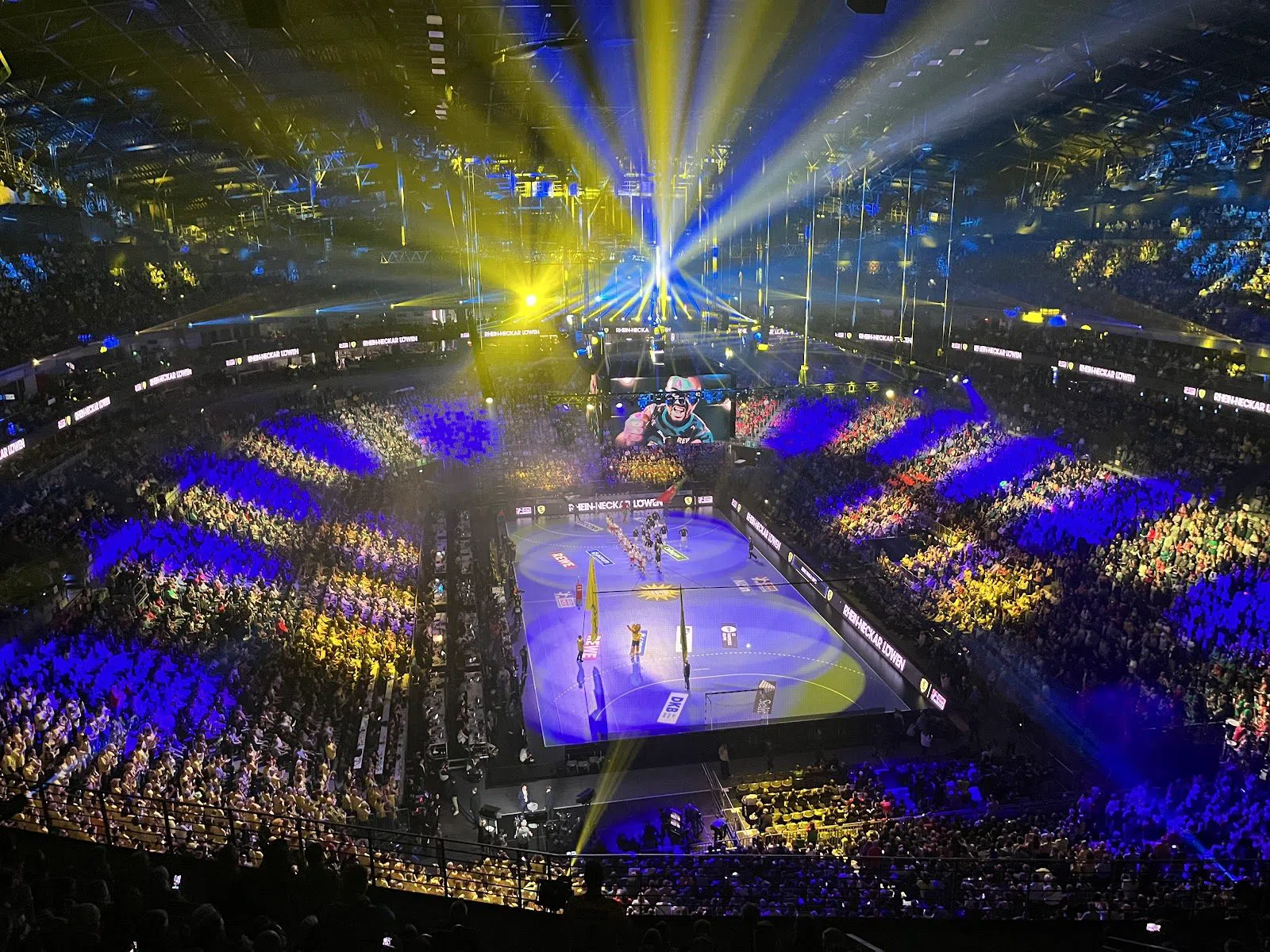
Lachende Kölnarena (LANXESS arena, Deutz) is the largest of these — an indoor carnival gala staged in a full arena, built for big blocks of booked seats, at roughly €53–57 a head. A famous local rule applies: you bring your own food and drink (no glass), which for a large group is more feature than inconvenience. The stage programme is in dialect, so it rewards parties with some German, or at least a local along to translate the punchlines.
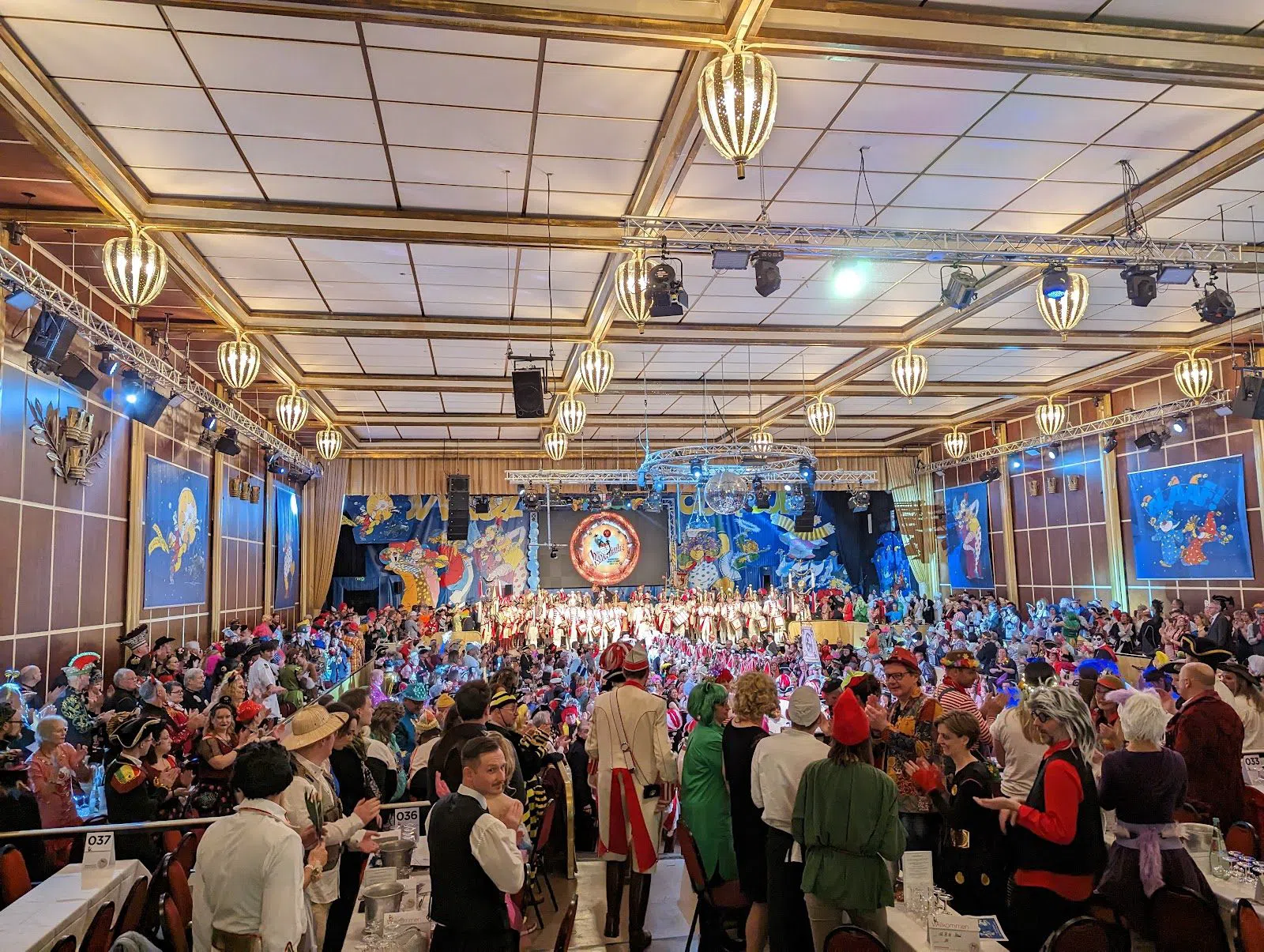
Sartory-Saal (city centre) offers the traditional Sitzung in its classic ballroom form — table seating, speeches, dance and bands, dressed up. It is ideal for booking a whole party into the ceremonial side of the season, the version of Cologne carnival that wears a sash rather than a sheet. If your group's idea of a good night is a seated hall with a printed programme, this is the format.
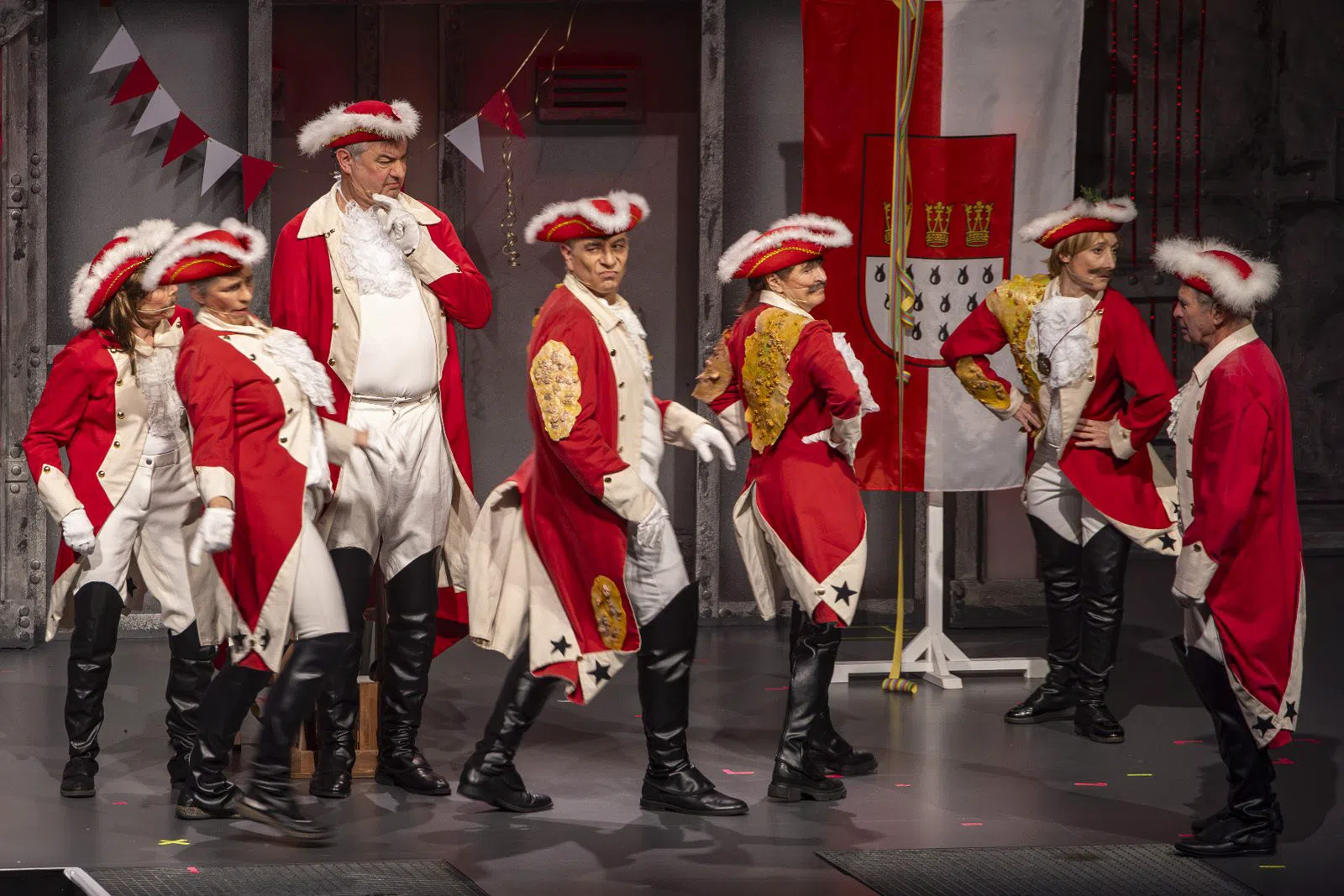
Stunksitzung (E-Werk, Mülheim) is the cult alternative — a politically sharp cabaret that stands as the deliberate antidote to the formal sessions. It is genuinely well made and sells out well ahead, so groups book early; tickets start around €32 and the format is seated. The honest caveat is that its satire is fast, topical German, so it is really only worth it for German-speaking visitors; without the language, the best jokes will pass you by.
Beyond the old town: room to breathe
Not everyone wants to be crushed into the Altstadt, and Cologne has scaled-up alternatives with space and a plan.
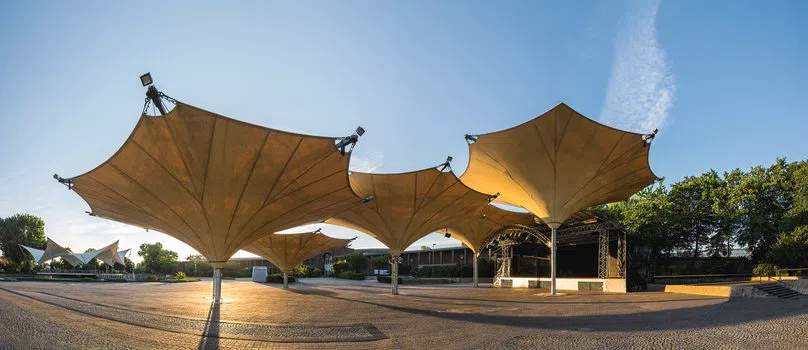
Tanzbrunnen Köln (Deutz, on the right bank) is a riverside event park that runs large ticketed stage events during the season — the Radio Köln Weiberfastnacht party among them — with tickets around €29. It comfortably takes big groups, and it hands you a postcard backdrop: the Rhine and the Dom across the water. For a party that wants organised carnival with elbow room rather than the inner-city squeeze, it is a sensible base.
Bumann & Sohn (Ehrenfeld) sits in one of the city's more interesting neighbourhoods, west of the centre and away from the tourist crush. Its festival grounds are spacious with covered areas built to absorb big carnival crowds, and the sound leans towards DJs rather than brass bands. Prices are moderate. This is the good-weather-proof pick for a group that wants a party atmosphere without the trad-carnival soundtrack.
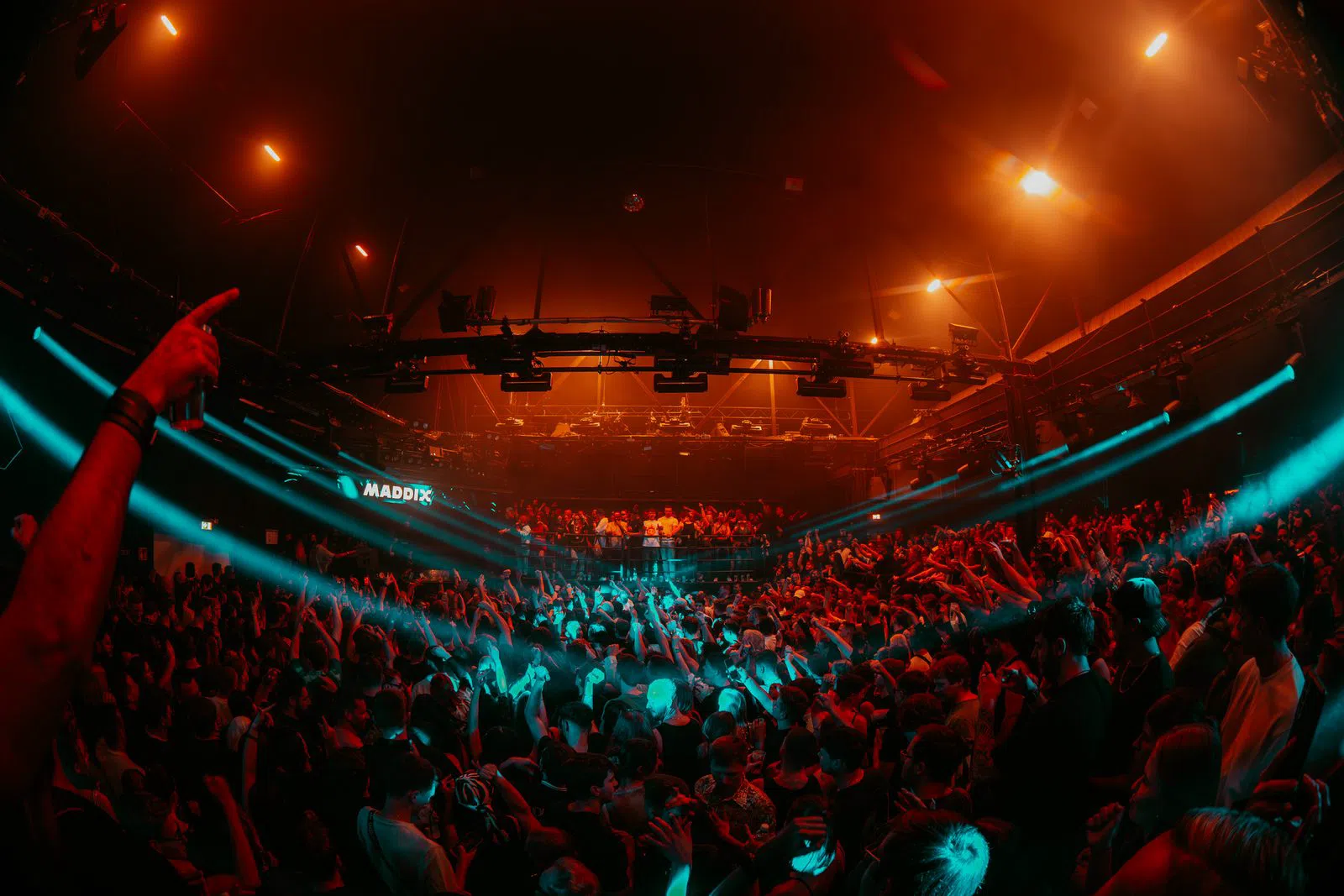
Bootshaus (Mülheim) is a different proposition entirely — a serious techno club that handles large groups with ease. Its carnival headline in 2026 is KitKat's Carneball Bizarre on Sunday 15 February, and it is important to be clear about what that is: a strict fetish dress code applies, door around €35, and it is a niche, dress-coded night, not a costume free-for-all. For a group after world-class electronic clubbing rather than beer-hall singalongs, it delivers — just read the dress rules before you commit.
Choosing well: who each place suits
If you are a large international group new to all this, anchor on Heumarkt & Alter Markt by day and Gaffel am Dom or Brauhaus Früh am Dom when the cold sets in. A young crew chasing the wildest night should go to Zülpicher Straße early with a fallback, or decamp to Bumann & Sohn or Bootshaus. Traditionalists belong at Päffgen or a Sartory-Saal Sitzung. Couples and quieter travellers will find the squares by day and the neighbourhood halls kinder than the gated party streets. And everyone, whatever their German, can march in the Kölner Geisterzug and stand on a curb for the Rosenmontagszug.
Practicalities: transport, cash, timing and budget
Timing. The street season runs Thursday 12 February to Ash Wednesday 18 February 2026. Weiberfastnacht (12 February) starts at 11:11 and is the busiest single morning in the old town. Rose Monday (16 February) is the parade; the Geisterzug is Saturday 7 February. Arrive at squares and parade routes early — an hour or more ahead on the big days — and expect the Zülpicher gates to close once the quarter fills.
Transport. Cologne's KVB trams and U-Bahn are the only sensible way to move during carnival, as the centre closes to traffic and parking is a lost cause; buy a day ticket and expect packed carriages, especially into Deutz for Tanzbrunnen and the LANXESS arena. Do not plan to drive.
Cash and drinks. Kölsch is cheap and pours fast — around €2.30 a Stange in the halls, less at street stalls. Carry cash: kiosks, stalls and Köbes are quicker with coins than cards, and remember the glass bans in force on Zülpicher Straße and at the arena.
Budget. The street carnival itself is free — the squares, both parades from the curb, and the Geisterzug cost nothing but the drinks in your hand. Ticketed experiences span a wide range: Tanzbrunnen events around €29, Stunksitzung from about €32, Bootshaus around €35, the Rose Monday grandstand €40–90, and the LANXESS arena gala roughly €53–57. Book the sit-down shows and grandstands well ahead — they sell out — and reserve any brauhaus table for carnival days.
Where to stay. Beds vanish and prices climb for carnival week, so book early and, ideally, within walking distance of the Altstadt so you can retreat from the crowds without relying on packed trams; start with a Cologne hotel search. Come costumed, keep your group together, and let the city do the rest.
Before you go
When is Cologne Karneval in 2026?
The street carnival runs from Weiberfastnacht on Thursday 12 February 2026, starting at 11:11, through to Ash Wednesday on 18 February. The Rosenmontagszug (Rose Monday Parade) is on 16 February, and the Geisterzug (Ghost Parade) is on Saturday 7 February 2026.
Where should a first-time visitor go during Cologne Karneval?
Head to Heumarkt and Alter Markt, two adjoining old-town squares with free open-air stages. They are the mixed-age, international heart of the street carnival and the easiest place to feel the real Fastelovend without a ticket. Arrive early on Weiberfastnacht, as they fill fast.
Is Zülpicher Straße worth it, and what are the entry restrictions?
It is the city's rowdiest, youngest carnival street — great for a young crew, but crowded. In 2026 the city uses three controlled entry points (Beethovenstr./Roonstr., Zülpicher Wall and Barbarossaplatz), closes the quarter when it is full, and enforces a glass ban. Go early and keep a backup plan.
Do I need to speak German to enjoy Cologne carnival?
Not for the street carnival, the brauhaus halls or the parades — Gaffel am Dom in particular is English-comfortable, and the Geisterzug needs no language at all. But the indoor sessions, including the LANXESS arena gala and the Stunksitzung cabaret, are performed in Kölsch dialect and really only reward German speakers.
How much does Cologne Karneval cost?
The core is free: the squares, both parades from the curb, and the Geisterzug cost nothing but your drinks, with Kölsch about €2.30 a glass. Ticketed options range from Tanzbrunnen events (~€29) and Stunksitzung (from ~€32) to Bootshaus (~€35), Rose Monday grandstand seats (€40–90) and the LANXESS arena gala (~€53–57).