The Cologne issue
The System in the Glass: Inside Cologne's Kölsch Ritual
Kölsch is not so much ordered as administered — here is how the ritual works, and the Cologne houses where it is poured best, whether you are two at the bar or twenty at a long table.

By Bram HendriksSlow walks, Romanesque churches and the city beyond the Dom
Kölsch arrives in a slim 0.2-litre glass called a Stange, and it keeps arriving. In Cologne's brauhäuser the beer is not so much ordered as administered — by a blue-aproned waiter, the Köbes, who reads your empty glass rather than your order and marks each round in pencil on the cardboard coaster beneath it. Learn to read that system and the city opens up; ignore it and you will simply keep drinking until you lay the coaster on top of the glass.
What follows is not a ranking. It is a map of a single ritual as it is practised across the Altstadt, over the river in Deutz, and out in the quieter quarters — organised the way you might actually plan a trip, from the houses by the cathedral to the ones only locals bother to reach.
The rules of the glass
Kölsch is a protected designation: pale, top-fermented, and by agreement brewed only in and around Cologne. It is served young and lightly carbonated, which is the whole reason for that small glass. A larger measure would go flat and warm before you reached the bottom; the 0.2-litre Stange keeps every pour cold and fresh, and it keeps the Köbes moving. He carries the beer on a round tray called a Kranz — literally a wreath — with the glasses slotted around the rim, and he restocks empties by instinct as he passes.
The tally system is the part visitors misread. You do not flag anyone down for a second round. When your glass is nearly empty a full one lands in its place and a pencil stroke goes on your coaster. This continues indefinitely. To stop, place the coaster flat on top of your glass; that is the universal signal that you are finished, and only then will the drawing stop. Settle up with the same Köbes at the end — cash is smoothest, and in the older houses it is sometimes the only option.
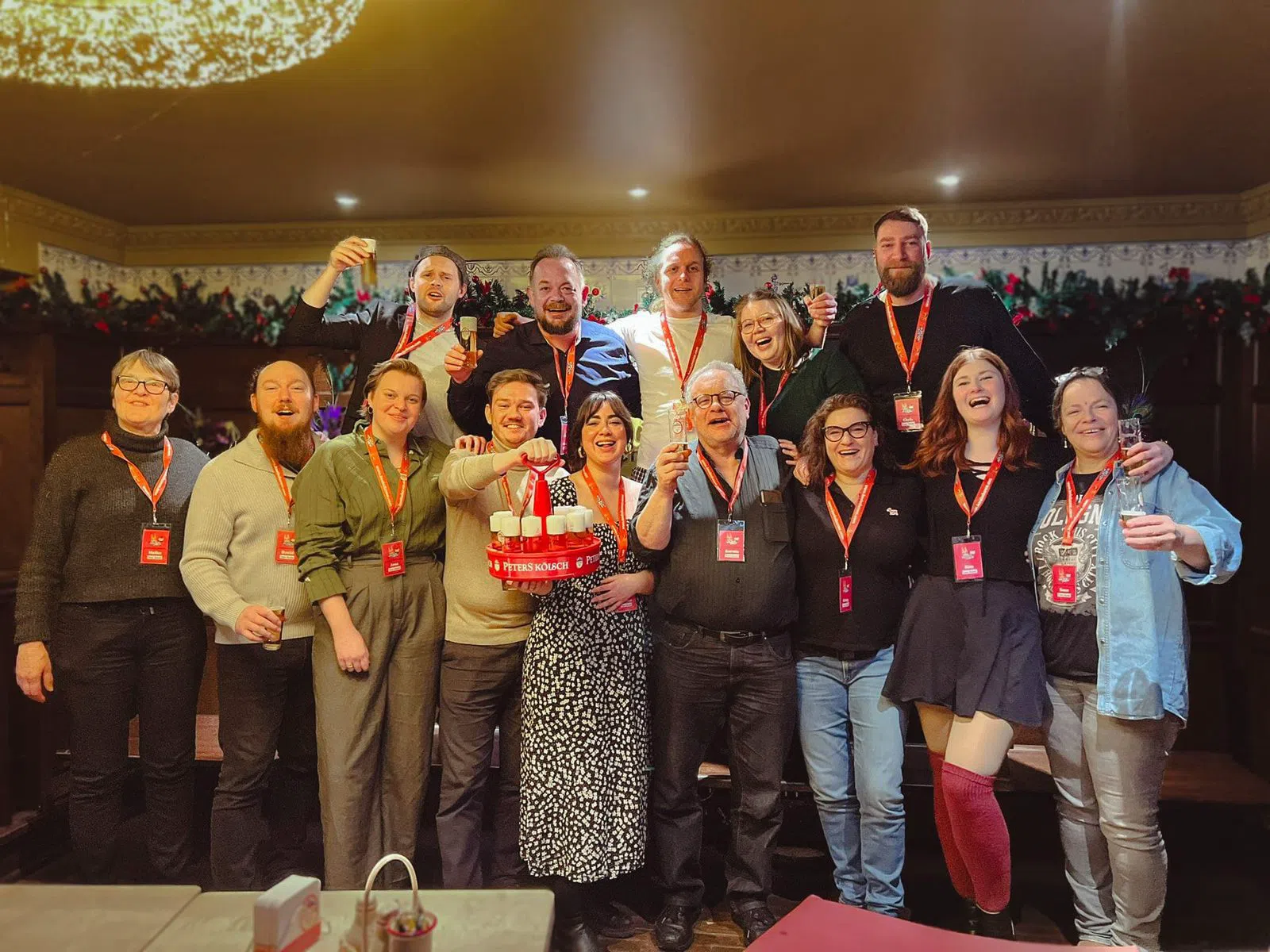
The service can feel curt. It is not rudeness so much as efficiency worn as a personality; the good Köbes is fast, dry, and faintly theatrical, and a bit of banter is part of the transaction. For an international group meeting all of this at once, the gentlest introduction is a guided round. The Kölsch Crew — Beer House Tour (starts in the Altstadt) is the one entry here that is not a venue at all, and it is the smartest first-night move: an English-speaking guide, the etiquette explained before you get it wrong, and three or four houses in roughly two hours. Public walks cap at around fifteen people (about €35–45 per head, several Kölsch included), and private departures take stag, hen and team groups. Do it on night one and every house afterwards makes more sense.
Plan your Cologne trip
Live prices from our booking partners.
Free cancellation on many rooms. We may earn a commission when you book.
Around the Dom: the houses you meet first
Step out of the cathedral and you are within a few minutes' walk of most of the classic big houses. They are busy, sometimes touristy, and — this matters — genuinely traditional all the same.
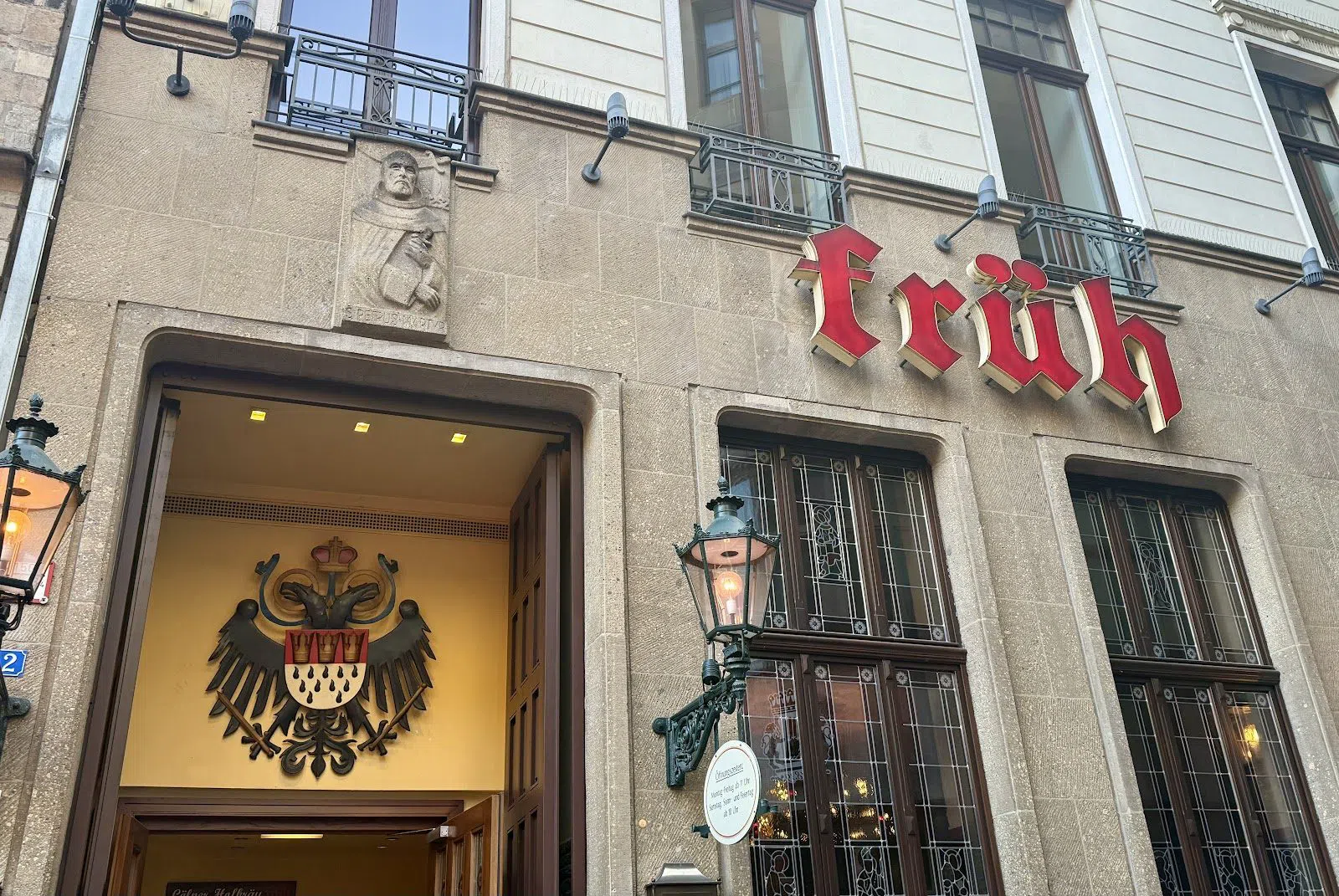
Brauhaus FRÜH am Dom (Altstadt, beside the cathedral) is the default first-timer's brauhaus and earns it. A large multi-room house built for volume, it takes walk-ins without fuss and reserves side rooms for parties, so it works for a couple slipping in for a Kölsch (around €2.30 for 0.2l) and a plate of something heavy (mains €12–20) as easily as for a coach party. The service is brisk, the refills relentless, and the coaster rule applies with particular vigour here.
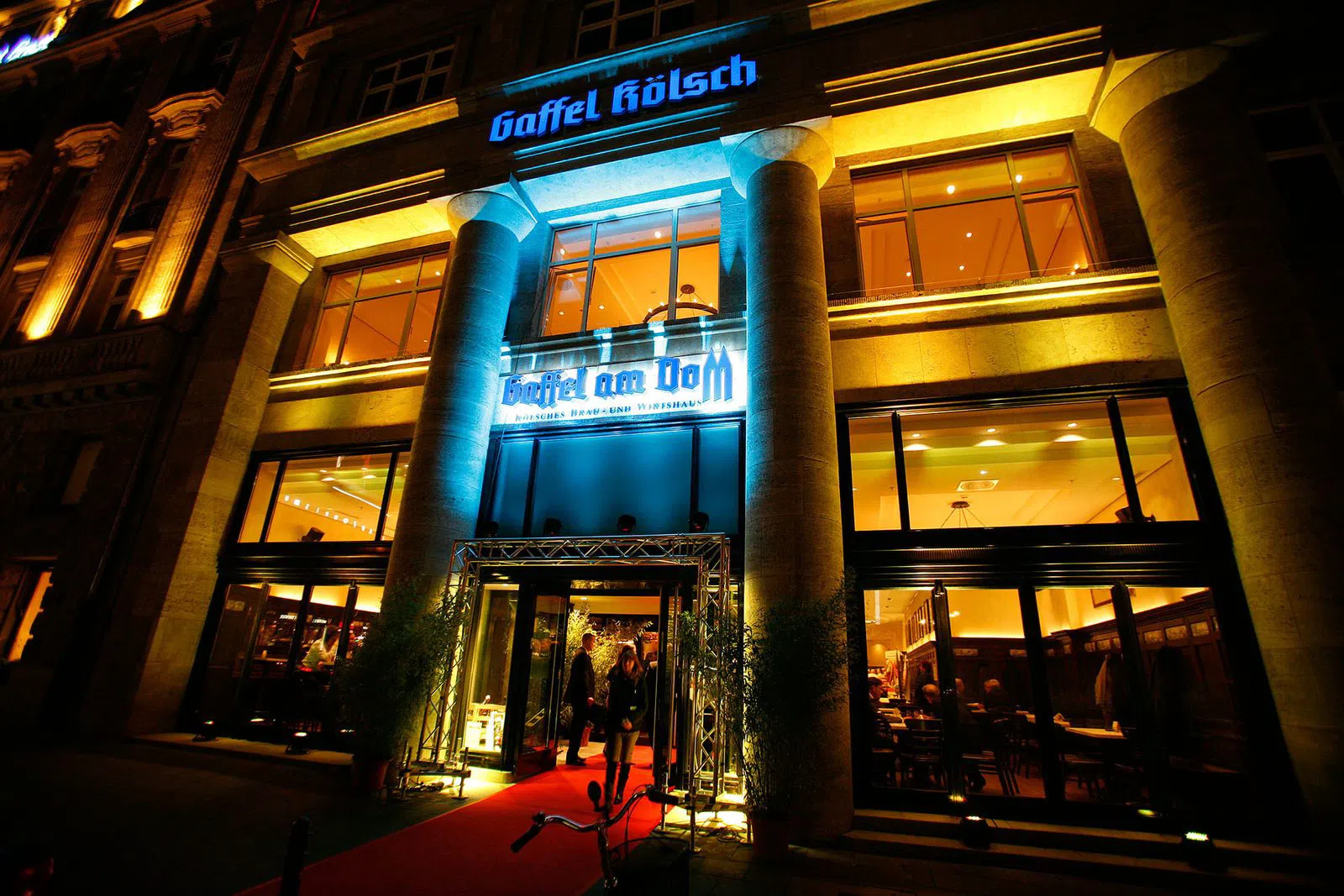
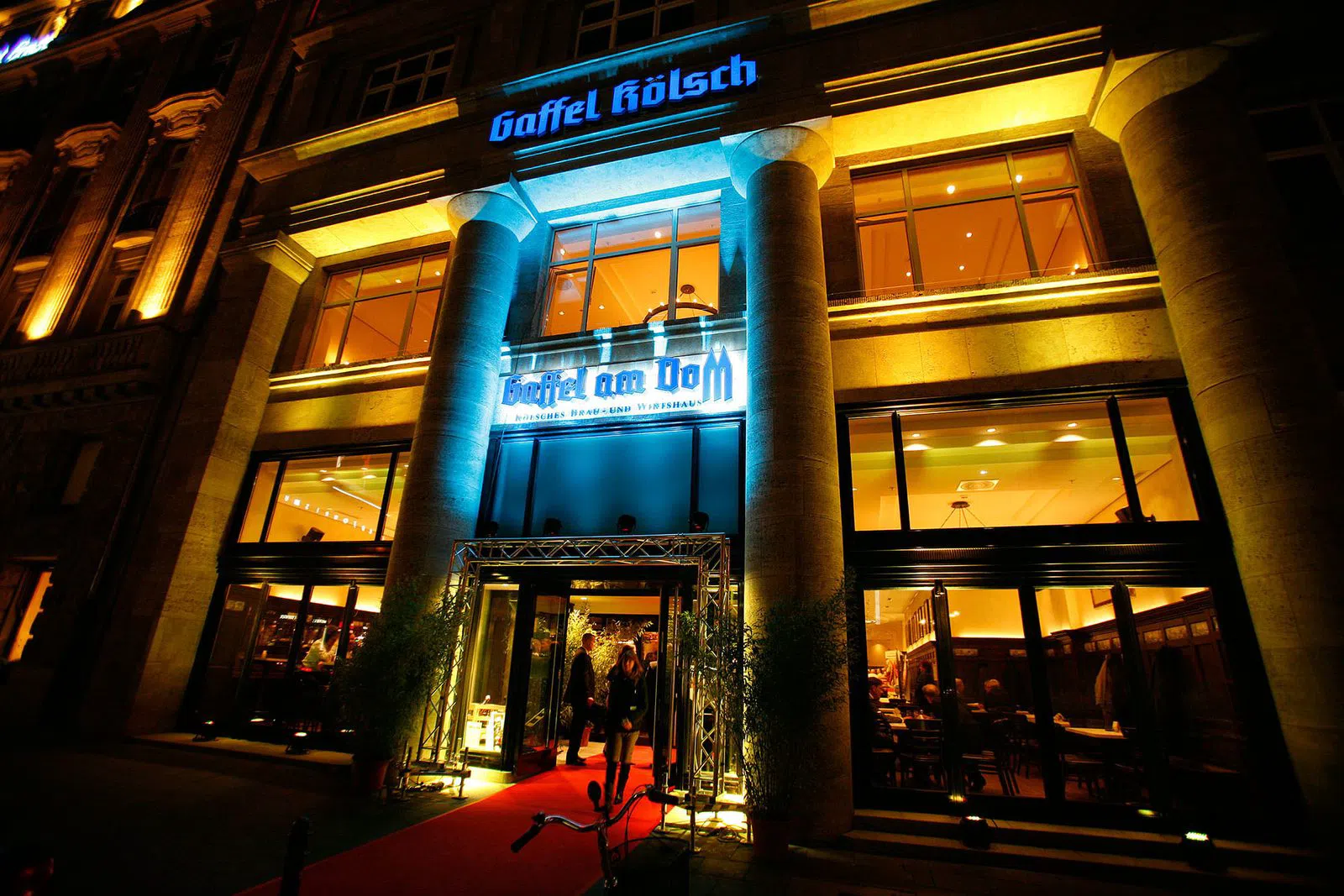
A minute away on the cathedral square, Gaffel am Dom (Altstadt, on the square) is the house to pick when the group wants a party as much as a beer. It is very group-friendly, takes large bookings, and runs a Saturday 'Brauhaus Beats' sing-along night with free entry — reliably the liveliest of the big houses. Prices sit in the same bracket (Kölsch about €2.30, mains €13–22). Its position, right on the square, makes it impossible to miss and easy to lose an evening in.
Brauhaus Sion (Altstadt, near the Dom) carries a brewing name traced to 1318 and behaves accordingly: roomy, central, and built to absorb tour parties without strain. It is less characterful than some of its neighbours, but that dependability is the point — a safe, spacious fallback when everywhere nearby is full, with Kölsch around €2.30 and mains €12–21.
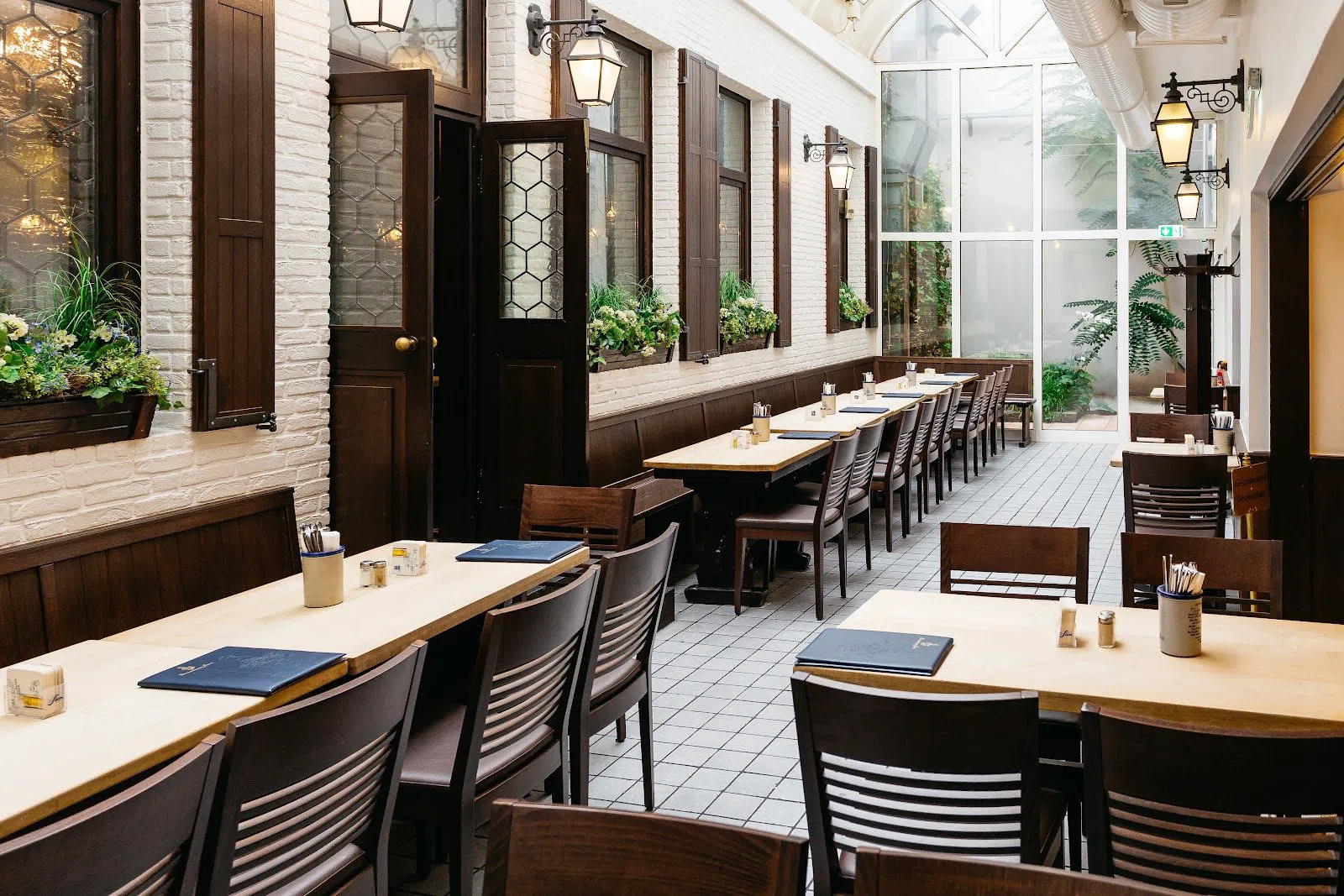
For atmosphere over scale, Peters Brauhaus (Altstadt) has the prettiest interior of the classic houses, thanks to a jewel-box stained-glass ceiling worth arriving early to sit beneath. It is comfortable for groups across several rooms and takes reservations, at a slightly higher register (€€; Kölsch around €2.30, mains €13–22). Book if you want the good room rather than the overflow.
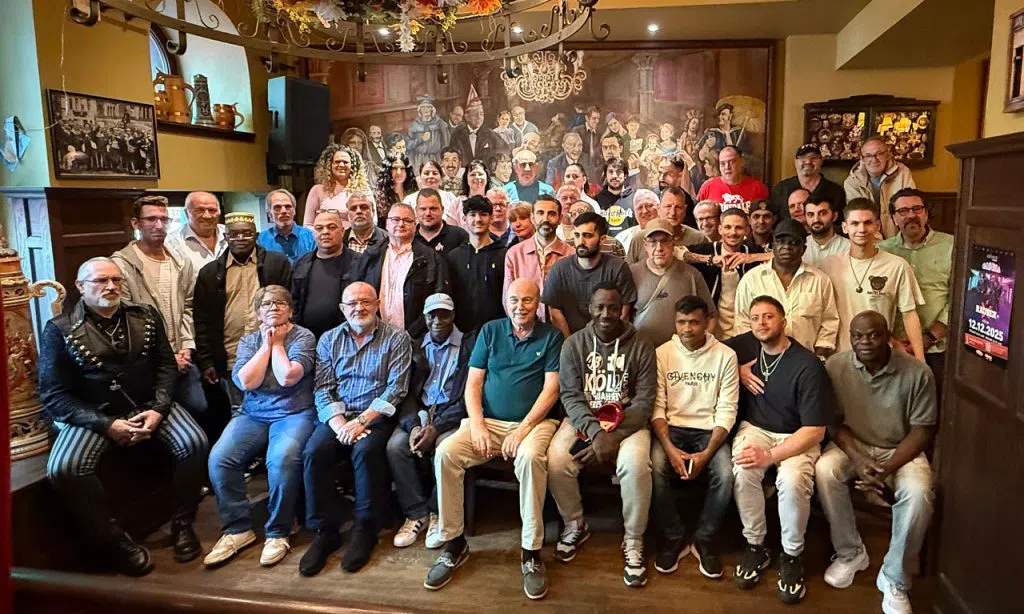
If the cathedral houses start to feel like coach-tour territory, Bierhaus en d'r Salzgass (Altstadt) is the quieter, more characterful pick a few streets back. It is snug but still group-friendly if you reserve a larger table, and it pours the excellent barrel Päffgen rather than its own label — a real draw for anyone who has already grown fond of that beer. Reckon on Kölsch around €2.30 and mains €13–22.
The purist's pour: straight from the wood
Two houses reward the traveller who wants the ritual at its least polished.
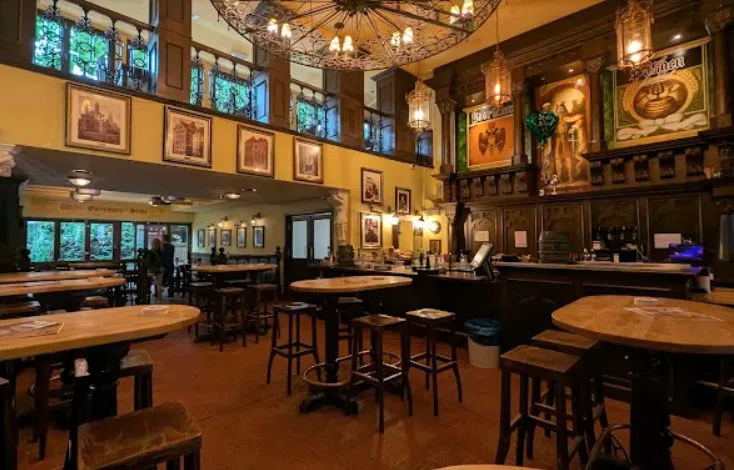
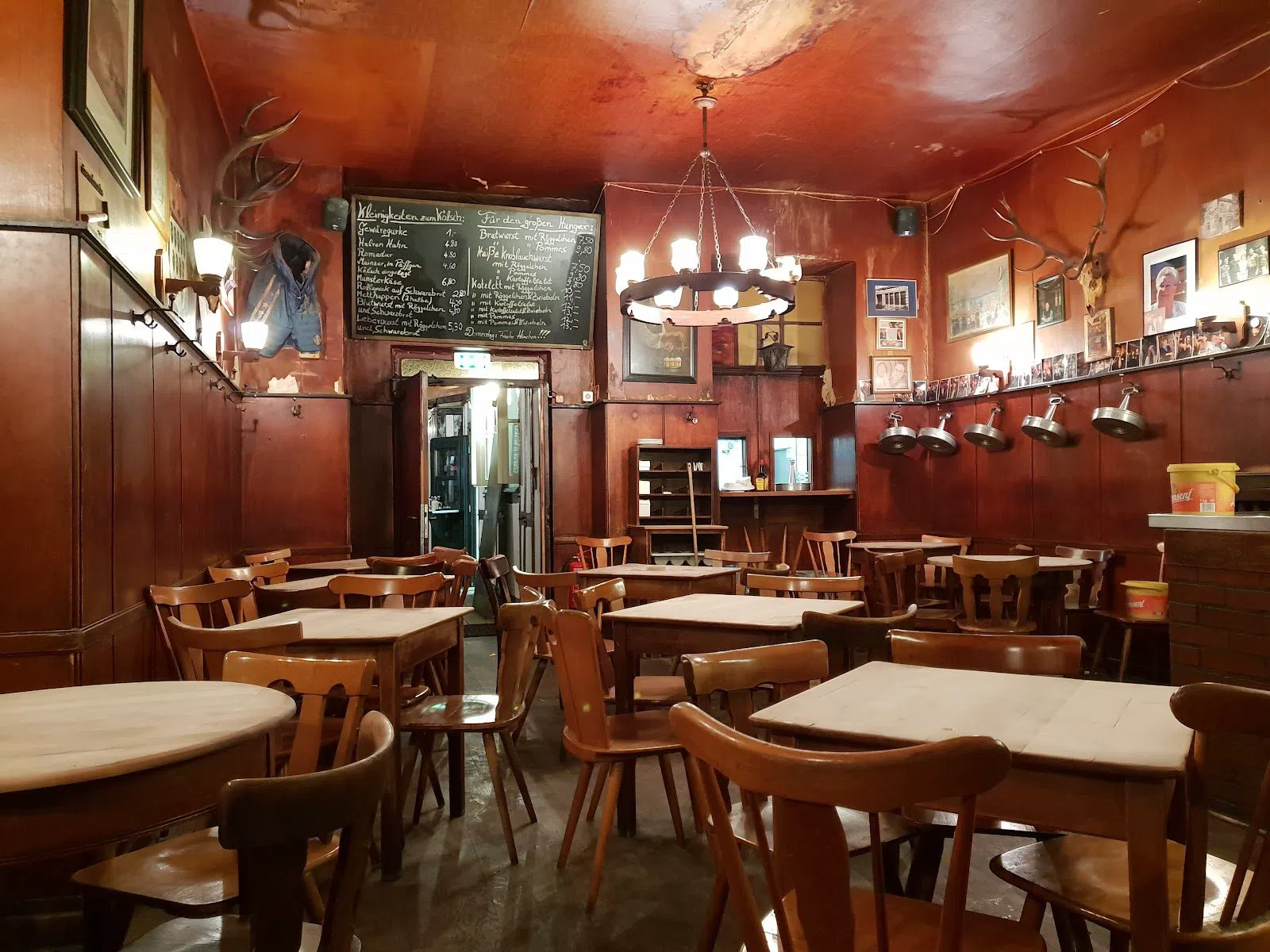
Päffgen (Friesenviertel, north-west of the Altstadt) is where purists start. Old-school and small inside, it is one of the last houses pouring unpressurised Kölsch straight from the wooden cask — no gas, just gravity and a practised hand — and the beer (around €2.20) tastes softer and rounder for it. The service is no-frills, cash is preferred, and the hearty plates (€10–18) are exactly what the room is for. Larger groups do better in the courtyard than crammed inside; two or four at a table indoors is the ideal.
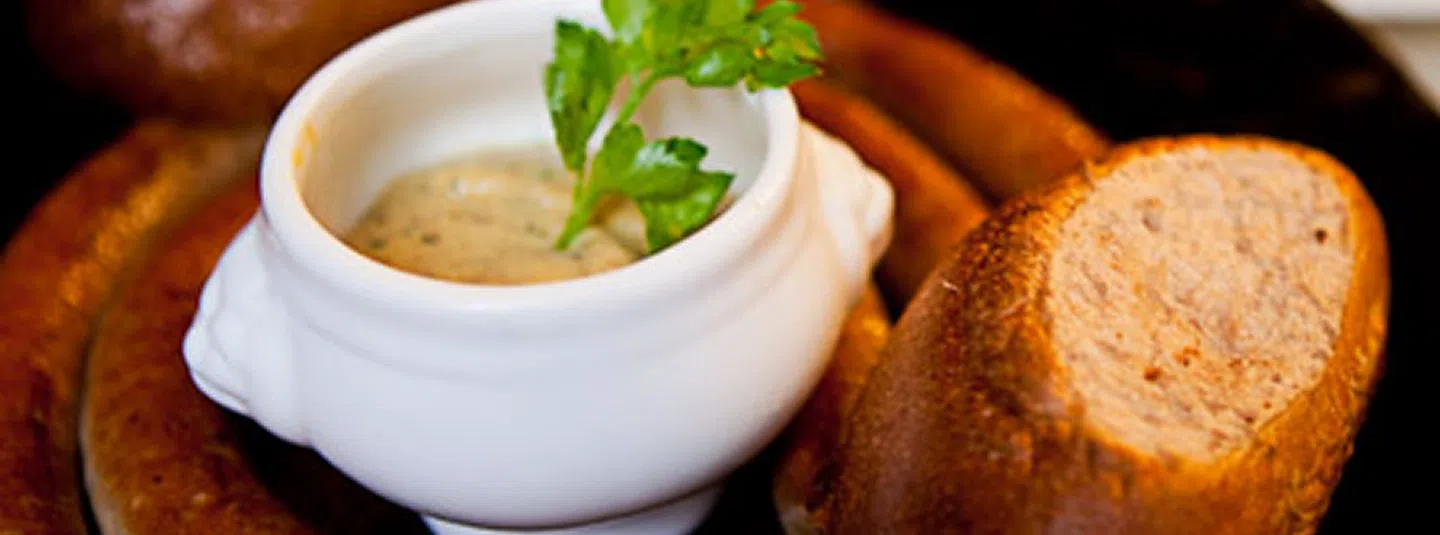
Across the Rhine in Deutz, Gaststätte Lommerzheim (Deutz, right bank) is spoken of as the Kölschest of all Kölsch pubs — an unpretentious institution, now run by Päffgen, that locals guard fiercely. There are no reservations and the room is cramped, so it suits small groups only; expect to queue, and in warm weather to drink in the beer garden rather than at a table. Go for the atmosphere and the legendary Kotelett — a pork chop of intimidating size, around €14 — with Kölsch at about €2.20. It is not the place for twelve people with a plan; it is the place for two or three with an afternoon to spare.
A softer, more polished glass
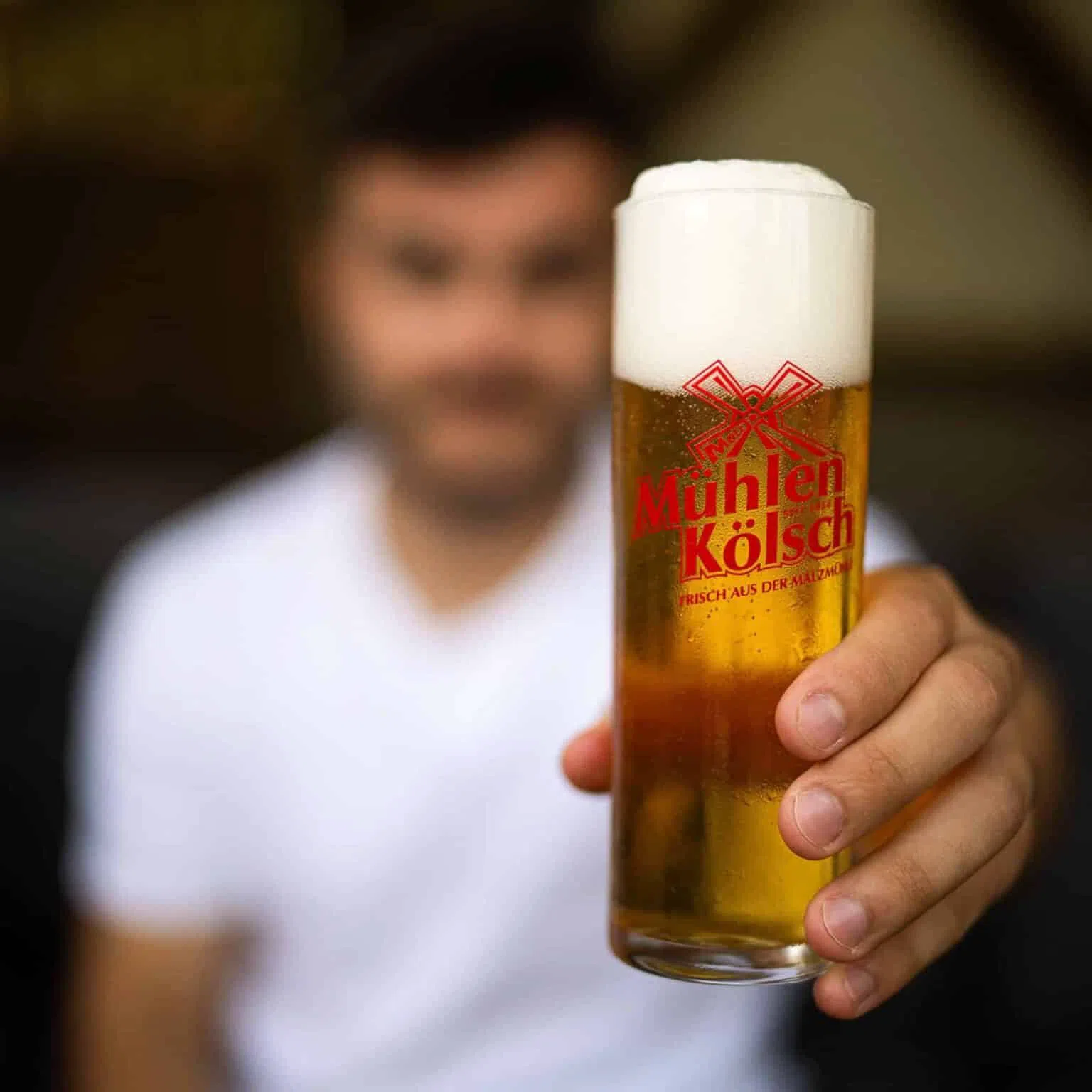
Brauerei zur Malzmühle (Altstadt, near Heumarkt) sits a notch above the tourist halls without losing the tradition. Family-run but sizeable, it welcomes groups and reservations and has its own hotel attached, which makes it a tidy anchor for a party staying in one place. The house Mühlen Kölsch is one of the softest in town, and the brewery wears its history lightly — Bill Clinton drank here, a fact the room mentions with restraint. Prices run a touch higher (€€; Kölsch around €2.40, mains €14–24) for the extra comfort.
Beyond the old town
The Altstadt is where the ritual is most concentrated, but three houses further out are worth the tram fare, particularly if you have already done the cathedral circuit.
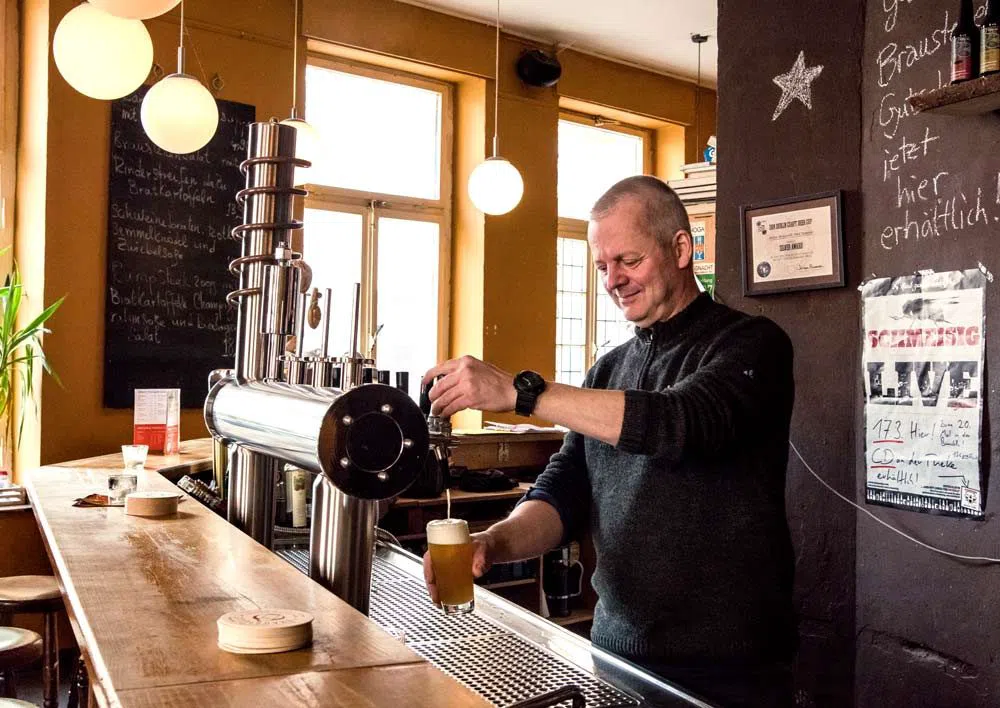
Gasthaus-Brauerei Braustelle (Ehrenfeld, west of the centre) is the city's smallest brewery and its craft-beer counterpoint — the pick for a group that has drunk its fill of the traditional halls and wants something inventive. The room is small, so it is best midweek and worth booking ahead for a larger party; beers run €3–4.50 with a short food menu. Come for curiosity rather than the classic Stange-and-Kranz routine.
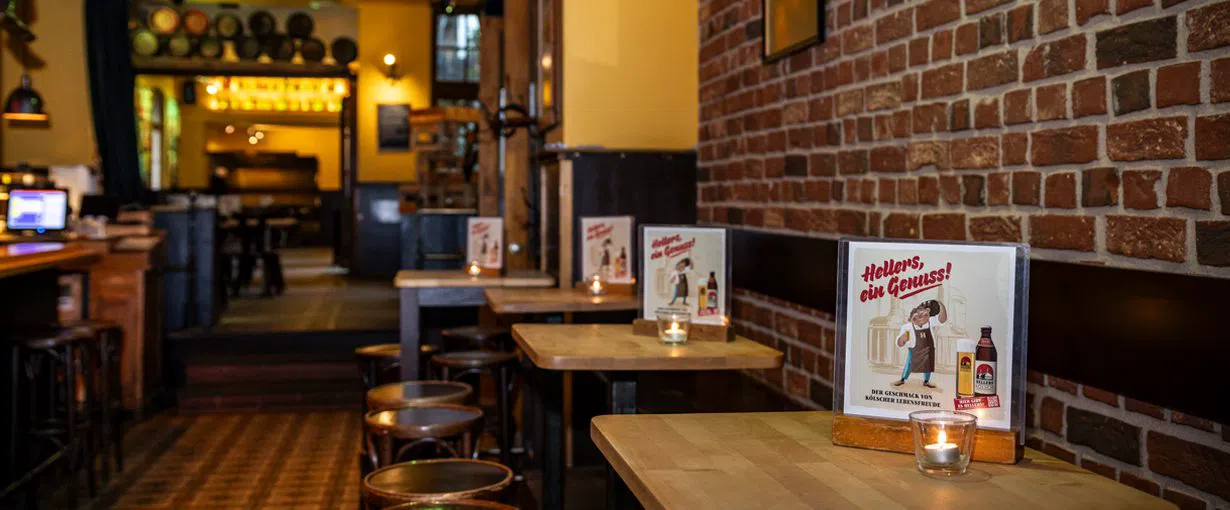
Brauhaus Hellers (Südstadt, by the Volksgarten) pours an organic, unfiltered Kölsch — a distinctive cloudy alternative to the bright standard — and draws a younger, student-quarter crowd. It is roomy and takes groups, but its real asset is the huge beer garden beside the Volksgarten, which in warm weather is the best-value spot in the city for a large group to spread out. Kölsch is around €2.40 and mains €12–20.
Brauhaus Pütz (Belgisches Viertel) is the genuinely local pick in the city's most fashionable quarter, comfortably away from the tourist crush. It is mid-sized and unpretentious, and the open Schwemme — the standing bar — lets you watch the pour up close, which is half the pleasure. Prices stay honest (Kölsch around €2.20, mains €11–19), and the neighbourhood around it rewards a wander before or after.
When the group is large
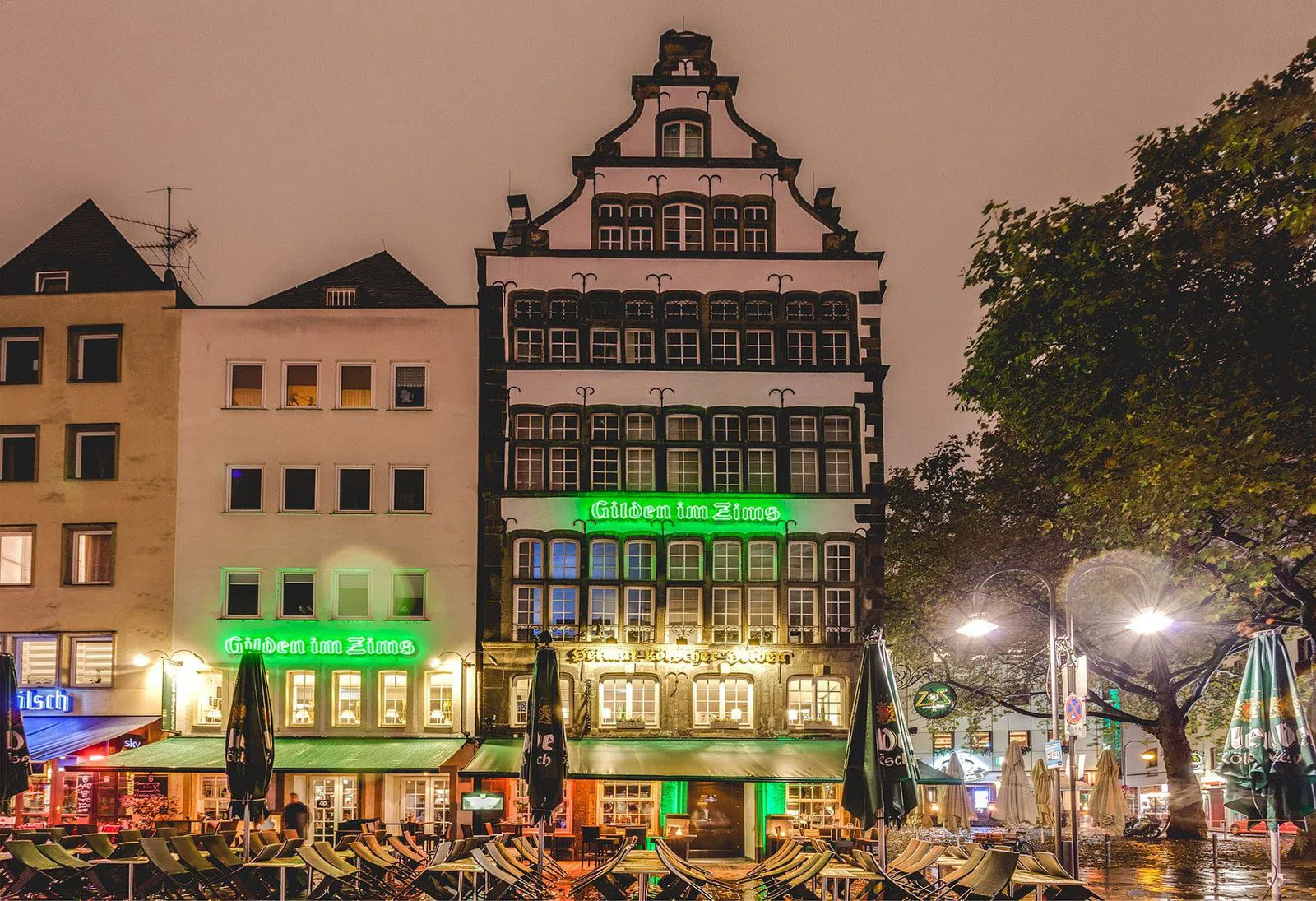
If your party is genuinely big — a stag or hen weekend, a team night, twenty-plus people who need to sit together — most houses will strain. Gilden im Zims (Altstadt, near Heumarkt) will not. Billed as the 'home of Kölsch heroes', it is a three-floor, roughly 800-seat house with one of the largest capacities in town, and it absorbs a crowd better than anywhere else, often with live entertainment laid on. It is built for events, so it lacks the intimacy of the smaller houses — but that is precisely why it works when numbers are the problem. Kölsch runs around €2.30, mains €12–21, and booking ahead for a big table is essential.
For context on the wider city — where to base yourself, what to see between rounds — the Cologne guide is a useful companion, and if you are still deciding where to stay, a Cologne hotel search will show what sits within stumbling distance of the Altstadt houses.
Practicalities
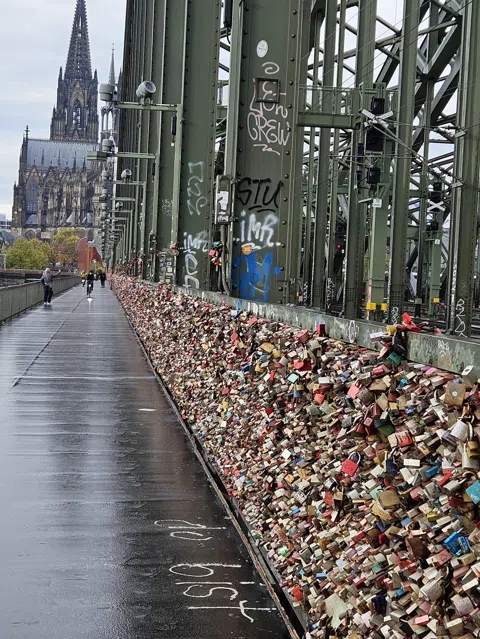
Getting around. The Altstadt houses are all within a short walk of the cathedral and the main station, so you can do four or five on foot in an evening. Deutz (for Lommerzheim), Ehrenfeld (Braustelle) and the Südstadt (Hellers) are a few minutes out by U-Bahn or tram; buy a day ticket for the KVB network if you plan to range beyond the centre. Cross the Rhine to Deutz on foot over the Hohenzollern bridge if the weather allows — it is a short, pleasant walk with the cathedral at your back.
Cash and payment. Bring euros. The big houses increasingly take cards, but the older and smaller pubs — Päffgen, Lommerzheim — prefer or expect cash, and settling a coaster tally is faster with notes in hand. Tipping is modest: round up, or add a euro or two per round for the Köbes.
Timing. Traditional houses fill from early evening and run late; a table for a large group on a Friday or Saturday needs a reservation days ahead. Weekday afternoons are the calmest window and the best time for the small purist pubs, where you may otherwise queue. If you want the stained-glass room at Peters or a seat in the Hellers beer garden on a warm evening, arrive before the after-work rush.
Budget. Kölsch is cheap and consistent — roughly €2.20–€2.40 for each 0.2-litre glass across almost every house — which makes the running total sneak up faster than you expect once the Köbes gets going. A hearty main runs €11–24 depending on the house; the €€ places (Malzmühle, Peters, Braustelle, Bierhaus en d'r Salzgass) charge a little more for comfort or invention. A full evening of food and a steady stream of Kölsch rarely tops €40–50 a head, and often less. Watch the coaster, and remember the only way to stop the beer is to cover the glass.
Before you go
What is Kölsch and why is it served in such a small glass?
Kölsch is a pale, top-fermented beer brewed by agreement only in and around Cologne. It is served young and lightly carbonated in a 0.2-litre glass called a Stange because a larger measure would go flat and warm before you finished it — the small glass keeps every pour cold and fresh, and keeps the waiter moving.
How do I stop the waiter bringing more beer?
You don't order refills in a Cologne brauhaus — the Köbes replaces your near-empty glass automatically and marks each round in pencil on the coaster beneath it. To stop, lay the coaster flat on top of your glass. That is the universal signal you are finished, and only then will the beer stop coming.
Which Cologne brauhaus is best for a large group?
For a genuinely big party, Gilden im Zims near Heumarkt has one of the largest capacities in town — three floors and around 800 seats — and absorbs crowds better than anywhere else. Gaffel am Dom and Brauhaus FRÜH am Dom also take large bookings, while Brauhaus Hellers offers a huge beer garden for warm-weather groups. Reserve well ahead for weekends.
Do Cologne brauhäuser take reservations and card payments?
Most of the larger houses — Früh, Gaffel, Peters, Sion, Malzmühle, Gilden im Zims — take reservations and increasingly accept cards, and booking is essential for big groups on Friday and Saturday. The smaller, older pubs such as Päffgen and Lommerzheim prefer cash and, in Lommerzheim's case, take no reservations at all.
Where do locals drink rather than tourists in Cologne?
For a less touristy pour, cross the Rhine to Gaststätte Lommerzheim in Deutz, seek out Päffgen for unpressurised Kölsch straight from the wood, or head to Brauhaus Pütz in the fashionable Belgisches Viertel. Bierhaus en d'r Salzgass is a quieter Altstadt alternative when the cathedral houses feel like coach-tour territory.