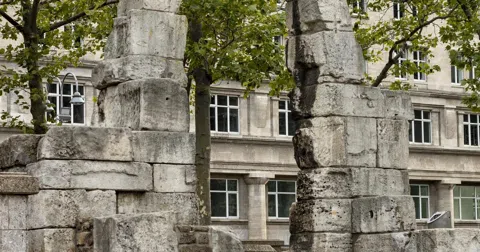
Especial Cologne
Cologne's Gestapo cells and the Jewish sites around them
Under Appellhofplatz is the Gestapo prison. The schoolyard that sent 130 children out on Kindertransports and the brick wall where the trains loaded are both within the same day's walk.
Por Bram HendriksSlow walks, Romanesque churches and the city beyond the Dom
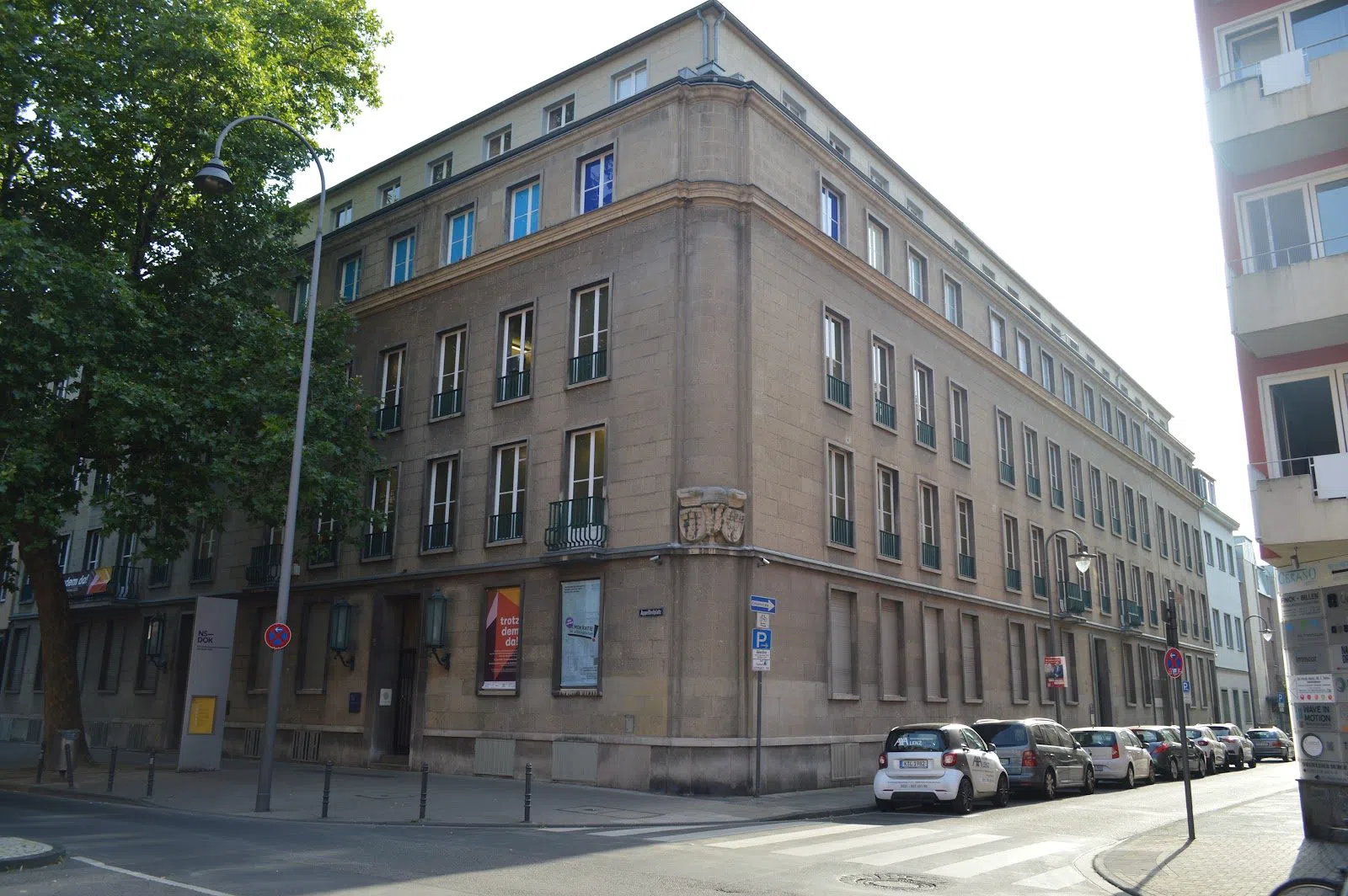
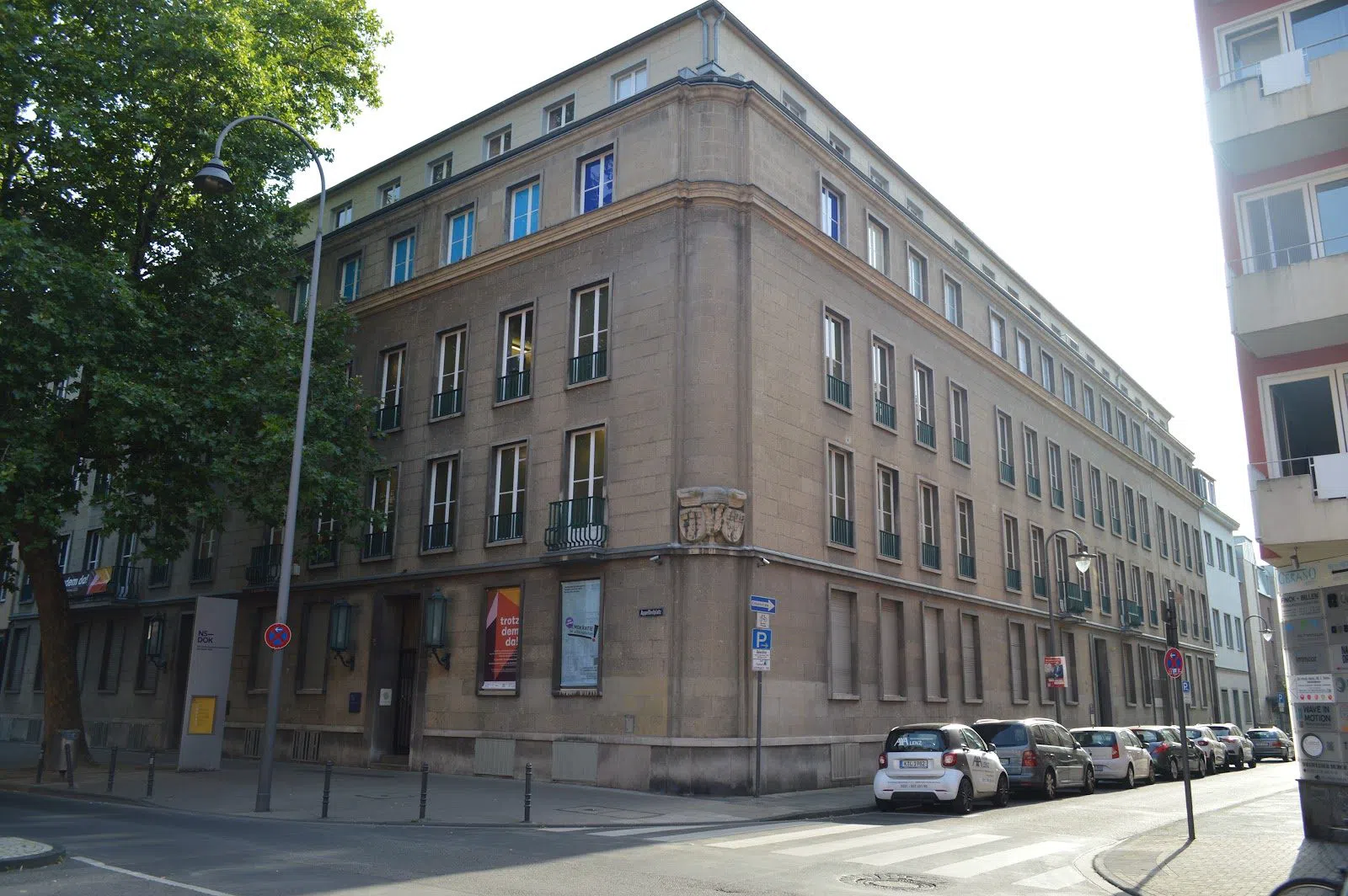
Ten whitewashed cells sit in the basement of a grey corner office block at Appellhofplatz 23-25. The Gestapo ran Cologne from the offices above them. Their prisoners covered the cell walls floor to ceiling with roughly 1,800 scratched and pencilled inscriptions in many languages.
The cells at the EL-DE-Haus
NS-Dokumentationszentrum der Stadt Köln (EL-DE-Haus) (Appellhofplatz) is the only intact Gestapo prison memorial of its kind in Germany. From the street it looks like a plain 1930s corner office block with a neon-lit stair core. Downstairs, the ten barrel-vaulted cells stand behind heavy barred doors.
Buy the €2 audio guide at the ticket desk. The exhibition panels upstairs are in German only, and the guide runs in eight languages, English and Hebrew among them. Without it, a visitor who has no German walks past the documentation itself.
Book the in-house guided tours online or on 0221/221-26361; they last 1.5 hours. A group pays €112.50 plus entry, a youth group €75. Foreign-language and weekend slots carry a €15 surcharge. The ticket area has a cloakroom and no limit on bag size.
Planifica tu viaje a Cologne
Precios en directo de nuestros socios de reservas.
Cancelación gratuita en muchas habitaciones. Podemos recibir una comisión cuando reservas.
Erich-Klibansky-Platz and the Jawne schoolyard
Lern- und Gedenkort Jawne / Löwenbrunnen (Erich-Klibansky-Platz, off Albertusstraße) is a five-minute walk from the EL-DE-Haus and the obvious second stop. A small bronze lion fountain stands on the quiet square, and the plates around it carry the engraved names and ages of 1,100 murdered Jewish children from Cologne.
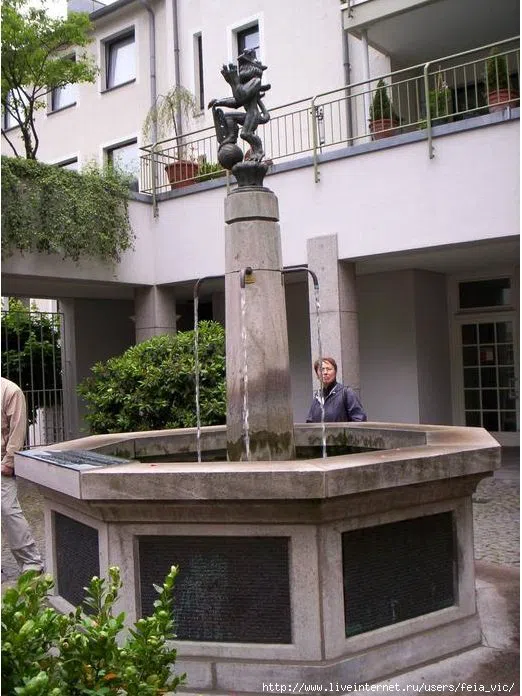
The low post-war building behind the fountain houses the learning site. The Jawne was the Rhineland's only Jewish grammar school. Its head, Erich Klibansky, got 130 children out on Kindertransports before he was murdered.
Opening slots are Tuesday and Thursday 11:00 to 14:00 and Sunday 12:00 to 16:00. Entry is free, with a donation box. A free public tour, 'Around the Jawne Schoolyard', runs on the first Sunday of the month at 12:00.
Roonstraße 50 and a working congregation
Synagoge Roonstraße (Synagogen-Gemeinde Köln) (Roonstraße 50) is a living congregation with a permanent police post and bollards at its street door. The 1899 brick building is neo-Romanesque, with a ribbed dome and a rose window. It burnt out in 1938 and was rebuilt in 1959. Inside, the barrel vault is gilded and painted blue.
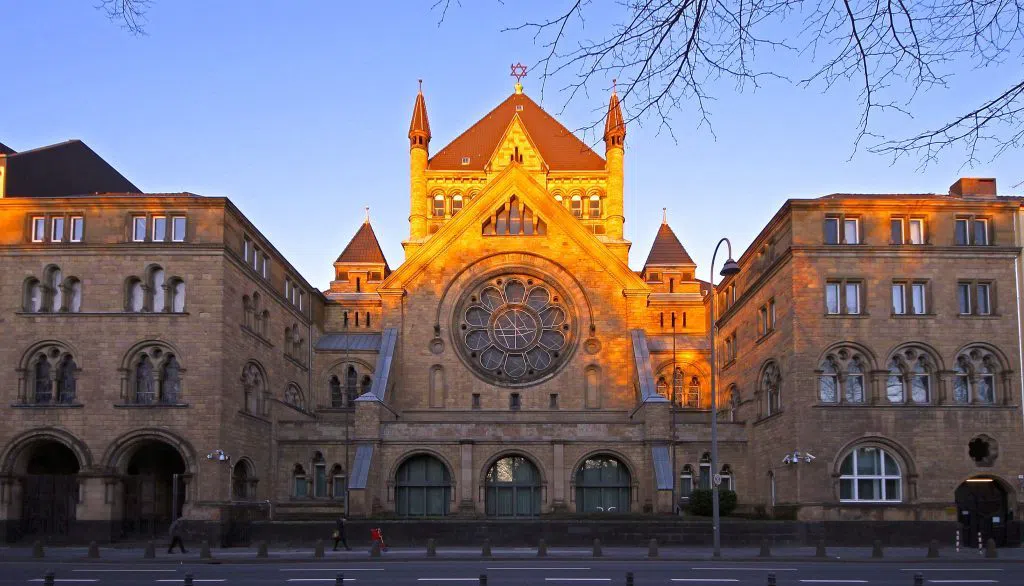
The congregation takes visitors by appointment only. Most people come on a group tour booked through Esther Bugaeva (0221 71662-335, [email protected]), and one public tour a month takes individuals at €11 a head, often fully booked. Bring photo ID for the security screening. Men must cover their heads.
Deutz, Müngersdorf and the deportation chain
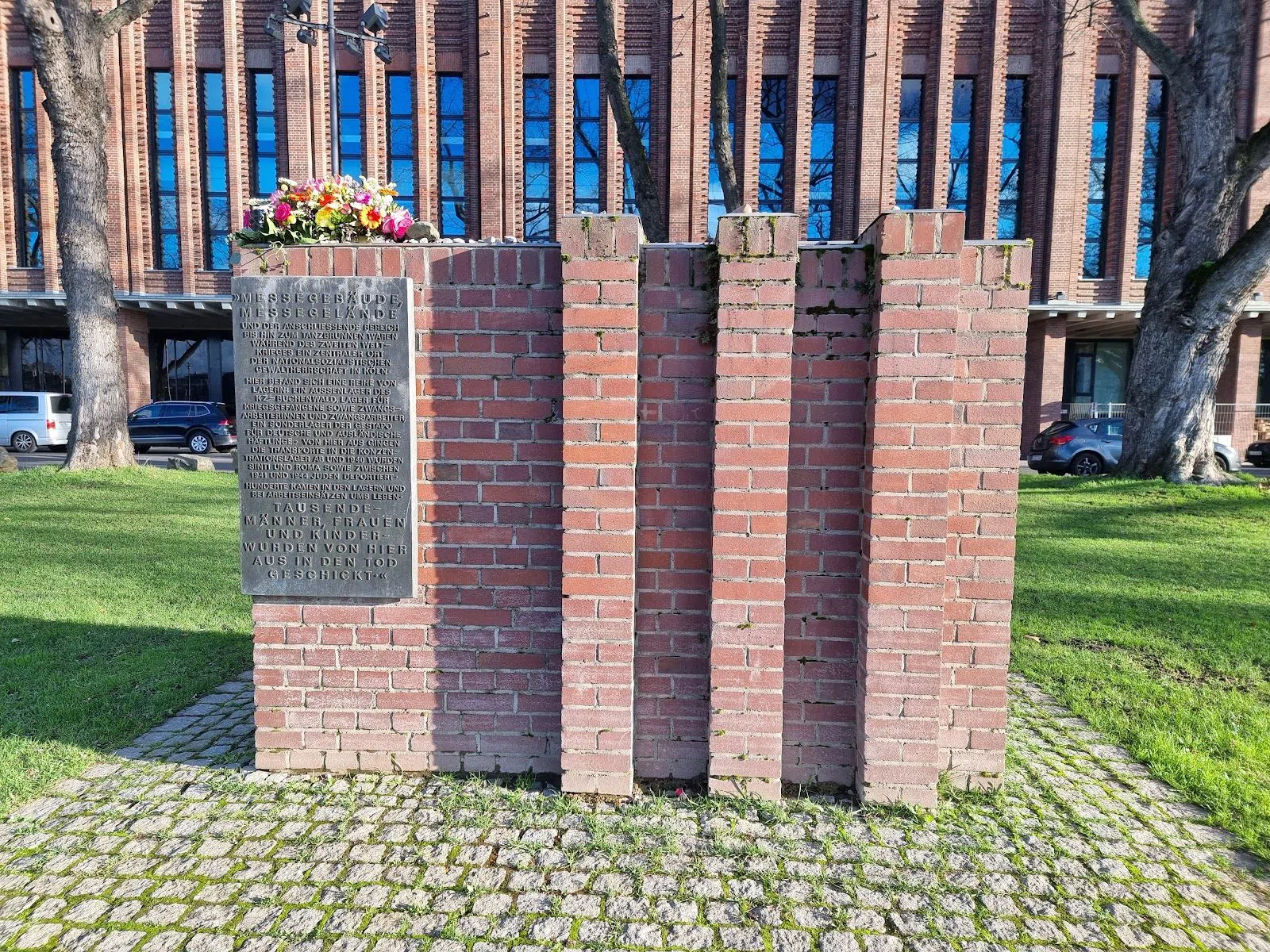
Mahnmal Messelager Köln-Deutz (in front of the old Rheinhallen of Kölnmesse, Deutz) is a two-metre red brick wall by the sculptor Wolfgang Reuter, built to match the 1920s brick exhibition halls behind it. More than 11,000 Jews and 1,500 Sinti and Roma were deported from the camp and the adjoining low-level station. A separate plaque sits at the Auenweg entrance to Köln Messe/Deutz station.
The wall stands two minutes from the Deutz platforms, outdoors on public ground, open at all hours and free. Fold it into an arrival or a departure.
Gedenkort Deportationslager Köln-Müngersdorf (Fort V) (Walter-Binder-Weg) is the field where Cologne's Jews were held before the trains. A 280-metre Path of Remembrance runs through scrubby parkland, past Simon Ungers' free-standing 'Wall' sculpture and three low red-brick information stones chosen to echo the brickwork of the vanished Fort V casemates. The site is unstaffed and permanently open, and QR codes on it link to NS-DOK background material.
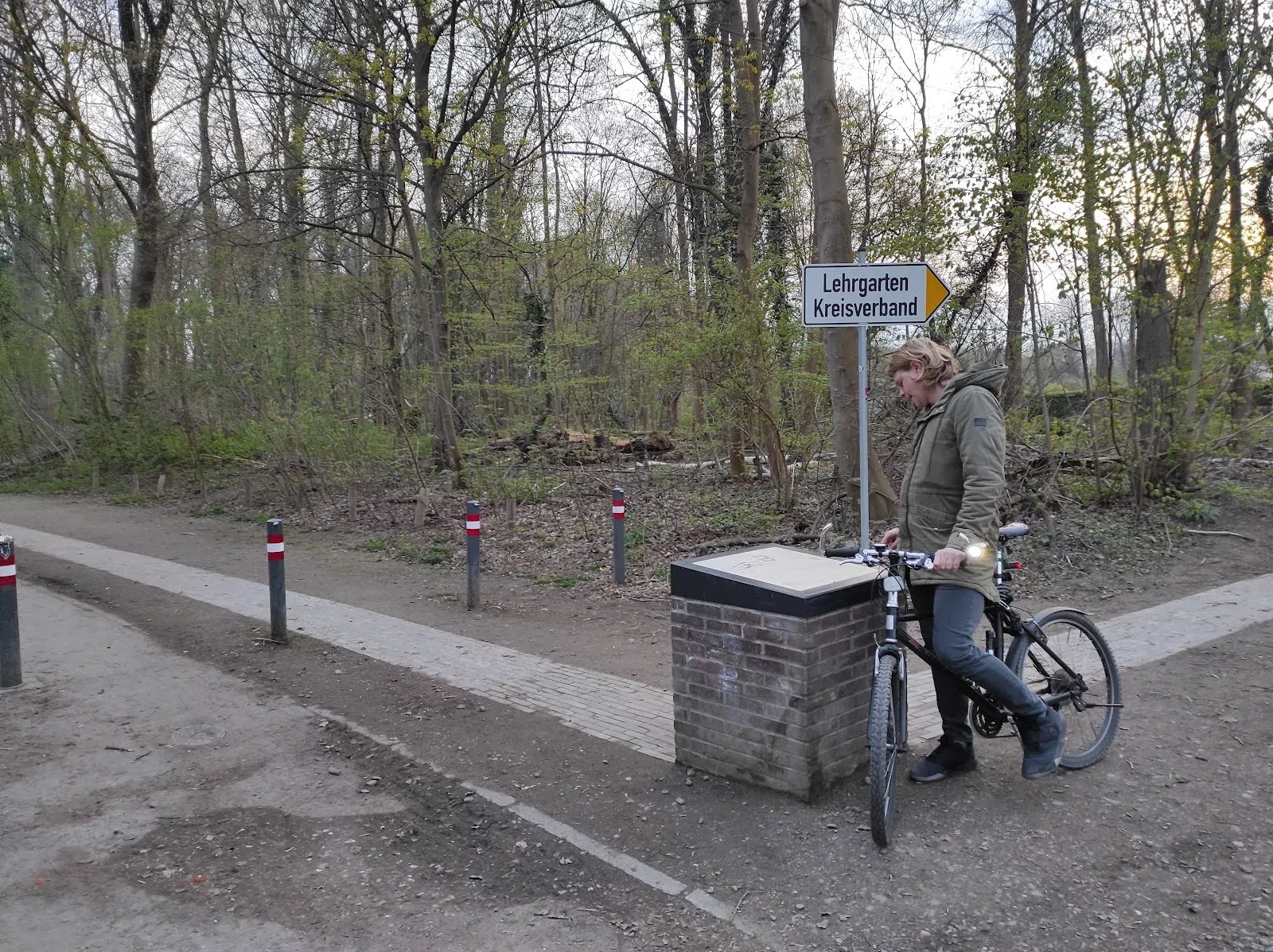
It is a tram ride out west, bleak and with nothing on display. NS-DOK runs occasional guided walks here. Go when you want the whole deportation chain rather than a single museum visit.
Bocklemünd cemetery
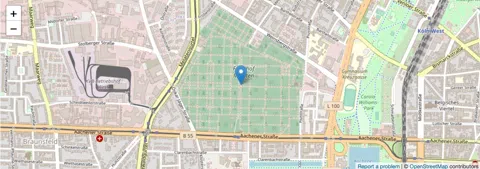
Jüdischer Friedhof Köln-Bocklemünd (Venloer Str. 1152) is a large walled cemetery with a domed red-brick mourning hall, long avenues of mature trees and rows of ivy-grown 19th-century family tombs. Many carry added inscriptions for relatives murdered in the camps. Headstones here record deaths at Theresienstadt and Auschwitz.
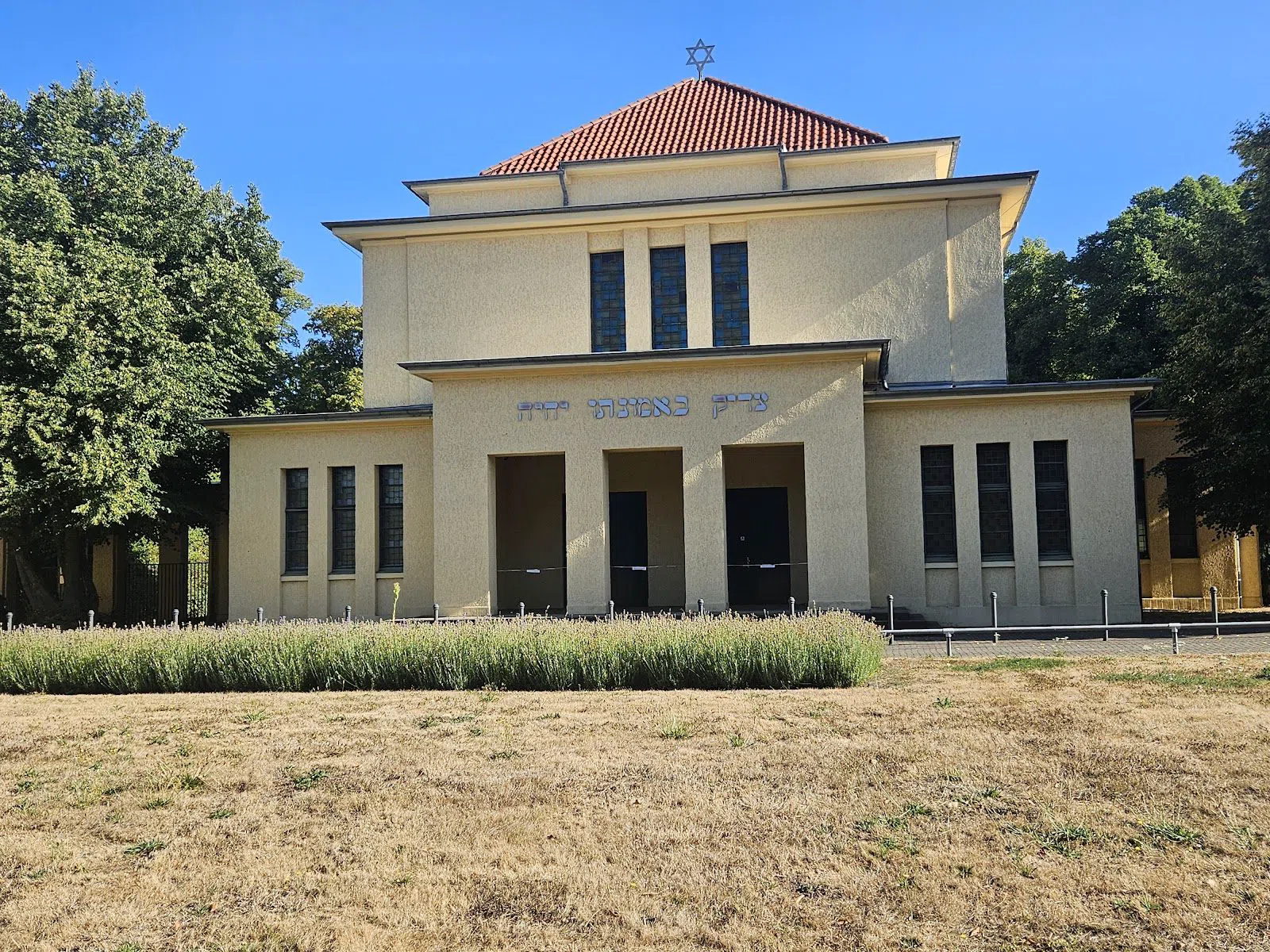
The cemetery admits visitors Monday to Thursday from 08:30 and on Sundays and holidays from 09:30, and closes on Saturdays and Jewish holidays. Men must cover their heads. Guided visits are arranged on request through the community ([email protected], 0221 508119), and entry is free.
Where the museums document, the graves give family names, dates, and deaths recorded in the camps. The ride out is worth it when you have a half-day.
Ehrenfeld and the Edelweiss Pirates
Edelweißpiraten memorial, Schönsteinstraße (Ehrenfeld, at the corner of Venloer Straße) marks an execution site under soot-darkened railway viaduct arches. The Gestapo publicly hanged 13 people there on 10 November 1944, among them teenage Edelweiss Pirates. Eleven forced labourers were hanged at the same place two weeks earlier.
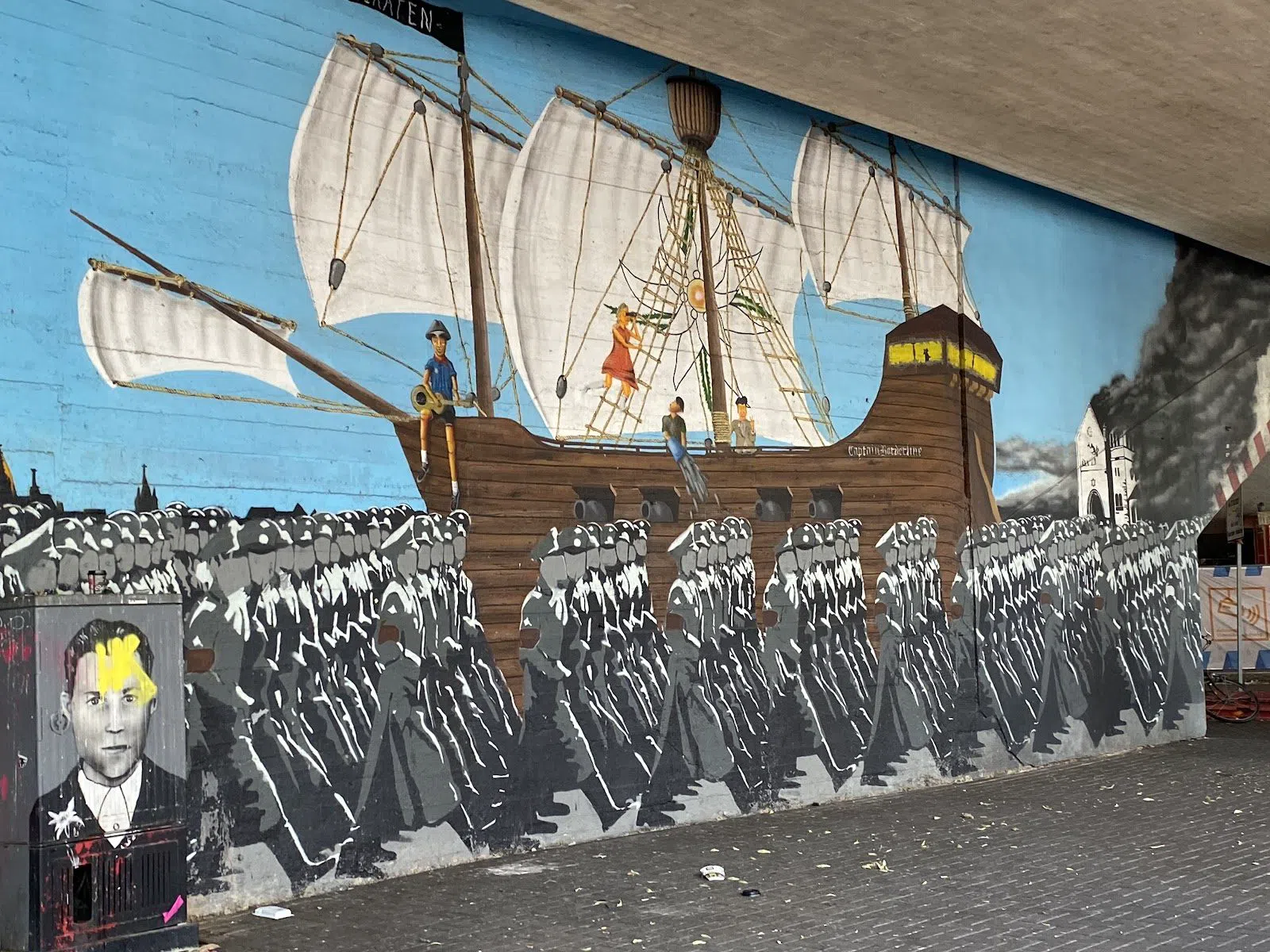
A bronze plaque sits under the brick arch. Beside it, a painted mural of 120 square metres fills the wall with the hanged teenagers. The street is public and open permanently, and NS-DOK's scheduled 'Treffpunkt Ehrenfeld' walk covers it.
What the bombing left
Kolumba stands on the bombed foundations of St. Kolumba, where Peter Zumthor's pale grey perforated brick wall rises straight out of the ruin. Daylight falls in dots through the gaps onto excavated rubble and walkways. The small 1950 'Madonna in the Ruins' chapel survives inside.
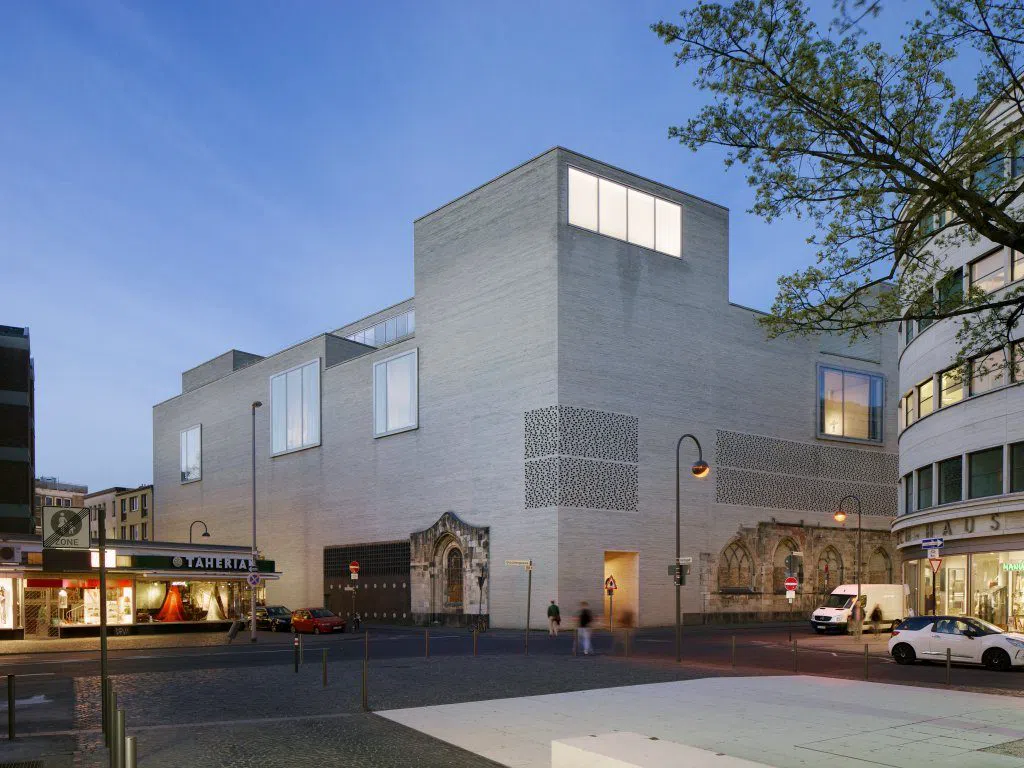
It opens daily 12:00 to 17:00 except Tuesdays. Entry is €8, or €5 reduced, with under-18s free. The annual exhibition changeover shuts it for weeks each summer, and it reopened on 19 September 2026 after the last one. Check its dates before you build a day around it.
Alt St. Alban (Trauernde Eltern) (Quatermarkt, behind the Gürzenich) was left in ruins on purpose, West Germany's first federal memorial to the dead of both wars. Open sky sits above bare stone walls. Two kneeling stone figures stand inside, Käthe Kollwitz's 'Grieving Parents' recut by Joseph Beuys and Erwin Heerich.
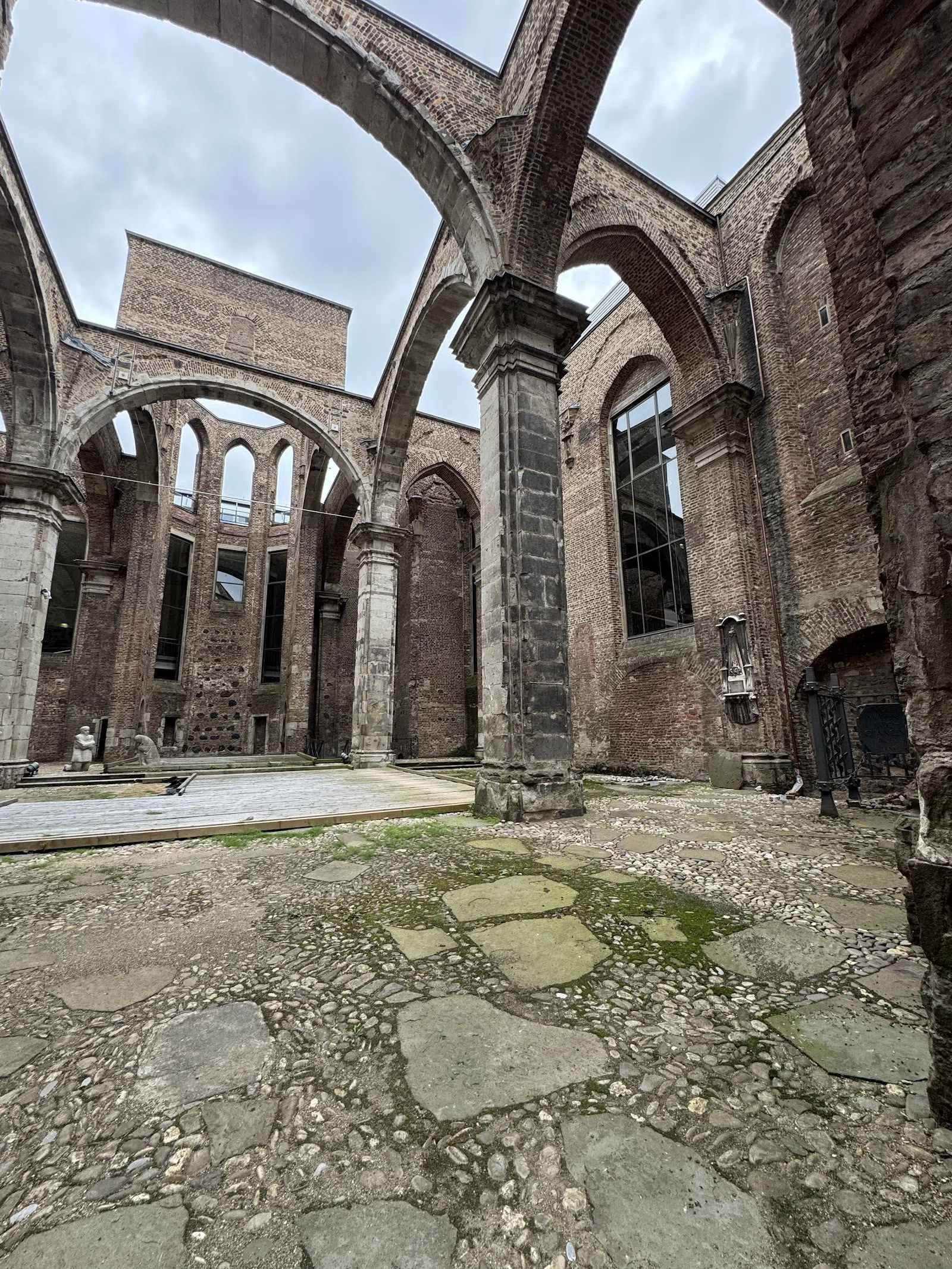
You cannot go in, and look at the figures through two iron gates. It is free, open at any hour and almost always empty, just off the Altstadt tourist track.
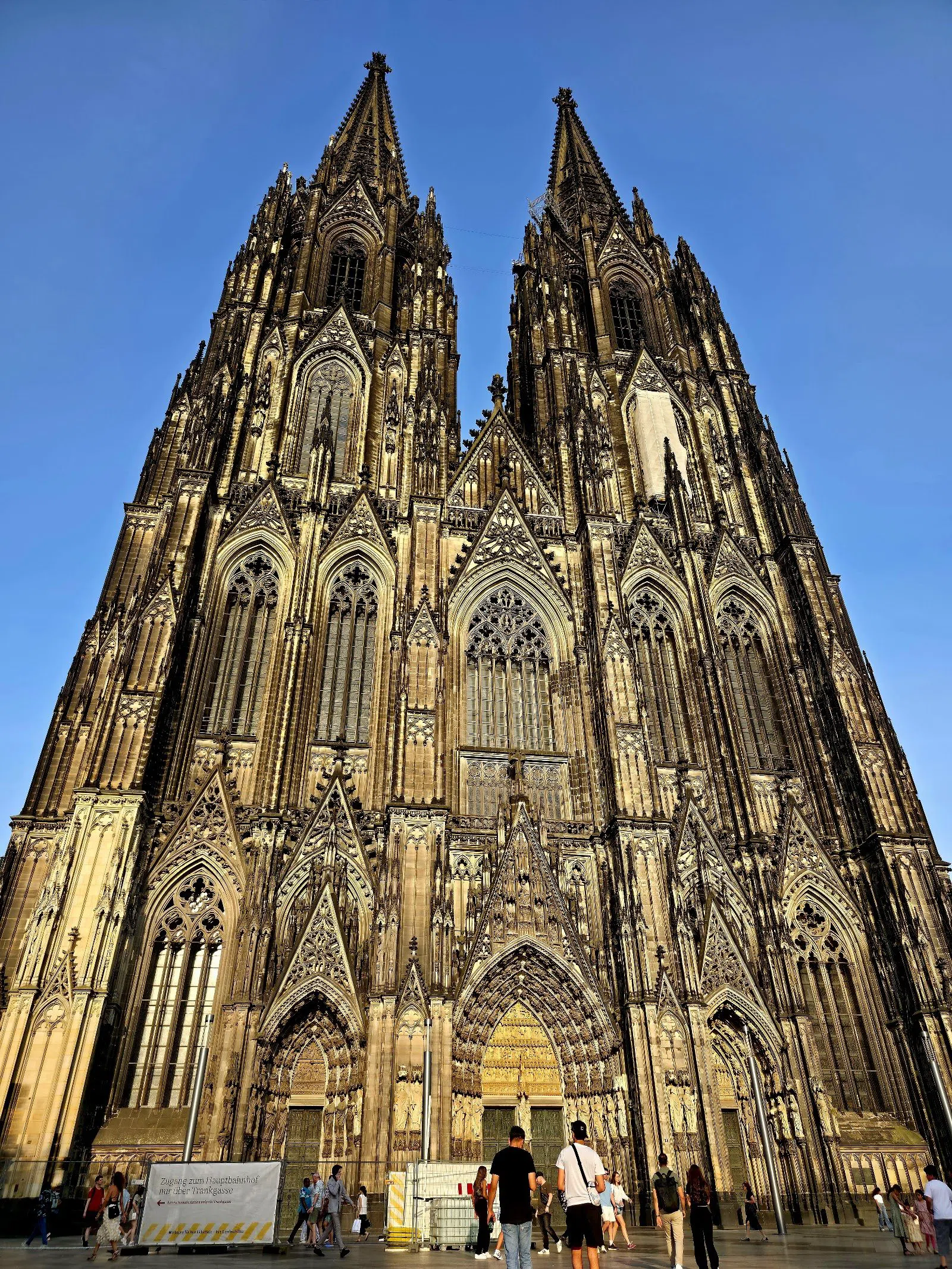
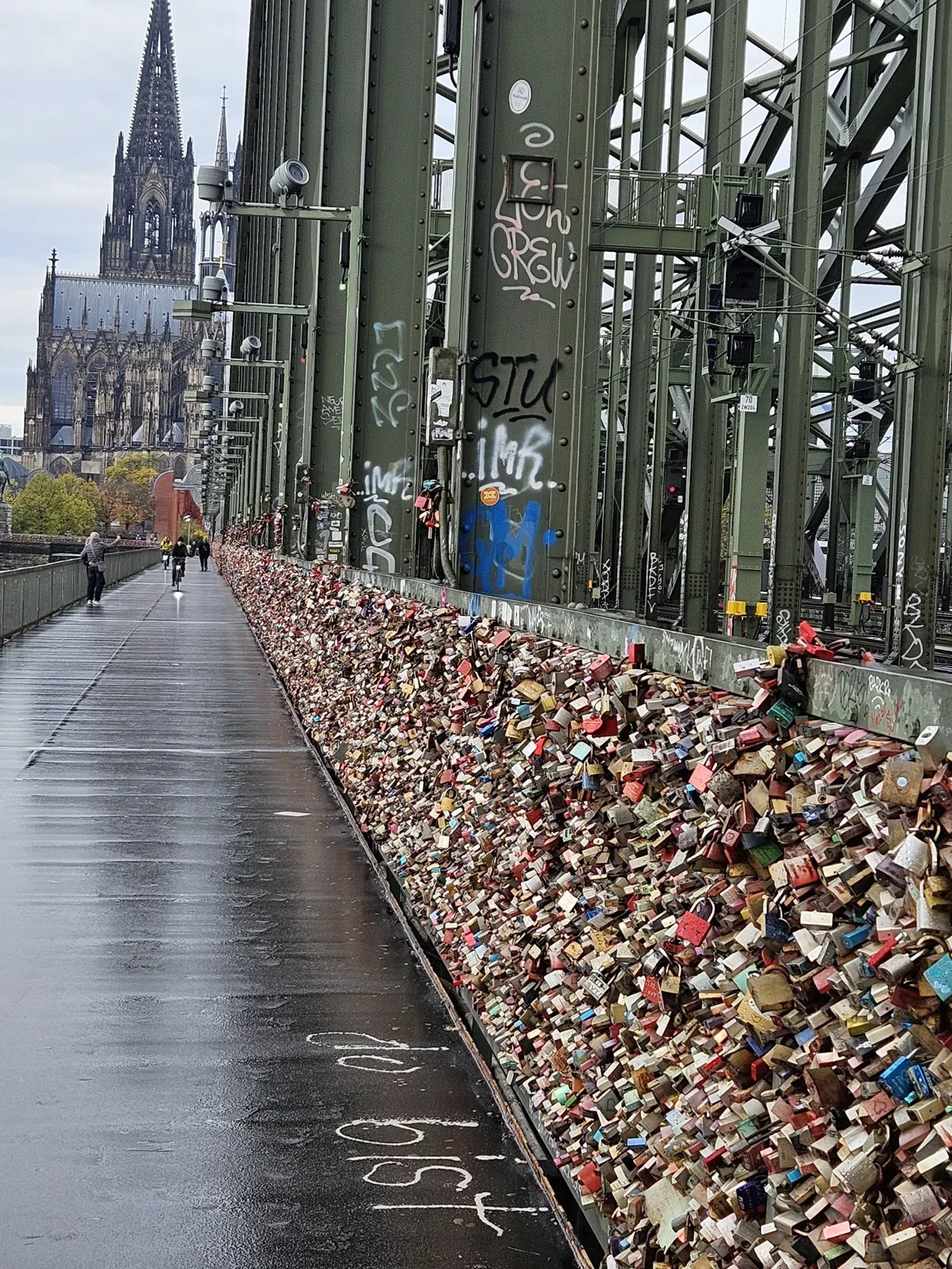
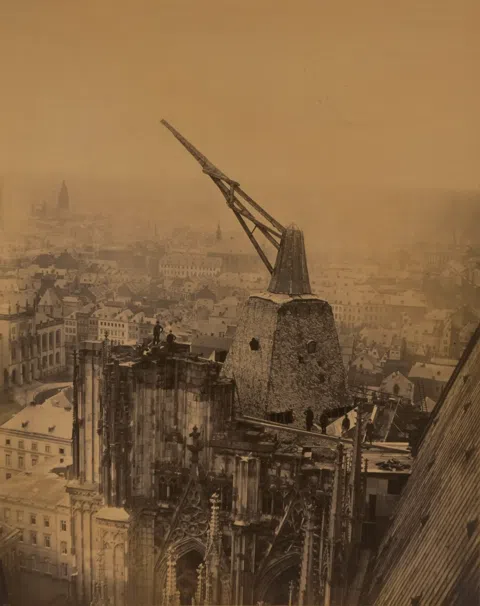
Kölner Dom (over the station forecourt) took 14 direct hits and stayed standing while the city around it was levelled. The stonework is still a patchwork, soot-dark original blocks against paler post-war replacements where the damage was repaired.
Tourists get in Monday to Saturday 10:00 to 17:45, and Sundays and holidays 13:30 to 16:30. Since 1 July 2026 tourist entry needs a ticket, €12 or €6 reduced, with under-14s free. The tower is €8. Prayer access through the north portal stays free.
Bags are capped at 40×35×15 cm and the cathedral has no lockers, so carry little. You may photograph without flash outside services.
Kölnisches Stadtmuseum (Minoritenstraße 13) reopened in its new home in 2024, a converted 1950s Franz Sauer fashion house with a pale stone-and-glass shopfront. Open-plan floors are hung with Cologne objects, including rubble-era photographs of the flattened city around the surviving cathedral. The wider 1933 to 1945 city story is here: the bombing and the rubble years, where the EL-DE-Haus keeps to persecution.
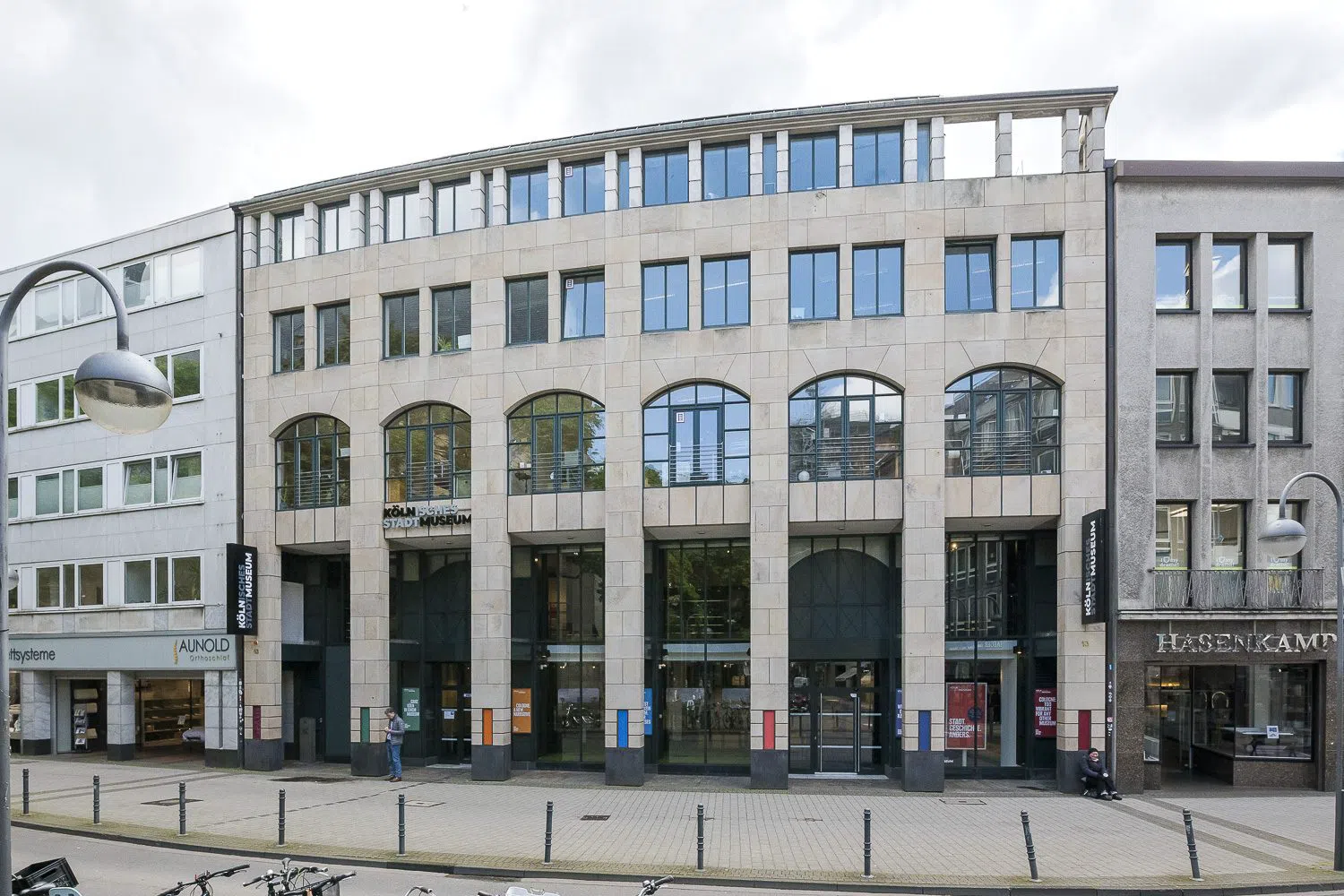
It opens Tuesday to Sunday 10:00 to 17:00, with the first Thursday of the month to 22:00. Entry is €5, or €3 reduced.
Art the regime banned
Kollwitz Museum Köln (Kollwitz Forum) (the former Neumarkt Passage) reopened in October 2025 after nearly three years shut, and holds the world's largest body of Käthe Kollwitz's work. Light upper-floor galleries carry her charcoal and lithographic sheets of grieving mothers and dead children, heavy black line on cream paper. The Nazis forced her out of the Prussian Academy.
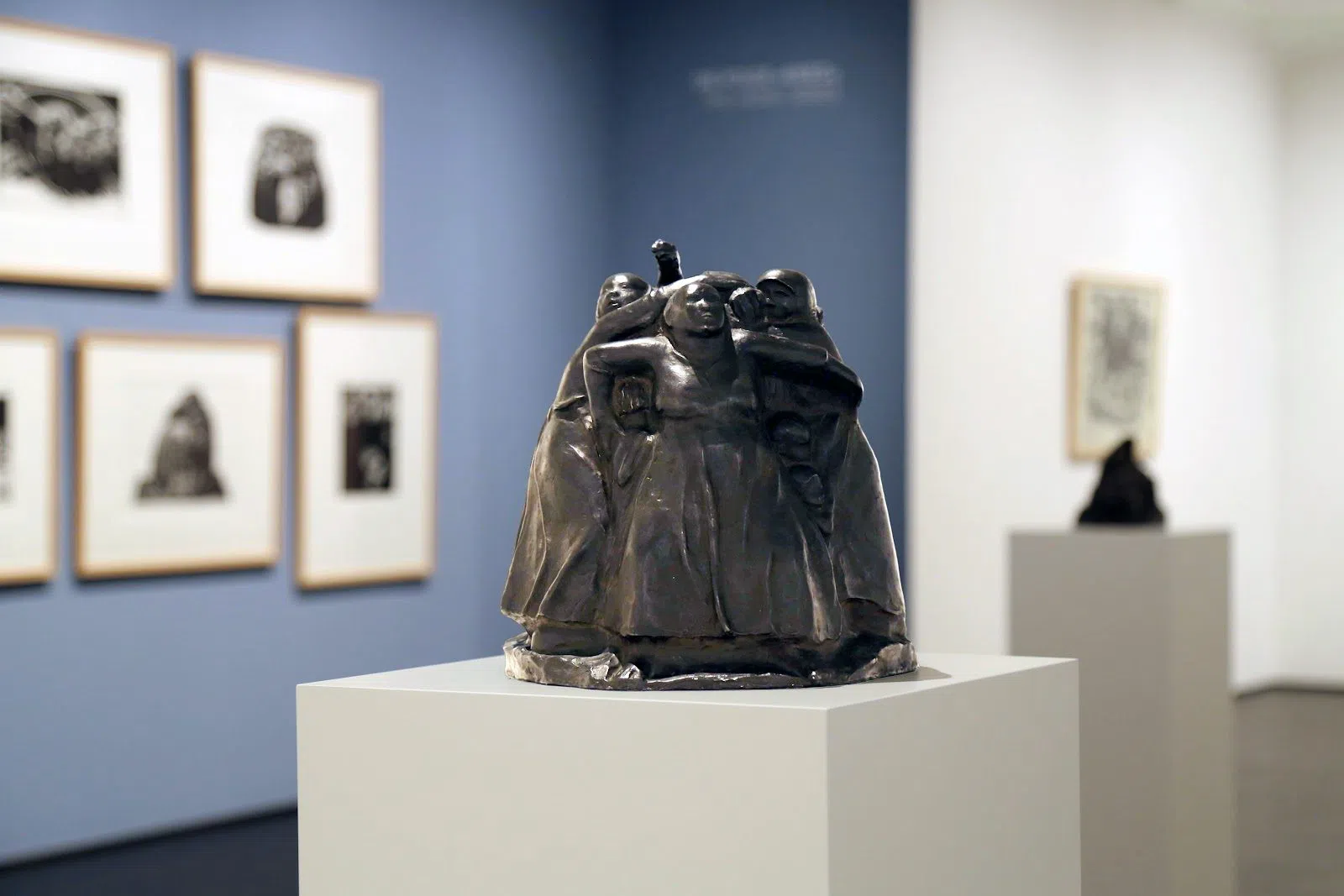
Put it after the cells. It opens Tuesday to Sunday 11:00 to 18:00, and on the first Thursday of the month to 21:00 with free entry. Otherwise €8, or €4 reduced, and half price in the last half hour.
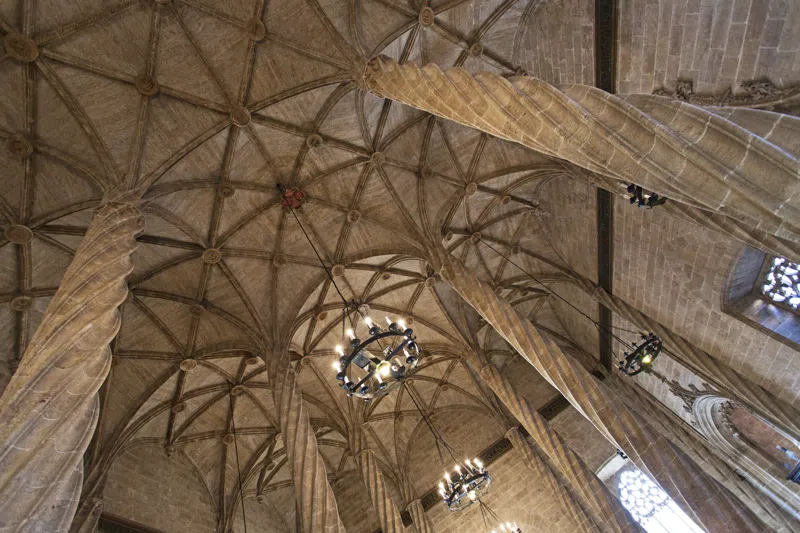
AntoniterCityKirche (Schildergasse) holds Ernst Barlach's bronze 'Der Schwebende', hanging horizontally on chains below the vault in the left aisle, its closed-eyed face modelled on Käthe Kollwitz. It is the only surviving original cast of a work the Nazis condemned as degenerate and melted down. The visit is free and takes ten minutes.
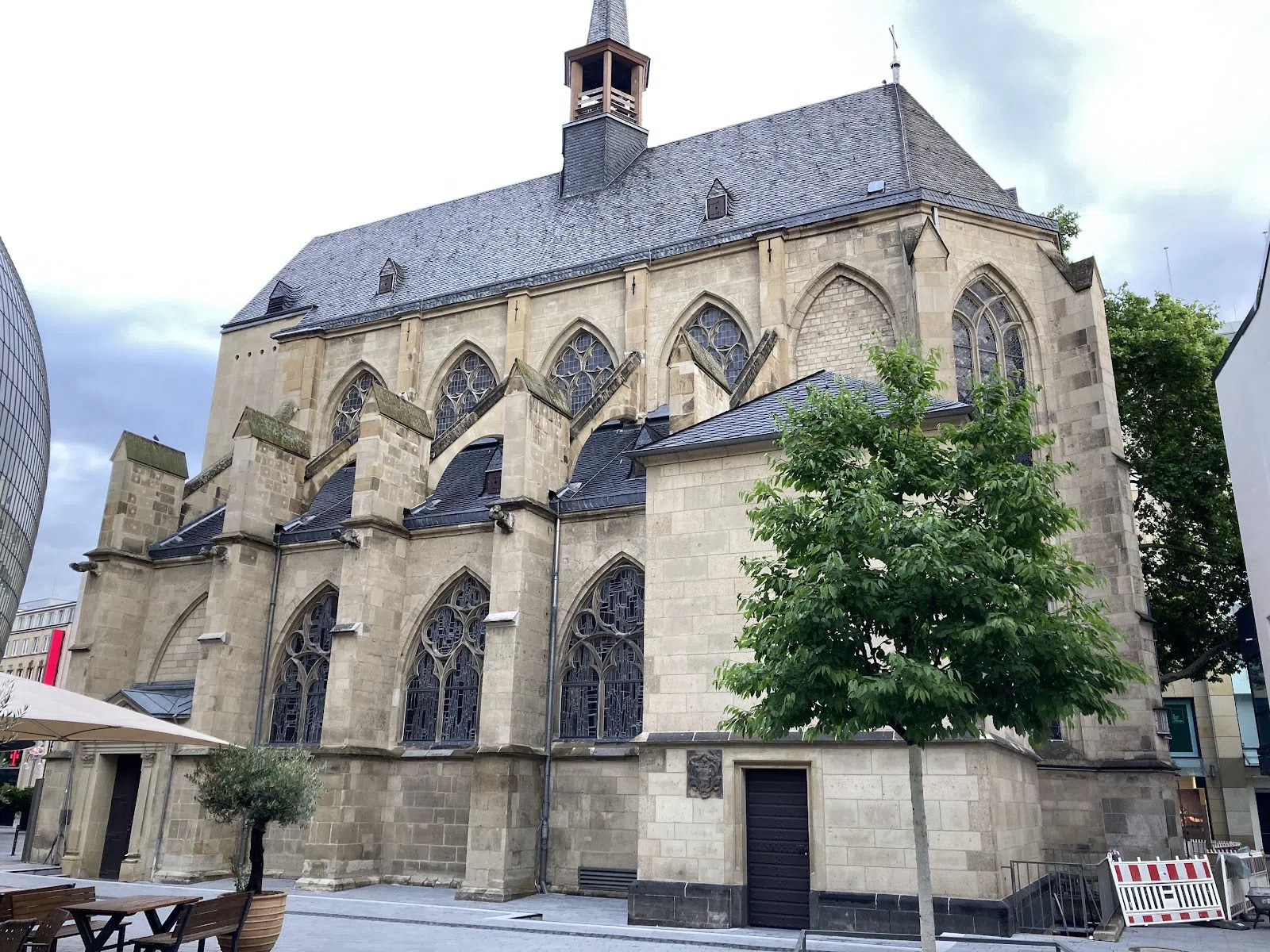
The church is late-Gothic, wedged into the Schildergasse shopping street. It opens Tuesday to Friday 11:00 to 18:00, Saturday 11:00 to 17:00 and Sunday 11:00 to 17:30, closed Mondays, and welcomes visitors outside services.
Museum Ludwig (beneath the cathedral's south flank) hangs the German Expressionist canvases Josef Haubrich hid from the regime and handed to the city in 1946. The building sits under a zigzag zinc sawtooth roof, and the galleries inside are high and white.
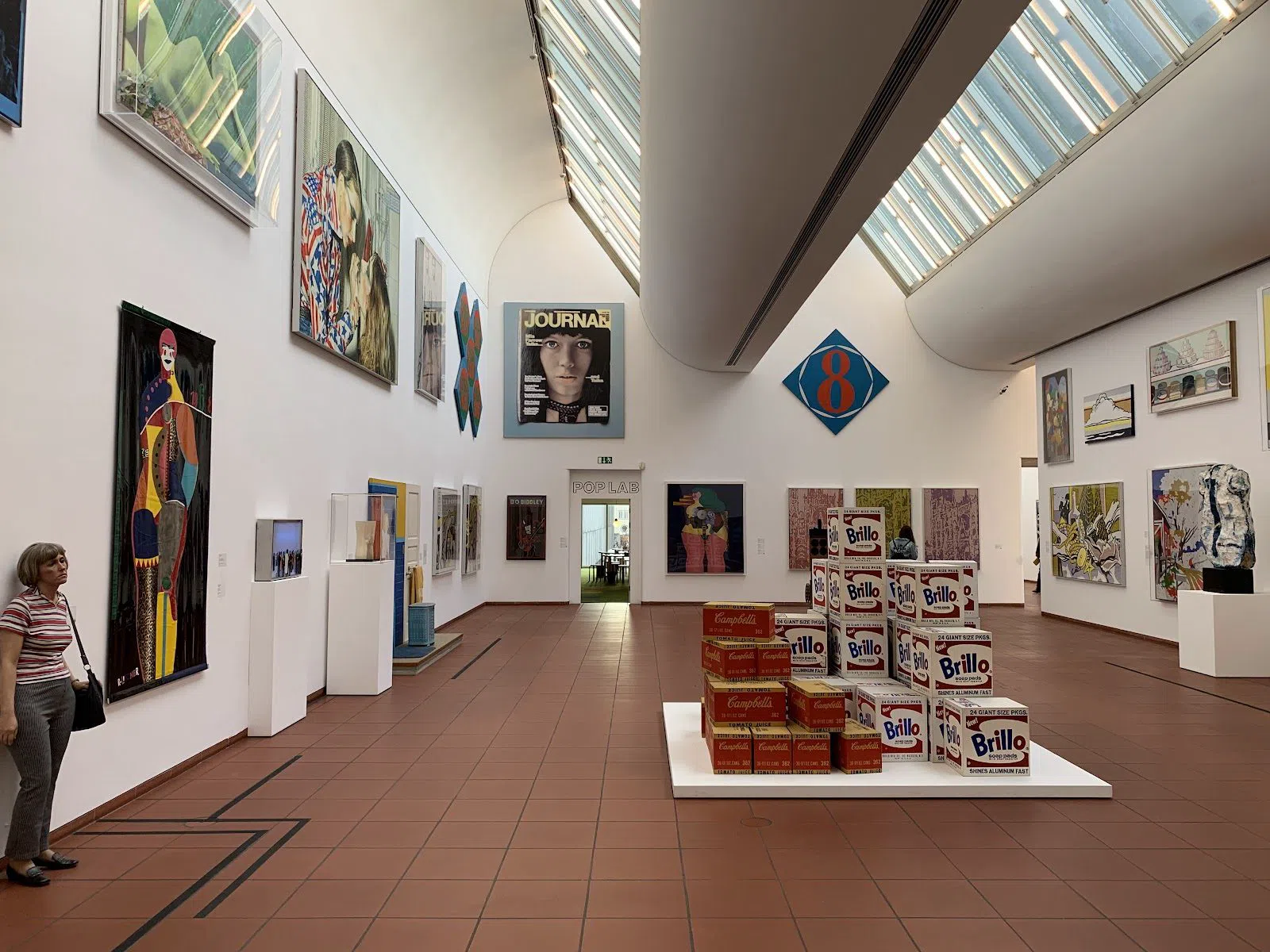
It opens Tuesday to Sunday 10:00 to 18:00, with the first Thursday to 22:00 and free entry on Köln-Tag. Entry is €12, or €8 reduced, with under-19s free.
Sitting down near the Dom
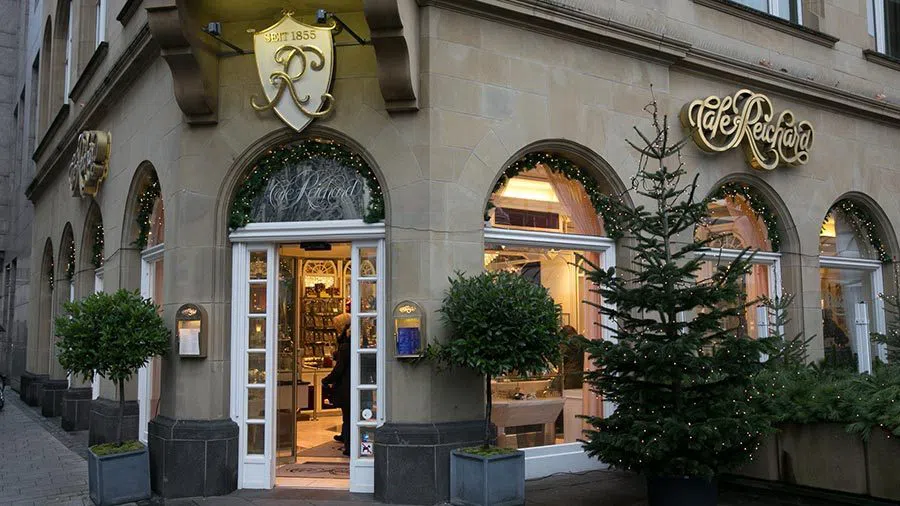
Café Reichard (Unter Fettenhennen 11) is a two-storey glass pavilion looking straight at the cathedral's west front. Palms and marble fill the room, and the long counter carries more than 40 cakes, hand-made pralines and Baumkuchen. It opens daily 08:30 to 20:00, at €€, with reservations on 0221 257 85 42. Seating runs to 400 inside and 400 more on the cathedral-facing terrace.
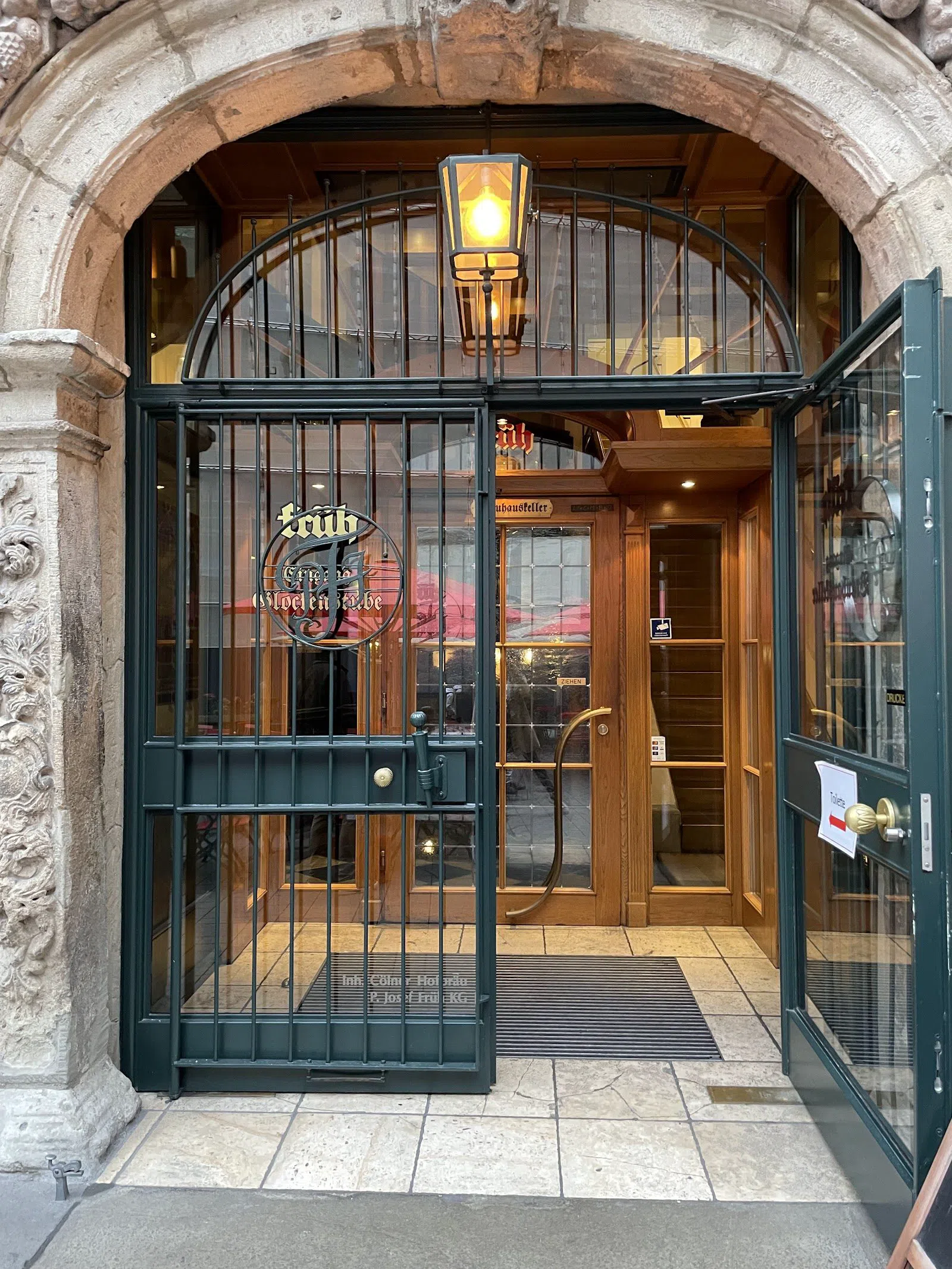
Brauhaus FRÜH am Dom (Am Hof 12-18) runs vaulted whitewashed cellar halls over three floors and a terrace, roughly 1,500 covers in all. Köbes waiters in blue aprons carry circular Kranz trays of 0.2 l Kölsch glasses to long dark wood tables. It opens at 10:00 or 11:00 daily and closes between 23:00 and 00:00. Reserve on 0221 2613 0 or [email protected]. Prices run at €€.
How long it takes
A guided walk linking the EL-DE-Haus with the Jewish sites around it takes three hours. Walks run six days a week, Tuesday to Sunday. Booking ahead confirms instantly, and the museum itself takes walk-ins at the door.
The guide earns the money on the German-only material and on the ground between the sites, where nothing is signposted as a sequence. Reading the basement inscriptions alone eats an hour.
Best time to go
Avoid Monday. The Stadtmuseum, Museum Ludwig, the Kollwitz Forum and the AntoniterCityKirche all close that day, and the guided walks do not run.
Tuesday takes Kolumba off the list. Saturday takes the cemetery off it. A first Thursday buys you late museum evenings, and a first Sunday adds the free tour of the Jawne schoolyard. Sunday makes the cathedral an afternoon visit.
The Müngersdorf path, the Deutz wall and the Ehrenfeld viaduct are all open-air with no cover. Take them in the drier half of the day.
Is it worth it
It suits a visitor willing to spend three hours in a prison and a children's memorial, reading rather than sightseeing. The audio guide carries the exhibition for anyone without German, and Erich-Klibansky-Platz and Roonstraße 50 put names and a living congregation next to the Gestapo paperwork.
A visitor who wants the war without the cells can take the Stadtmuseum, Kolumba and the cathedral and leave the rest.
Before you go
Book the Roonstraße synagogue and any guided tour well ahead of your dates, and confirm Kolumba's changeover before you travel. Men need a head covering at the synagogue and the cemetery, and photo ID at the synagogue door.
See the Cologne guide and the Cologne hotel search.
Antes de ir
Can I visit the EL-DE-Haus without a guide?
Yes, the museum takes walk-ins at the door. The exhibition panels are in German only, so buy the €2 audio guide at the ticket desk; it runs in eight languages, including English and Hebrew. The museum's own guided tours last 1.5 hours, and you can book them online or on 0221/221-26361.
How long does the EL-DE-Haus and Jewish history walk take?
A guided walk that links the EL-DE-Haus with the Jewish sites around it takes three hours, and the museum's own tour of the building and cells lasts 1.5 hours. The Jawne memorial on Erich-Klibansky-Platz is five minutes away on foot.
Which days do the guided walks run?
Six days a week, Tuesday to Sunday. Monday is a bad day for the indoor stops anyway, since the Kölnisches Stadtmuseum, Museum Ludwig, the Kollwitz Forum and the AntoniterCityKirche are all shut.
Can I visit the Roonstraße synagogue without booking?
No. Visits are by appointment, and there is security screening at the door. Esther Bugaeva (0221 71662-335, [email protected]) books the group tours, and one public tour a month takes individuals at around €11 a head, though it is often full. Bring photo ID; men must cover their heads.
Is Cologne Cathedral still free to enter?
Since 1 July 2026 tourists need a ticket: €12, or €6 reduced, with under-14s free, and €8 for the tower. Prayer access through the north portal is still free. Tourist hours are Monday to Saturday 10:00 to 17:45 and Sundays and holidays 13:30 to 16:30. Bags must be no larger than 40×35×15 cm, and there are no lockers on site.